Wednesday, February 9

Blockchain Technology

A blockchain is a distributed database that is shared among the nodes of a computer network. As a database, a blockchain stores information electronically in digital format. Blockchains are best known for their crucial role in cryptocurrency systems, such as Bitcoin, for maintaining a secure and decentralized record of transactions. The innovation with a blockchain is that it guarantees the fidelity and security of a record of data and generates trust without the need for a trusted third party.
One key difference between a typical database and a blockchain is how the data is structured. A blockchain collects information together in groups, known as blocks, that hold sets of information. Blocks have certain storage capacities and, when filled, are closed and linked to the previously filled block, forming a chain of data known as the blockchain. All new information that follows that freshly added block is compiled into a newly formed block that will then also be added to the chain once filled.
A database usually structures its data into tables, whereas a blockchain, like its name implies, structures its data into chunks (blocks) that are strung together. This data structure inherently makes an irreversible time line of data when implemented in a decentralized nature. When a block is filled, it is set in stone and becomes a part of this time line. Each block in the chain is given an exact time stamp when it is added to the chain.
The goal of blockchain is to allow digital information to be recorded and distributed, but not edited. In this way, a blockchain is the foundation for immutable ledgers, or records of transactions that cannot be altered, deleted, or destroyed. This is why blockchains are also known as a distributed ledger technology (DLT). TO READ MORE ABOUT THIS TECNOLOGY, CLICK HERE...

Tuesday, February 8

Being A Full Stack Developer

Full stack developers are the Swiss army knives of the development world. As masters of multiple programming languages, these savvy professionals are capable of transitioning seamlessly from one development environment to the next.
A boundless sense of curiosity drives full stack developers — it’s not enough to know that something works, they need to understand the how and why behind each functionality.
Full stack technology refers to the entire depth of a computer system application, and full stack developers straddle two separate web development domains: the front end and the back end.
The front end includes everything that a client, or site viewer, can see and interact with. By contrast, the back end refers to all the servers, databases, and other internal architecture that drives the application; usually, the end-user never interacts with this realm directly.
The easiest way to put the full stack into perspective is to imagine a restaurant. The front end encompasses the well-decorated, comfortable seating areas where visitors enjoy their food. The kitchen and pantry make up the “back end” and are typically hidden away from the customer’s view.
Full stack technology refers to the entire depth of a computer system application, and full stack developers straddle two separate web development domains: the front end and the back end.
The front end includes everything that a client, or site viewer, can see and interact with. By contrast, the back end refers to all the servers, databases, and other internal architecture that drives the application; usually, the end-user never interacts with this realm directly.
The easiest way to put the full stack into perspective is to imagine a restaurant. The front end encompasses the well-decorated, comfortable seating areas where visitors enjoy their food. The kitchen and pantry make up the “back end” and are typically hidden away from the customer’s view.
Chefs (developers) gather permanently stored materials from the pantry (the database) and perform operations on it in the kitchen (the server), and then serve up fully-prepared meals (information) to the user.
Front end developers work to optimize the visible parts of an application for web browsers and mobile devices. Front end platforms are usually built with HTML, CSS, and JavaScript; however, they can also be made via pre-packaged code libraries or content management systems like WordPress.
Front end developers work to optimize the visible parts of an application for web browsers and mobile devices. Front end platforms are usually built with HTML, CSS, and JavaScript; however, they can also be made via pre-packaged code libraries or content management systems like WordPress.
Back end developers, in contrast, refine the software code that communicates with servers, databases, or other proprietary software that conveys information to front end interfaces.
Those knowledgeable in both front end and back end are called full stack developers, meaning they are well versed in both disciplines.
The term “full stack developer” originated during the early days of the web, when websites were small and uncomplicated enough to allow a single person to tackle every aspect of site-building. But in the decades since those initial days, the web has grown ever more complex.
Those knowledgeable in both front end and back end are called full stack developers, meaning they are well versed in both disciplines.
The term “full stack developer” originated during the early days of the web, when websites were small and uncomplicated enough to allow a single person to tackle every aspect of site-building. But in the decades since those initial days, the web has grown ever more complex.
The rise of machine learning, predictive computing, and responsive design has made it challenging — but not impossible! — for a single developer to handle every aspect of building and designing a site or application.
Today, modern businesses often rely on entire teams of developers to operate network equipment, work with virtual machines, and manage enormous databases. It takes time to develop a comprehensive, nuts-and-bolts understanding of all these emerging technologies.
Today, modern businesses often rely on entire teams of developers to operate network equipment, work with virtual machines, and manage enormous databases. It takes time to develop a comprehensive, nuts-and-bolts understanding of all these emerging technologies.
The developers who do so are, for that reason, versatile enough to shift fluidly between front and back end development and take on any task that their team might need them to tackle.
According to a 2020 Stack Overflow survey of 65,000 developers worldwide, roughly 54.9 percent, identify as full stack. READ MORE...
According to a 2020 Stack Overflow survey of 65,000 developers worldwide, roughly 54.9 percent, identify as full stack. READ MORE...
Cyber Sercurity

Cyber security is the application of technologies, processes and controls to protect systems, networks, programs, devices and data from cyber attacks.
It aims to reduce the risk of cyber attacks and protect against the unauthorised exploitation of systems, networks and technologies.
Types of cyber threats
Common cyber threats include:
What are the 5 types of cyber security?
1. Critical infrastructure cyber security
Critical infrastructure organisations are often more vulnerable to attack than others because SCADA (supervisory control and data acquisition) systems often rely on older software.
Operators of essential services in the UK’s energy, transport, health, water and digital infrastructure sectors, and digital service providers are bound by the NIS Regulations (Network and Information Systems Regulations 2018). Among other provisions, the Regulations require organisations to implement appropriate technical and organisational measures to manage their security risks.
2. Network security
Network security involves addressing vulnerabilities affecting your operating systems and network architecture, including servers and hosts, firewalls and wireless access points, and network protocols.
3. Cloud security
Cloud security is concerned with securing data, applications and infrastructure in the Cloud.
4. IoT (Internet of Things) security
IoT security involves securing smart devices and networks that are connected to the IoT. IoT devices include things that connect to the Internet without human intervention, such as smart fire alarms, lights, thermostats and other appliances.
5. Application security
Application security involves addressing vulnerabilities resulting from insecure development processes in the design, coding and publishing of software or a website.
Common cyber threats include:
- Malware, such as ransomware, botnet software, RATs (remote access Trojans), rootkits and bootkits, spyware, Trojans, viruses and worms.
- Backdoors, which allow remote access.
- Formjacking, which inserts malicious code into online forms.
- Cryptojacking, which installs illicit cryptocurrency mining software.
- DDoS (distributed denial-of-service) attacks, which flood servers, systems and networks with traffic to knock them offline.
- DNS (domain name system) poisoning attacks, which compromise the DNS to redirect traffic to malicious sites.
What are the 5 types of cyber security?
1. Critical infrastructure cyber security
Critical infrastructure organisations are often more vulnerable to attack than others because SCADA (supervisory control and data acquisition) systems often rely on older software.
Operators of essential services in the UK’s energy, transport, health, water and digital infrastructure sectors, and digital service providers are bound by the NIS Regulations (Network and Information Systems Regulations 2018). Among other provisions, the Regulations require organisations to implement appropriate technical and organisational measures to manage their security risks.
2. Network security
Network security involves addressing vulnerabilities affecting your operating systems and network architecture, including servers and hosts, firewalls and wireless access points, and network protocols.
3. Cloud security
Cloud security is concerned with securing data, applications and infrastructure in the Cloud.
4. IoT (Internet of Things) security
IoT security involves securing smart devices and networks that are connected to the IoT. IoT devices include things that connect to the Internet without human intervention, such as smart fire alarms, lights, thermostats and other appliances.
5. Application security
Application security involves addressing vulnerabilities resulting from insecure development processes in the design, coding and publishing of software or a website.
HyperAutomation

Hyperautomation involves the orchestrated use of multiple technologies, tools or platforms, including:
As a large-scale endeavor, hyperautomation requires careful planning and deliberation. At the same time, the potential upside and return-on-investment should enervate team members from across the organization; they have the opportunity to unburden teams from repetitive labor and potentially boost the success of their value-producing work.
While the goal of hyperautomation is to truly encompass all automatable processes, realistic implementation is more nuanced. A feasible hyperautomation strategy involves several key steps:
- Artificial intelligence (AI)
- Machine learning
- Event-driven software architecture
- Robotic process automation (RPA)
- Business process management (BPM) and intelligent business process management suites (iBPMS)
- Integration platform as a service (iPaaS)
- Low-code/no-code tools
- Packaged software
- Other types of decision, process and task automation tools
While the goal of hyperautomation is to truly encompass all automatable processes, realistic implementation is more nuanced. A feasible hyperautomation strategy involves several key steps:
Assess budget and identify cost savings by highlighting existing automations. Workflows using RPA or other technologies can be expanded to other areas of the company in the course of the hyperautomation process.
Gather information on the existing processes that can be automated or otherwise must remain manual. Pay special attention to bottlenecks that maintain existing delays and can be improved through automation. One particularly effective technique for analysis is digital twinning, where an organization creates a virtual model of a process for deeper analysis and manipulation without affecting existing workflows.
Collect data. Automations are only as good as the data they run on, and the pipelines delivering the right data to the right place must be created alongside these machine-driven workflows. Creating a pipeline between these data stores and the automations that will use them is an essential step.
Identify automation tools. Project leaders may choose to begin by replicating one existing automation into another area of their operation, such as standardizing one automated approvals process for other decision makers. In fact, the automations themselves can be automated for more efficiency gains. It all depends on which tools and platforms are put to use throughout the project.
Predict outcomes. Automation for automation’s sake is even less effective at the enterprise-level and can lead to workers growing unclear on where their responsibilities lie. Outcome prediction involves setting the inputs for an automation, noting any hand-offs or human interventions, and predicting the results that arrive, as well as larger considerations like efficiency improvements and overall ROI.
Implement automations. AI tools can build the automations iteratively with human guidance to achieve consistent benchmarks. It’s this collaboration between machine learning and human intuition that drives successful hyperautomation endeavors, and creates clear guidance on the future of employee responsibilities.
Next Steps: Leveraging Hyperautomation
The key word for hyperautomation is interoperability. A single automation can be extended to processes, while an operation that once relied mostly or entirely on manual work can be enhanced through AI tools. A single document submission, for example, may OCR to interpret the text, sentiment analysis to identifying the underlying meaning, and AI to draft model responses. Each tool individually works on its own for a wider variety of tasks, with deployment made easy by successful replication and oversight from IT. READ MORE...

Monday, February 7


The Black Boom

Economic inequality continues to be one of the most hotly debated topics in America, but there has been relatively little discussion of the fact that black-white gaps in joblessness, income, poverty, and other measures were shrinking prior to the pandemic.
Why was it happening, and why did this phenomenon go unacknowledged by so much of the media?
In The Black Boom, Jason L. Riley—acclaimed Wall Street Journal columnist and senior fellow at the Manhattan Institute—digs into the data and concludes that the economic lives of black people improved significantly under policies put into place during the Trump administration. To acknowledge as much is not to endorse the 45th president but rather to champion policies that achieve a clear moral objective shared by most Americans.
As Riley argues in The Black Boom: “Prior to the Covid-19 pandemic of 2020, the economic fortunes of blacks improved under Trump to an extent that was not only unseen under Obama but unseen going back several generations. Black unemployment and poverty reached historic lows, and black wages increased at a faster clip than white wages.”
Less inequality is something that everyone wants, but disapproval of Trump’s personality and methods too often skewed the media’s appraisal of effective policies advocated by his c. If we want to make real progress in improving the lives of low-income minorities, says Riley, we must look beyond our partisan differences at what works and keep doing it. Unfortunately, many press outlets were unable or unwilling to do that.
As The Black Boom notes: “Political reporters were not unaware of this data. Rather, they chose to ignore or downplay it because it was inconvenient. In their view, Trump, because he was a Republican and because he was Trump, had it in for blacks, and thus his policy preferences would be harmful to minorities.
To highlight the fact that significant racial disparities were narrowing on his watch—that the administration’s tax and regulatory reforms were mainly boosting the working and middle classes rather than ‘the rich’—would have undermined a narrative that the media preferred to advance, regardless of its veracity.”
As with previous books in our New Threats to Freedom series, The Black Boom includes two essays from prominent experts who take issue with the author’s perspective. Juan Williams, a veteran journalist, and Wilfred Reilly, a political scientist, contribute thoughtful responses to Riley and show that it is possible to share a deep concern for disadvantaged groups in our society even while disagreeing on how best to help them.
The Black Boom exemplifies the calm, rational dialogue that Americans want and need at this moment in our history to understand which public policies best promote upward mobility for everyone. SOURCE: GOOGLE BOOKS

What Does the Vice President Do?

Vice President-elect Kamala Harris will be sworn in by Justice Sonia Sotomayor on Wednesday, a history-making event in which the first Black, South Asian and female vice president will take her oath of office from the first Latina justice. THE ASSOCIATED PRESS
On Jan. 20, Kamala Harris will become vice president of the United States – the first woman, the first person of South Asian descent, and the first African American to do so. Harris will also become the first vice president to have graduated from a historically black college or university.
Each of these achievements is significant in its own right. However, the vice presidency itself has traditionally been a relatively insignificant position, though the office has become more influential in recent years.
The 'Most Insignificant' Office?
The role of vice president is only mentioned in the U.S. Constitution a handful of times. Article I, Section 3 says that the vice president "shall be President of the Senate but shall have no Vote" except in the event of a tie. Normally, ties are rare, but the vice president's power to break them will likely become relevant to Harris as Democrats, and independents who caucus with Democrats, are expected to control only 50 of the 100 Senate seats.
The beginning of Article II, Section 1 explains how vice presidents are elected, which was later revised by the 12th Amendment. The end of that section states that presidential power "shall devolve on the Vice President" in the event of the president's "Death, Resignation, or Inability to discharge the Powers and Duties of the said Office." Finally, Article II, Section 4 states that vice presidents – like presidents – can be "removed from Office on Impeachment for, and Conviction of, Treason, Bribery, or other high Crimes and Misdemeanors."
So, other than staying out of trouble to avoid impeachment and waiting around for the president to need a replacement, vice presidents are really obligated only to occasionally cast a tie-breaking vote. This means that the great majority of the time, vice presidents have no real job to do.
John Adams, the first U.S. vice president, once complained to his wife that the vice presidency was "the most insignificant Office that ever the Invention of Man contrived or his Imagination conceived." However, not all have been upset about such inactivity. Woodrow Wilson's vice president, Thomas Marshall, quipped after he retired: "I don't want to work … [but] I wouldn't mind being Vice President again." READ MORE...
Why is Joe Biden so Unpopular?

It's in a two-minute TV ad narrated in authoritative and reassuring tones by none other than Academy Award-winner Tom Hanks. It was in a graphics and light display outside the White House on Wednesday night, when the Democratic National Committee showcased record job numbers and vaccination progress. It's in the avalanche of fact sheets from the administration detailing President Joe Biden's 2021 accomplishments, and it was in the sometimes-exasperated voice of Biden himself Wednesday as he pleaded his case for a good freshman year grade.
If there were an avatar to accompany the PR campaign, it would be an image of the baffled president, lifting America up by its collective lapels and screaming, "What is wrong with you people? Why don't you LIKE ME!?"
The frustration is understandable. On paper, the Biden administration has racked up some impressive achievements: more than 6 million new jobs were created, a single-year record. Unemployment dropped from 6.2% to 3.9%, another single-year first. Childhood poverty and hunger are down while average wages went up. Biden has the first majority non-white Cabinet in history and presides over the most diverse administration in history. He passed a massive COVID-19 relief bill and an expansive infrastructure package many previous presidents tried and failed to achieve.
But as polling consistently shows, American voters don't like Biden – or at least, they don't think he's doing a good job. An average of current polling shows the president with an anemic 41.7% approval rating, with 53.4% disapproving of him. And while high inflation has alarmed many Americans, Biden's slide in the polls began last August, before prices started to jump. READ MORE...
Democrats Brace For the Fall

It's a small comfort to Democrats who are watching their GOP foes measure drapes, plan policy strategies and plot ways to get back at Democrats who kicked Republicans off of legislative committees. But despite the very grim outlook for Democrats in the fall midterms, it could have been much, much worse for the party.
Virtually no one in either party talks with a straight face about the possibility that the Democrats will retain their narrow majority in the House. Historical trends, combined with the dampening effect of an unpopular Democratic president, mean the question is not so much whether Republicans will reclaim the majority in the House, but how big their gains will be.
But recent developments mean Democrats aren't as likely to face the political apocalypse threatening them last year.
Redistricting – which could have delivered a death blow to Democrats for a decade, given the fact that there are more GOP-controlled state legislatures than Democratic-run ones – has turned out to be largely a wash. Legal challenges of maps in Ohio and North Carolina could limit GOP gains in those states, while a recent court ruling ordering Alabama to create another majority-minority seat could give Democrats a chance at a pickup.
Far more House Democrats (28) than Republicans (13) have announced their retirements or plans to run for other office, a sign that Democrats believe they will be in the minority next year. But the vast majority of those seats are not in highly competitive districts, providing Republicans with fewer chances to flip the seats.
"I think Democrats are happy – well, maybe not happy, but relieved," says Stu Rothenberg, a veteran political analyst and author of the nonpartisan Rothenberg Report. "It doesn't change the fundamentals of a midterm cycle, particularly with a president whose approval rating sits at 40-44%. But the Democrats are relieved that the worst-case scenario didn't occur," Rothenberg says. "Some of them are really surprised they did as well as they did."
The party of the president in power tends to lose seats in the midterm, with exceptions occurring just three times since 1910. President Joe Biden's low approval ratings also hurt down-ticket candidates, Rothenberg notes, especially since Biden is facing criticism from both the progressive and centrist wings of his party. READ MORE...

Sunday, February 6
Memorable Quotes
John AdamsIn my many years I have come to a conclusion that one useless man is a shame; two is a law firm and three or more is a government.
If you don't read the newspaper you are uninformed, if you do read the newspaper you are misinformed.
Mark Twain
Suppose you were an idiot. And suppose you were a member of government. But then I repeat myself.
Mark Twain
I contend that for a nation to try to tax itself into prosperity is like a man standing in a bucket and trying to lift himself up by the handle.
Winston Churchill
A government which robs Peter to pay Paul can always depend on the support of Paul.
George Bernard Shaw
Foreign aid might be defined as a transfer of money from poor people in rich countries to rich people in poor countries.
Douglas Casey, Classmate of Bill Clinton at Georgetown University
Giving money and power to government is like giving whiskey and car keys to teenage boys.
P.J. O'Rourke, Civil Libertarian
Government is the great fiction, through which everybody endeavours to live at the expense of everybody else.
Frederic Bastiat, French economist(1801-1850)
I don't make erjokes . I just watch the government and report the facts.
Will Rogers
In general, the art of government consists of taking as much money as possible from one party of the citizens to give to the other.
Voltaire (1764)
Just because you do not take an interest in politics doesn't mean politics won't take an interest in you!
Pericles (430 B.C.)
No man's life, liberty, or property is safe while the legislature is in session.
Mark Twain (1866)
Talk is cheap...except when government does it.
Anonymous
The government is like a baby's alimentary canal, with a happy appetite at one end and no control at the other.
Ronald Reagan
The only difference between a tax man and a taxidermist is that the taxidermist leaves the skin.
Mark Twain
There is no distinctly Native American criminal class. . . Save government.
Mark Twain
What this country needs are more unemployed politicians.
Edward Langley, Artist (1928-1995)
A government big enough to give you everything you want, is strong enough to take everything you have.
Thomas Jefferson


African American History
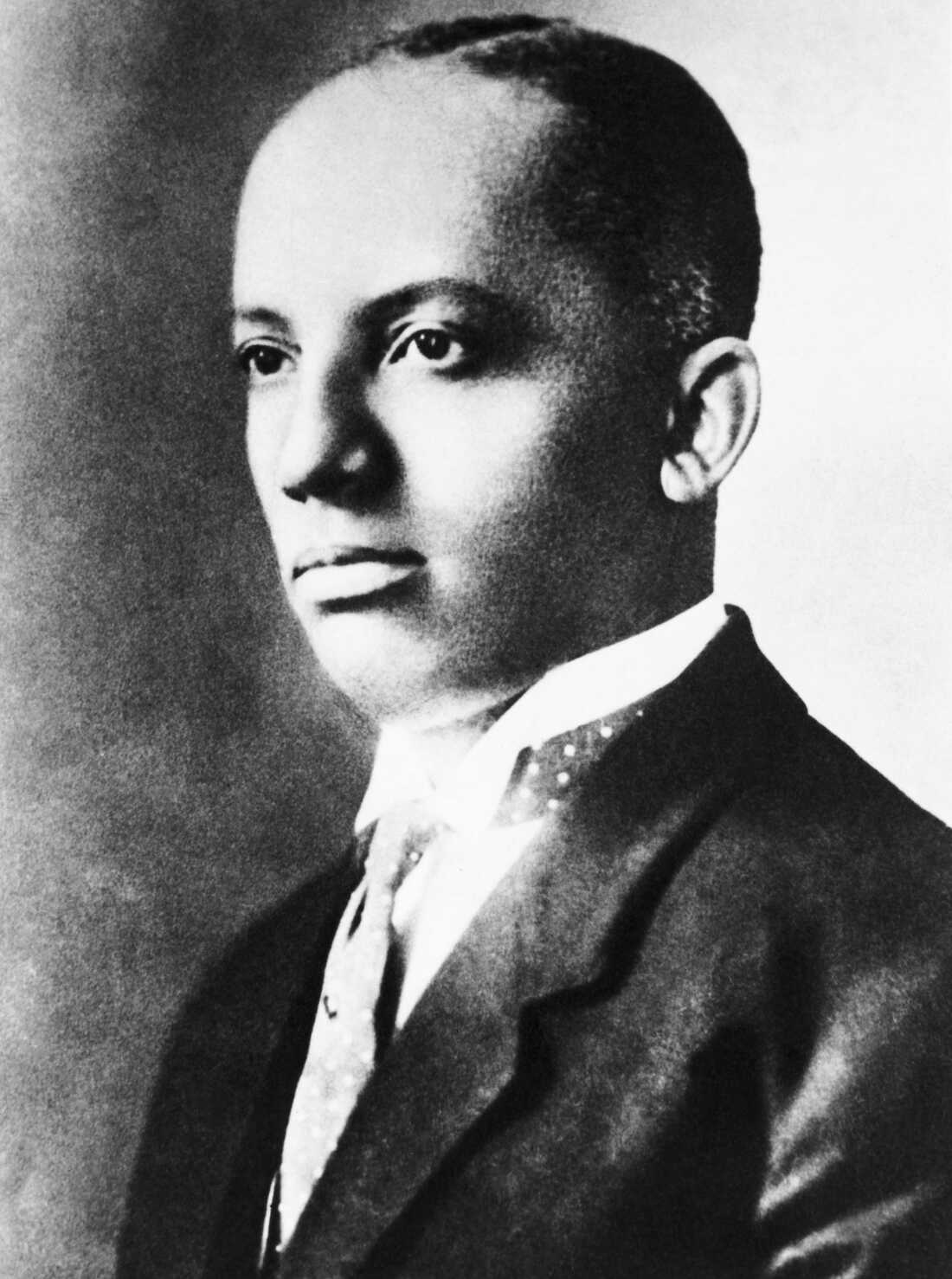
Carter G. Woodson (1875-1950) was an American historian, a scholar and the founder of the Association for the Study of Negro Life and History. Woodson was instrumental in launching Negro History Week in 1926.Bettmann Archive/Getty Images
Every February, the U.S. honors the contributions and sacrifices of African Americans who have helped shape the nation. Black History Month celebrates the rich cultural heritage, triumphs and adversities that are an indelible part of our country's history.
This year's theme, Black Health and Wellness, pays homage to medical scholars and health care providers. The theme is especially timely as we enter the third year of the COVID-19 pandemic, which has disproportionately affected minority communities and placed unique burdens on Black health care professionals.
"There is no American history without African American history," said Sara Clarke Kaplan, executive director of the Antiracist Research & Policy Center at American University in Washington, D.C. The Black experience, she said, is embedded in "everything we think of as 'American history.' "
First, there was Negro History Week. Critics have long argued that Black history should be taught and celebrated year-round, not just during one month each year.
It was Carter G. Woodson, the "father of Black history," who first set out in 1926 to designate a time to promote and educate people about Black history and culture, according to W. Marvin Dulaney. He is a historian and the president of the Association for the Study of African American Life and History (ASALH).
Woodson envisioned a weeklong celebration to encourage the coordinated teaching of Black history in public schools. He designated the second week of February as Negro History Week and galvanized fellow historians through the Association for the Study of Negro Life and History, which he founded in 1915. (ASNLH later became ASALH.)
The idea wasn't to place limitations but really to focus and broaden the nation's consciousness. "Woodson's goal from the very beginning was to make the celebration of Black history in the field of history a 'serious area of study,' " said Albert Broussard, a professor of Afro-American history at Texas A&M University.
The idea eventually grew in acceptance, and by the late 1960s, Negro History Week had evolved into what is now known as Black History Month. Protests around racial injustice, inequality and anti-imperialism that were occurring in many parts of the U.S. were pivotal to the change. READ MORE...
This year's theme, Black Health and Wellness, pays homage to medical scholars and health care providers. The theme is especially timely as we enter the third year of the COVID-19 pandemic, which has disproportionately affected minority communities and placed unique burdens on Black health care professionals.
"There is no American history without African American history," said Sara Clarke Kaplan, executive director of the Antiracist Research & Policy Center at American University in Washington, D.C. The Black experience, she said, is embedded in "everything we think of as 'American history.' "
First, there was Negro History Week. Critics have long argued that Black history should be taught and celebrated year-round, not just during one month each year.
It was Carter G. Woodson, the "father of Black history," who first set out in 1926 to designate a time to promote and educate people about Black history and culture, according to W. Marvin Dulaney. He is a historian and the president of the Association for the Study of African American Life and History (ASALH).
Woodson envisioned a weeklong celebration to encourage the coordinated teaching of Black history in public schools. He designated the second week of February as Negro History Week and galvanized fellow historians through the Association for the Study of Negro Life and History, which he founded in 1915. (ASNLH later became ASALH.)
The idea wasn't to place limitations but really to focus and broaden the nation's consciousness. "Woodson's goal from the very beginning was to make the celebration of Black history in the field of history a 'serious area of study,' " said Albert Broussard, a professor of Afro-American history at Texas A&M University.
The idea eventually grew in acceptance, and by the late 1960s, Negro History Week had evolved into what is now known as Black History Month. Protests around racial injustice, inequality and anti-imperialism that were occurring in many parts of the U.S. were pivotal to the change. READ MORE...


Black History Months Facts

1) The current population of Black and African Americans makes up 46.9 million, the U.S. Census Bureau reports. Also, 89.4% of African Americans age 25 and older had a high school diploma or higher in 2020, as Fox10 Phoenix reported.
2) A founder of the Association for the Study of African American Life and History organization, Carter G. Woodson, first had the idea of this month-long celebration. Woodson was born in 1875 to newly freed Virginia slaves. He later earned a Ph.D. in history from Harvard University. He worried that Black children were not being taught about their ancestors’ achievements in American schools in the early 1900s, as Fox 10 noted.
3) By the late 1960s, Negro History Week — the precursor for this month's celebrations and events — changed into what is now known as Black History Month.
4) The month of February was picked for Black History Month because it contained the birthdays of President Abraham Lincoln and Frederick Douglass. Lincoln was born on Feb. 12, and Douglass, a former slave who did not know his precise birthday, celebrated his date of birth on Feb. 14.
5) ASALH has celebrated Negro History Week and Black History Month for 95 years.
6) Fifty years after the first celebrations, then-President Gerald R. Ford officially recognized Black History Month at the country's 1976 bicentennial. Ford called on Americans to "seize the opportunity to honor the too-often neglected accomplishments of Black Americans in every area of endeavor throughout our history," as History.com noted.
7) Forty years after Ford's recognition of Black History Month, then-President Barack Obama delivered this message, in part, from the White House: "Black History Month shouldn't be treated as though it is somehow separate from our collective American history or somehow just boiled down to a compilation of greatest hits from the March on Washington or from some of our sports heroes … It's about the lived, shared experience of all African Americans."
8) Canada also commemorates Black History Month in February.
9) At the time of Negro History Week's launch in 1926, Woodson believed the teaching of Black history was key to the physical and intellectual survival of the race within society: "If a race has no history, it has no worthwhile tradition, it becomes a negligible factor in the thought of the world, and it stands in danger of being exterminated," he said in part, as the Journal of Negro History reported.
10) While this year's theme for Black History Month is Black health and wellness, past themes have included the family, Black migrations, and Black women in American culture and history, among others.
A Proclomation on Black History Month, 2022

THE WHITE HOUSE
Each February, National Black History Month serves as both a celebration and a powerful reminder that Black history is American history, Black culture is American culture, and Black stories are essential to the ongoing story of America — our faults, our struggles, our progress, and our aspirations. Shining a light on Black history today is as important to understanding ourselves and growing stronger as a Nation as it has ever been. That is why it is essential that we take time to celebrate the immeasurable contributions of Black Americans, honor the legacies and achievements of generations past, reckon with centuries of injustice, and confront those injustices that still fester today.
Our Nation was founded on an idea: that all of us are created equal and deserve to be treated with equal dignity throughout our lives. It is a promise we have never fully lived up to but one that we have never, ever walked away from. The long shadows of slavery, Jim Crow, and redlining — and the blight of systemic racism that still diminishes our Nation today — hold America back from reaching our full promise and potential. But by facing those tragedies openly and honestly and working together as one people to deliver on America’s promise of equity and dignity for all, we become a stronger Nation — a more perfect version of ourselves.
Across the generations, countless Black Americans have demonstrated profound moral courage and resilience to help shape our Nation for the better. Today, Black Americans lead industries and movements for change, serve our communities and our Nation at every level, and advance every field across the board, including arts and sciences, business and law, health and education, and many more. In the face of wounds and obstacles older than our Nation itself, Black Americans can be seen in every part of our society today, strengthening and uplifting all of America.
Vice President Harris and I are deeply committed to advancing equity, racial justice, and opportunity for Black Americans as we continue striving to realize America’s founding promise. That began by building a Federal Government that looks like America: including the first Black Secretary of Defense, the first Black woman to head the Office of Management and Budget, the first Black man to lead the Environmental Protection Agency, the first Black woman to lead the Department of Housing and Urban Development in more than 40 years, the first Black chair of the White House Council of Economic Advisors, a Black Ambassador representing America at the United Nations, and the first Black and South Asian Vice President in our history. We have been proud to appoint accomplished Black Americans to serve in a vast array of roles across our Administration. I am prouder still to have already nominated eight Black women to serve as Federal appellate judges — matching in just 1 year the total number of Black women who have ever served on Federal appeals courts.
My Administration has worked hard to reverse decades of underinvestment in Black communities, schools, and businesses. Both the American Rescue Plan and the Bipartisan Infrastructure Law are making historic investments in Black America — from vaccine shots in arms to checks in families’ pockets and tax cuts for working families with children to a landmark $5.8 billion investment in and support for Historically Black Colleges and Universities. And in my first year in office, the American Rescue Plan provided the full Child Tax Credit to the lower income families of more than 26 million children — who are disproportionately Black — and put us on a path to cut Black child poverty in half.
As the Infrastructure Law continues to be implemented, we will expand on that progress. Lead service lines that have contaminated the water of too many homes and schools in Black communities will be removed and replaced. We will deliver high-speed internet to every community so that no Black family is left behind in the 21st century economy. Historic investments in public transportation will help more people in more neighborhoods get to where good jobs actually are quickly and safely. We will reconnect Black neighborhoods cut off from opportunity by highways that were built to brush them aside. Long-standing environmental injustices that have hit Black communities the hardest will be remediated. We will deliver major investments in Black entrepreneurs and small businesses — including making the Minority Business Development Agency permanent and seeding it with a record $110 million in new resources to help level the playing field for Black businesses.
But this is only the start. To fulfill America’s promise for all, we will work tirelessly in the year ahead to deliver on my Build Back Better agenda, bringing down the costs that families face on child care, housing, education, health care, prescription drugs, and so much more. We will continue to battle the COVID-19 pandemic with equity at the center of our response. We will not rest until we have protected the foundation of our democracy: the sacred right to vote. And we will fight to keep dismantling all of those structural inequities that have served as barriers for Black families for generations.
As we celebrate National Black History Month, let us all recommit ourselves to reach for that founding promise. Let us continue to fight for the equity, opportunity, and dignity to which every Black American is due in equal measure. Let us carry forward the work to build an America that is, in the beautiful words of the poet Amanda Gorman, “Bruised, but whole — benevolent, but bold, fierce, and free.“
NOW, THEREFORE, I, JOSEPH R. BIDEN JR., President of the United States of America, by virtue of the authority vested in me by the Constitution and the laws of the United States, do hereby proclaim February 2022 as National Black History Month. I call upon public officials, educators, librarians, and all the people of the United States to observe this month with appropriate programs, ceremonies, and activities.
IN WITNESS WHEREOF, I have hereunto set my hand this thirty-first day of January, in the year of our Lord two thousand twenty-two, and of the Independence of the United States of America the two hundred and forty-sixth.
JOSEPH R. BIDEN JR.

Subscribe to:
Posts (Atom)