Sunday, April 10
Student Disconnection
“Stunning” is the word she uses to describe the level of disengagement she and her colleagues have witnessed across the Nebraska campus. “I don’t seem to be capable of motivating them to read textbooks or complete assignments,” she says of that portion of her students. “They are kind kids. They are really nice to know and talk with. I enjoy them as people.” But, she says, “I can’t figure out how to help them learn.”
Marley, a biology professor, hesitates to talk to her students about the issue, for fear of making them self-conscious, but she has a pretty good idea of what is happening. In addition to two
years of shifting among online, hybrid, and in-person classes, many students have suffered deaths in their families, financial insecurity, or other pandemic-related trauma. That adds up to a lot of stress and exhaustion. In a first-year seminar last fall, Marley says, she provided mental-health counseling referrals to seven out of her 17 students.
Marley knew the pandemic was wreaking havoc on people’s lives. But she didn’t expect that its impact on learning would be so profound, even when students returned, with excitement, to campus.
She is far from alone. The Chronicle recently asked faculty members to share their experiences with student disengagement this academic year. More than 100 people wrote in to describe a disconcerting level of disconnection among students, using words like “defeated,” “exhausted,” and “overwhelmed.”
While a self-selected group, the respondents, several of whom agreed to be interviewed, represent a range of institutions: community colleges, large public universities, small private colleges, and some highly selective institutions. They described common challenges: Far fewer students show up to class. Those who do avoid speaking when possible. Many skip the readings or the homework. They have trouble remembering what they learned and struggle on tests. READ MORE...
Pyramids, Pharaohs, and Secrets
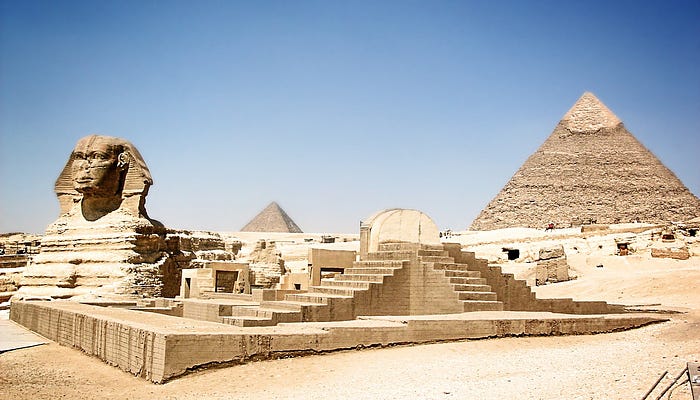
Egyptian pyramids are ancient pyramid-shaped stone constructions located in Egypt.
The number of objects identified as Egyptian pyramids is about 100. Most of the pyramids were built as tombs for the pharaohs of the ancient and middle kingdoms. The oldest is the Pyramid of Djoser, created by the architect Imhotep between 2667-2488 BC.
Picture from pixabay.comWhat are the facts about pyramids?
The most incredible Pyramid in the Giza complex is 147 meters high, with a base side of 230 meters, and took between 20 and 30 years to build. It is located about 25 kilometers southwest of Cairo, Egypt’s capital.
The Great Pyramid, also known as the Pyramid of Khufu, has 2.6 million cubic meters and is greater than the two Giza colossi, the pyramids of Menkaure and Khafre. All of the pyramids are said to have been coated with gleaming limestone at one point, but this has since been removed and reused in various construction projects throughout the millennia.
Each Pyramid at Giza is part of a larger complex that includes a tomb temple and a network of interconnected pathways. The monuments are essentially the last resting sites of Egypt’s famous pharaohs. READ MORE...
Saturday, April 9
Giant Stone in Costa Rica
Archaeologists have excavated giant stone spheres in the DiquÃs Delta of Costa Rica.
Stone spheres are found on the small island of Isla del Caño and the DiquÃs Delta, where over 300 stone Petrospheres have been previously identified from the DiquÃs culture.
The DiquÃs culture emerged in the Valley of the Rio Grande de Térraba, where they established complex social, economic, and political systems to govern their society.
During the Chiriquà Period between AD 800 – 1500, many settlements grew into large communities around the alluvial lands of the Térraba River and its main tributaries, constructing large structures using round-edged boulders, paved areas, burial sites, and circular or rectangular mounds with stone walls.
The DiquÃs reached an apex of cultural development during this period, with DiquÃs artisans creating elaborate ceramic, bone, and gold objects, and sculpturing stone spheres in important zones within the settlements. Stone spheres were also placed in alignments in public plazas, or along the approach to the dwellings of the ruling elite or chieftains.
Archaeologists from the Instituto Nacional de AntropologÃa e Historia (INAH) and the National Museum of Costa Rica (MNCR) have excavated 6 stone spheres as part of a wider project to preserve the monuments.
The team focused on the Finca 6 archaeological site located in the canton of Osa in the Puntarenas Province, in which stone spheres have deteriorated due to alterations derived from the constitution of the rock, damage caused by humidity, and floods resulting from hurricanes and tropical storms. READ MORE...
Microplastics in Lungs
The scientists said microplastic pollution was now ubiquitous across the planet, making human exposure unavoidable and meaning “there is an increasing concern regarding the hazards” to health.
Samples were taken from tissue removed from 13 patients undergoing surgery and microplastics were found in 11 cases. The most common particles were polypropylene, used in plastic packaging and pipes, and PET, used in bottles. Two previous studies had found microplastics at similarly high rates in lung tissue taken during autopsies.
People were already known to breathe in the tiny particles, as well as consuming them via food and water. Workers exposed to high levels of microplastics are also known to have developed disease.
Microplastics were detected in human blood for the first time in March, showing the particles can travel around the body and may lodge in organs. The impact on health is as yet unknown. But researchers are concerned as microplastics cause damage to human cells in the laboratory and air pollution particles are already known to enter the body and cause millions of early deaths a year.
“We did not expect to find the highest number of particles in the lower regions of the lungs, or particles of the sizes we found,” said Laura Sadofsky at Hull York medical school in the UK,a senior author of the study. “It is surprising as the airways are smaller in the lower parts of the lungs and we would have expected particles of these sizes to be filtered out or trapped before getting this deep.” READ MORE...
Human Gut Microbiota
New research now shows that xanthan gum affects our gut microbiota.
The study was recently published in Nature Microbiology by a team of scientists at NMBU in collaboration with the University of Michigan and several other international partners.
"We were surprised at how much the human gut bacteria have adapted to this additive since it was introduced into the modern diet only fifty years ago," says NMBU researcher Sabina Leanti La Rosa (above).
When it was first introduced, xanthan gum was thought to not affect us as it was not digested by the human body. However, the new study shows that the additive nevertheless affects the bacteria that live in our intestines. And these bacteria are important for our health and well-being.
"The gut bacteria we have investigated show genetic changes and a rapid adaptation to enable them to digest this particular additive," explains professor Phil Pope.
He leads the Microbial Ecology and Meta-Omics group at NMBU, where the researchers who conducted the new study work. READ MORE...
Friday, April 8
On Being Caucasian
"U ain't WOKE bro..."
"Bro... I b WOKE as I wanna b..."
Woke (/ˈwoʊk/ WOHK) is an English adjective meaning 'alert to racial prejudice and discrimination' that originated in African-American Vernacular English (AAVE). Beginning in the 2010s, it came to encompass a broader awareness of social inequalities such as sexism, and has also been used as shorthand for left-wing ideas involving identity politics and social justice, such as the notion of white privilege and slavery reparations for African Americans. SOURCE: Wikipedia
Unintended Consequences
Not too long ago, my wife suggested that we put handles on the vanity in our bathroom because our fingerprints made when opening the doors were tarnishing the coating... and our cleaning was not removing those stains... so, one weekend we went to Lowes purchased a bunch of handles that we liked with all the appropriate hardware and in a few hours, all the handles were installed exactly where we wanted them.
Since neither of us was a carpenter or skilled as a handyperson, it took us longer than normal to complete this weekend project.
A few weeks later, my wife made the comment one morning while we were both watching the news that the cords to her electrical devices that she uses to fix her hair are now getting tangled up in the handles of the drawers to the vanity and it has gotten to the point where it is very annoying...
I acknowledged her comment and her frustration but had the common sense not to say anything... after she got the frustration out of her system, there has been no more comments... but, I am sure that she continues to experience the tangling of cords whenever she decides to fix her hair.
As I began to reflect upon this experience, it dawned on me that this was a perfect example of unintended consequences...
Most of the time, we cannot nor do we want to predict the future outcomes of our actions today. If we did, we may not do some of the things that we have done in the past... We just don't live this way... but, maybe we should.
China Could Easily Invade Taiwan
The invasion of Taiwan, officially the Republic of China (ROC), has been considered by Chinese military planners for decades but only under President Xi Jinping have observers worried this might be increasingly likely.
Taiwan, formerly the island of Formosa, was the last bastion that held out against Mao Zedong’s victorious Communist army after elements of the defeated nationalist Kuomintang military retreated to the eastern island in 1949.
Threats of military action against the self-ruled island have escalated during times when some Taiwanese political parties have debated whether to declare independence. Taiwan has had no seat at the United Nations for 50 years.
President Xi’s rise, with his focus on centralised control and a new, professionally-run, modern military, has set off alarm bells around the world.
This, combined with explicit rhetoric from China’s president that “Taiwanese independence separatism” was “the most serious hidden danger to national rejuvenation” has refocused global attention on the possibility of China using force to take the island. The aggressive patrolling and overflights of Taiwanese airspace by aircraft from the Chinese air force have added a sense of urgency that this could very well happen in the near future.
But how difficult would it be for China to successfully invade Taiwan? READ MORE...
The Hunter Biden Scandal
A new live episode from Fox Nation hosted by Fox News commentator and legal analyst Gregg Jarrett succeeds the four-part "Who is Hunter Biden?" series which shaped the backstory and the scandals plaguing President Biden's son.
This time, Jarrett dives into the latest bombshell developments surrounding Hunter Biden and hosts a discussion surrounding the potential ethical violations associated with his dealings with China – violations the mainstream media, for months, labeled as "Russian disinformation."
"Why has The New York Times, The Washington Post and CNN now reluctantly, begrudgingly and belatedly – 16, 17 months later – come out and said ‘oops, the laptop’s real, it's authentic, yes, there are incriminating emails contained therein?'" Jarrett asked during the episode's panel segment.
Jarrett theorized two possible reasons mainstream outlets elected to ignore the steaming Hunter Biden scandal until it reached an overboil. READ MORE...
The China Russia Pact
What follows is a Q&A that has been lightly edited and condensed for clarity. We strongly encourage you to watch the accompanying video so you may hear Kaufman in his own words.
Q: What is the significance of the Feb. 4, 2022, pact that Russian President Vladimir Putin and Chinese President Xi Jinping signed before Russia’s invasion of Ukraine?
A: On Feb. 4, Vladimir Putin and Xi Jinping, announced that China and Russia had signed an extensive security pact – 5,000 words, very detailed – with each side pledging to the other that they would support mutual efforts to supplant the United States as the world's primary power and make the world safe for the survival of Russian and Chinese tyranny.
This is a hugely significant development, and it signals that we are at a major negative inflection point in international relations that is a long time in coming. For years, with honorable exceptions, there's been a wide consensus operating on the delusion that Russia is a partner for peace, and China seeks to become part of our system … This pact should be a warning call that this is not the case and that the free world, and the United States in particular, will have to take seriously the imperative of vigilance across the board, dealing with this threat.
We've already seen manifestations of it already. China is enabling Putin's invasion of Ukraine, blunting the effects of sanctions. And Putin, likewise, has embraced China's implacable determination to subjugate Taiwan. This is in many ways a 21st century version of a dangerous gangster pact known as the Nazi-Soviet Pact, consummated between two rogue regimes in August of 1939. READ MORE...
Thursday, April 7
Oldest Sun Observatory
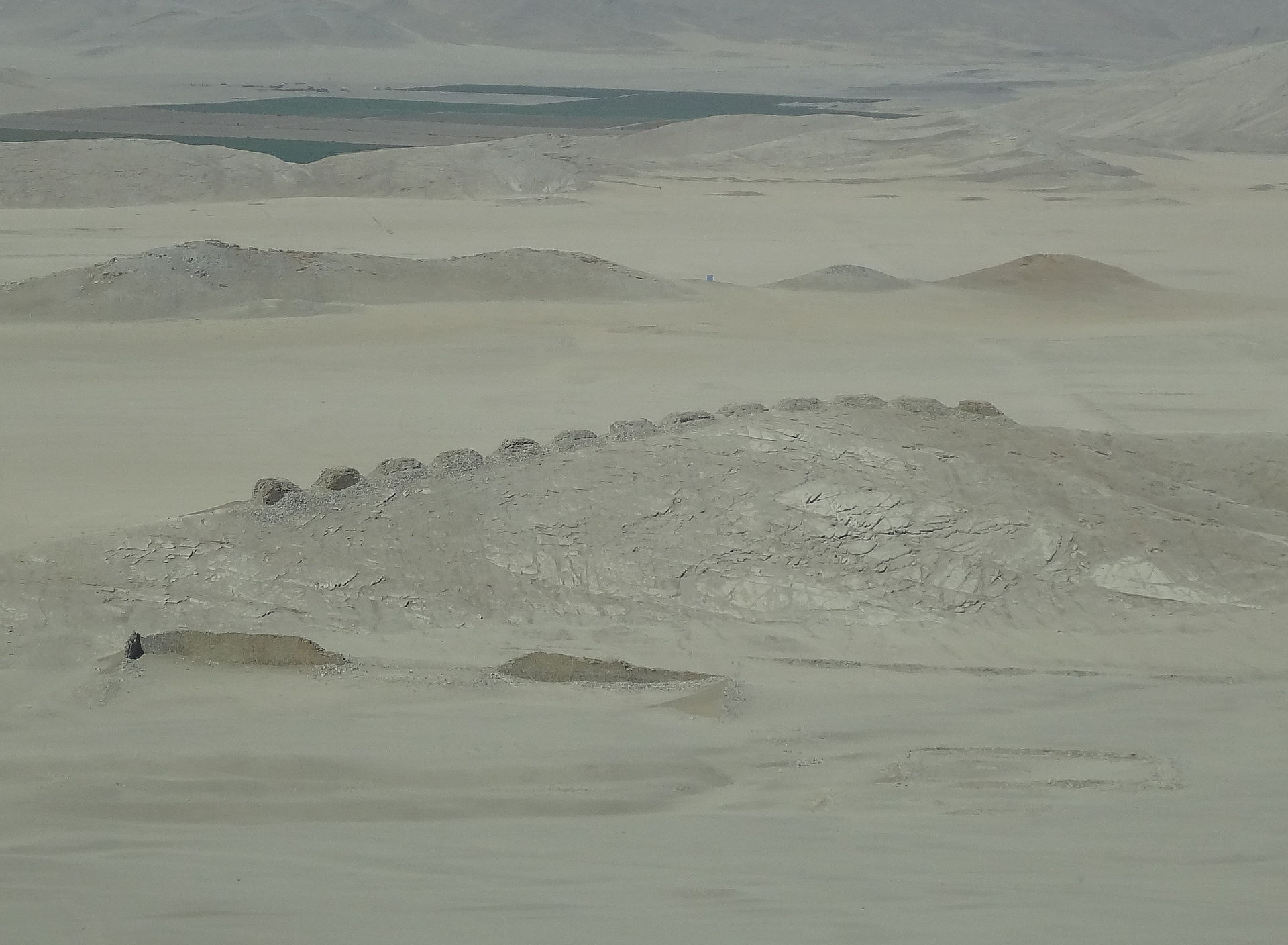
Long before the Incas rose to power in Peru and began to celebrate their sun god, a little known civilization was building the earliest known astronomical observatory in the Americas.
While not quite as old as sites like Stonehenge, these ancient ruins, known as Chankillo, are considered a "masterpiece of human creative genius", holding unique features not seen anywhere else in the world.
Based in the coastal desert of Peru, the archaeological site famously contains a row of 13 stone towers, which together trace the horizon of a hill, north to south, like a toothy bottom grin.

Apart from this remarkable structure, known as the Thirteen Towers, the ruins of the observatory also include a triple-walled hilltop complex called the Fortified Temple and two building complexes called the Observatory and the Administrative Center.
Completed over 2,300 years ago and abandoned in the first century of the common era, the site has remained a mystery to travelers for centuries.
Only when official excavations began at the turn of the 21st century, did archaeologists realize what they were looking at. READ MORE...
Saving an Old Laptop
It’s not pleasant seeing a once-beloved laptop (or desktop) computer slowly slide into obsolescence as it gets too old and tired to keep up with the demands of modern-day computing, but Google has now provided an option for these ailing machines in the form of Chrome OS Flex.
Chrome OS Flex is the standard Chrome OS that runs on Chromebooks, in a form that you can install on computers that aren’t Chromebooks. The idea is that the lightweight operating system won’t weigh your old device down to the same extent as Windows or macOS. It’s essentially just a web browser, and hey presto, your laptop or desktop has a new lease on life.
We should warn you that this project is in its very, very early stages: Google says it’s in “early access” mode and is “still unstable” at this point. As a result, you should expect some weird behavior and bugs—at the moment, this is really something to attempt on laptops that you’re otherwise going to get rid of.
That said, you can try it. Google has a list of computer models that it plans to eventually certify for Chrome OS Flex. It has also published some minimum requirements for the operating system: An Intel or AMD x86-64-bit compatible device, with at least 4GB of RAM and 16GB of storage space, with the ability to boot from a USB drive. READ MORE...