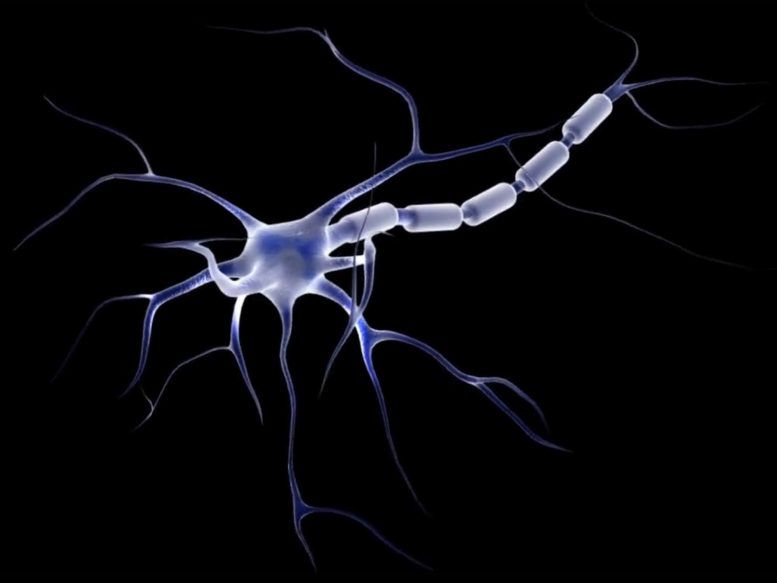
Saturday, November 20
Friday, November 19
Defying Newton's Third Law
But many systems exist and persist far from equilibrium. Perhaps the most glaring example is life itself. We’re kept out of equilibrium by our metabolism, which converts matter into energy. A human body that settles into equilibrium is a dead body.
In such systems, Newton’s third law becomes moot. Equal-and-opposite falls apart. “Imagine two particles,” said Vincenzo Vitelli, a condensed matter theorist at the University of Chicago, “where A interacts with B in a different way than how B interacts with A.” Such nonreciprocal relationships show up in systems like neuron networks and particles in fluids and even, on a larger scale, in social groups. Predators eat prey, for example, but prey doesn’t eat its predators.
For these unruly systems, statistical mechanics falls short in representing phase transitions. Out of equilibrium, nonreciprocity dominates. Flocking birds show how easily the law is broken: Because they can’t see behind them, individuals change their flight patterns in response to the birds ahead of them.
Gifted People
- Giftedness seems like a blessing but may be a burden.
- Gifted individuals have learning differences, including divergent thinking, quirky humor, and a penchant for complexity, that set them apart.
- Openness to experience is a key personality trait found in association with giftedness.
- Giftedness is not associated with less-social personality traits, dispelling the myth that gifted individuals have innate social problems.
We are fascinated by gifted people, from those with unusual and specific talents who are otherwise ordinary or even challenged, to those who appear almost as mythical beings, able to master many disciplines and get things done to an extraordinary extent.
The pros and cons of giftedness
Misunderstood gifted people face difficult struggles, often only coming into their own later in life, though, increasingly, work on “profoundly gifted” (PG) children is carving out room for them to do well earlier on in traditional educational settings. Gifted kids are often stigmatized, labeled as weird or antisocial, and are more likely to be bullied or excluded.
Because giftedness is poorly understood, educational, social, and professional settings may contribute to social problems by not providing a home for such people. Furthermore, unlike those with traditional learning differences, it is harder to see where giftedness can create challenges when there are so many positives.
According to the Davidson Institute, PG people exhibit the following tendencies: rapid comprehension, intuitive understanding of the basics, a tendency toward complexity, the need for precision, high expectations, divergent interests—and a quirky sense of h Rumor. They usually show “asynchronous development," being remarkably ahead in some areas while being average or behind in other ways. It’s hard to know where they fit in, and educational settings typically are not designed to accommodate their differences. Especially for younger children, youthful appearance clashes with advanced ability, making it harder for certain teachers to be responsive.
Is there a gifted personality type?
While many things contribute to giftedness, including various types of intelligence, genetic factors, and upbringing, one key area of interest is personality. Do gifted people look different in terms of personality compared to "non-gifted"1 individuals? In the journal High Ability Studies, researchers Ogurlu and Özbey (2021) conduct a meta-analysis of the literature on personality and giftedness to see where the Big 5 personality traits of Extraversion, Conscientiousness, Openness to Experience, Neuroticism and Agreeableness fit in. READ MORE...
How to Speak
@JUSTINJBARISO

Getty Images
Earlier this year, I came across a lecture by former MIT professor Patrick Winston called "How to Speak." The lecture was posted on YouTube a few months after Winston's death in 2019, and has since been viewed over 4.7 million times.
Winston, who taught at MIT for almost 50 years and was one of the school's most beloved professors, knew how to captivate an audience. His style wasn't flashy, but it was extremely compelling--even more noteworthy when you consider he worked in the technical field of artificial intelligence.
If you watch the full lecture, and I highly recommend you do, you'll learn some invaluable tips that will make you not only a better speaker but a better communicator. However, you'll also discover a priceless gem in the first five minutes of the talk, when Winston describes what he calls the "rule of engagement." It's a simple, non-negotiable policy, and it's only five words long.
Winston's classroom rule? No laptops. No cellphones.
Although simple, this is a rule that almost no one today follows, and that makes it extremely valuable. Winston's rule of engagement is also a perfect example of emotional intelligence in real life: the ability to make emotions work for you, instead of against you.
How the 'Rule of Engagement' makes you a better listener
Winston goes on to explain the reasoning behind his rule of engagement.
"Some people ask why [no laptops, no cellphones] is a rule of engagement," says Winston. "The answer is, we humans only have one language processor. And if your language processor is engaged ... you're distracted. And, worse yet, you distract all of the people around you. Studies have shown that."
He continues, "And worse yet, if I see an open laptop, somewhere back there, or up here, it drives me nuts!" TO READ THE ENTIRE ARTICLE, CLICK HERE...
Thursday, November 18
Going to College
Let me just say up front, that not only did I attend college and graduate with a BA degree in English, I continued my education attaining an MBA with a focus in Strategic Planning... however, that is not to say that college was, in fact, the right move for me as I look back on my life.
My entire family attended college, including my grandfather, so, whether I wanted it or not, my destiny (according to my parents) was for me to attend college as well.
And, as I look back on my education, my English degree was based upon comparing and contrasting different forms of literature as well as writing and analyzing different forms of creative writing.
Building upon what was learned in English classes in high school was not the focus, so I learned nothing new about grammar. But, like anything else, becoming a good writer is based upon PRACTICE... not necessarily college.
MY MBA put me in touch with how business people think from the standpoint of managing a company, but for the rest of my career, my MBA did very little other than open doors.
80% of my entire college tuitions was paid for by the GI Bill that I earned by remaining in the active military for 21 months and the military reserves for a total of 6 years... The other 20% was paid for by the fact that I worked while I was attending college, even though in undergraduate school it was parttime work while in graduate school it was full time employment.
I literally have NO COLLEGE DEBT which made a big difference for me... and, if I was considering college around 2000 or 2010 or 2020, acquiring college debt would be a big factor in my desire to attend college.
Coast-to-Coast 18 wheel truck drivers can make in excess of $100,000/year. The average salary of a college graduate is around $55,000/year. Now, while I would not want to drive a truck for the rest of my life, if you are using college to increase your earnings power, college will not always get you where you want to be.
Sam Walton who founded WalMart, dropped out of school in the 8th grade I've been told. And, while not everyone has the personality traits of Sam Walton, there is evidence to suggest that going to college will not always get the financial wealth that you seek.
But, going to college will get you financial debt...
Another justification for going to college is that most college graduate have "sit behind a desk" jobs as they are called even though they are not always just sitting behind a desk. Therefore, there is not the physical abuse leveled on a body like there would be if one were a house builder, a carpenter, a brick layer, an electrician, or a plumber.
However, there is no physical abuse if someone were to sell life insurance, be a salesperson in retail, be a computer technician, or an appliance repair person... or, even manage a fast food or some other type of restaurant.
And, while many people do not even consider the military because of having to go to war, there are many jobs in the military that will not require you to go to war.
Think seriously before you decide to go to college or if you are a parent and might be expecting your child or children to attend college.
Truisms
I've learned that I like my teacher because she cries when we sing "Silent Night." Age 5
*
I've learned that our dog doesn't want to eat my broccoli either. Age 7
*
I've learned that when I wave to people in the country, they stop what they are doing and wave back. Age 9
*
I've learned that just when I get my room the way I like it, Mom makes me clean it up again. Age 12
*
I've learned that if you want to cheer yourself up, you should try cheering someone else up. Age 14
*
I've learned that although it's hard to admit it, I'm secretly glad my parents are strict with me. Age 15
*
I've learned that silent company is often more healing than words of advice. Age 24
*
I've learned that brushing my child's hair is one of life's great pleasures. Age 26
*
I've learned that wherever I go, the world's worst drivers have followed me there. Age 29
*
I've learned that if someone says something unkind about me, I must live so that no one will believe it. Age 30
*
I've learned that there are people who love you dearly but just don't know how to show it. Age 42
*
I've learned that you can make someone's day by simply sending them a little note. Age 44
*
I've learned that the greater a person's sense of guilt, the greater his or her need to cast blame on others. Age 46
*
I've learned that children and grandparents are natural allies. Age 47
*
I've learned that no matter what happens, or how bad it seems today, life does go on and it will be better tomorrow. Age 48
*
I've learned that singing "Amazing Grace" can lift my spirits for hours. Age 49
*
I've learned that motel mattresses are better on the side away from the phone. Age 50
*
I've learned that you can tell a lot about a man by the way he handles these three things: a rainy day, lost luggage, and tangled Christmas tree lights. Age 51
*
I've learned that keeping a vegetable garden is worth a medicine cabinet full of pills. Age 52
*
I've learned that regardless of your relationship with your parents, you miss them terribly after they die. Age53
*
I've learned that making a living is not the same thing as making a life. Age 58
*
I've learned that life sometimes gives you a second chance. Age 62
*
I've learned that you shouldn't go through life with a catcher's mitt on both hands. You need to be able to throw something back. Age 64
*
I've learned that if you pursue happiness, it will elude you. But if you focus on your family, the needs of others, your work, meeting new people, and doing the very best you can, happiness will find you. Age 65
*
I've learned that whenever I decide something with kindness, I usually make the right decision. Age 66
*
I've learned that everyone can use a prayer. Age 72
*
I've learned that even when I have pains, I don't have to be one. Age 74
*
I've learned that every day you should reach out and touch someone. People love that human touch - holding hands, a warm hug, or just a friendly pat on the back. Age 76
*
I've learned that I still have a lot to learn. Age 86
Shipping Containers

Shipping containers sit stacked at a port in Bayonne, N.J., on Oct. 15. Supply chain problems are disrupting the global economy, causing delays and a shortage of containers.Spencer Platt/Getty Images
Ah, the unassuming shipping container. It's really nothing more than a big steel box with a couple of doors. At any given time, millions of containers are piled on ships plying the world's waterways. Battered by weather and waves, they are packed with just about anything you can imagine — exotic fruits and vegetables, cheap clothing and electronics, parts for cars and trucks.
"Globalization, as we know it today, would not have been possible without the container," says Marc Levinson, an economist, a historian and the author of two books on shipping containers.
These days during the coronavirus pandemic, with the holidays fast approaching, jampacked container ships have gotten stuck in traffic at ports, which is choking the economy. Delayed containers have become both a symptom of and a contributor to global supply chain problems. But if one looks back, cargo has generally moved more easily and cheaply now than it did before these big boxes came around, making them almost indispensable to the global economy. READ MORE...
Human Neurons and Mammels

Human neurons have fewer ion channels, which might have allowed the human brain to divert energy
to other neural processes.
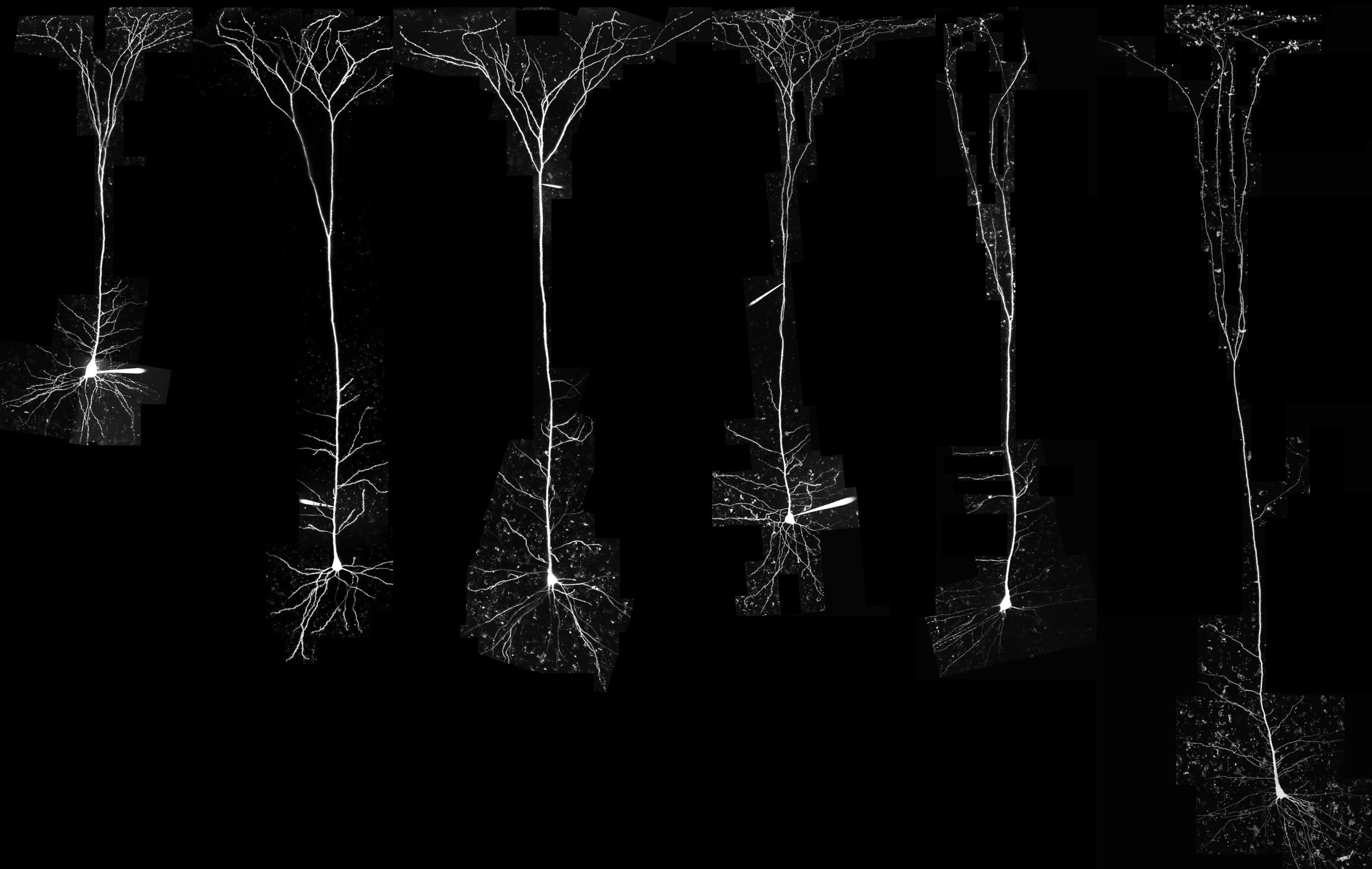
Neurons communicate with each other via electrical impulses, which are produced by ion channels that control the flow of ions such as potassium and sodium. In a surprising new finding, MIT neuroscientists have shown that human neurons have a much smaller number of these channels than expected, compared to the neurons of other mammals.
The researchers hypothesize that this reduction in channel density may have helped the human brain evolve to operate more efficiently, allowing it to divert resources to other energy-intensive processes that are required to perform complex cognitive tasks.
“If the brain can save energy by reducing the density of ion channels, it can spend that energy on other neuronal or circuit processes,” says Mark Harnett, an associate professor of brain and cognitive sciences, a member of MIT’s McGovern Institute for Brain Research, and the senior author of the study.
Harnett and his colleagues analyzed neurons from 10 different mammals, the most extensive electrophysiological study of its kind, and identified a “building plan” that holds true for every species they looked at — except for humans. They found that as the size of neurons increases, the density of channels found in the neurons also increases.
However, human neurons proved to be a striking exception to this rule.
“Previous comparative studies established that the human brain is built like other mammalian brains, so we were surprised to find strong evidence that human neurons are special,” says former MIT graduate student Lou Beaulieu-Laroche.
Beaulieu-Laroche is the lead author of the study, which was published on November 10, 2021, in Nature. READ MORE...
Wednesday, November 17
A True Story
Many years later, in 2013, the biological father was operating a bicycle shop in California when a writer/reporter came by and asked if he could talk to him. That was when the biological father, Ted Jorgensen, found out that his biological son is Jeff Bezos, the richest man in the world.
When Bezos exited the space capsule, the first person he hugged was his mother.
AMAZON founder Jeff Bezos sought the help of his parents to kick start his company back in 1995.
Since then, Amazon has become one of the top five wealthiest companies globally, with a net worth of over $314billion.
Jeff Bezos' parents were Jacklyn and Miguel 'Mike' Bezos.
Bezos, 57, was born in Albuquerque, New Mexico, to Jacklyn and Ted Jorgensen.
Jacklyn was 17-years-old when she gave birth to Bezos and was still a high school student at the time.
Bezos’ dad Ted owned a local bike shop in the city.
The pair divorced in 1965 and Jacklyn met Miguel “Mike” Bezos shortly after and fell in love.
She and Mike moved to Houston with Bezos and asked him to adopt her son when he was four years old.
Mike agreed and raised Bezos, even granting him his last name.
Mike came from a Cuban immigrant family and worked as an engineer for Exxon when he moved to the US.
How did Jeff Bezos’ parents help him with Amazon?
Bezos presented Mike and Jacklyn with the idea of Amazon back in 1995.
His parents lent him $245,573, which at the time was considered a large sum of money and a massive risk as the internet was fairly new.
Bezos turned $245,573 into $1trillion as of 2021 and is the world’s wealthiest person as of July 2021.
He is worth over $200billion.
Using the word UP
JUST TRY TO UNDERSTAND...
PHENOMENAL 2 LETTER WORD.
I'm sure you will enjoy this.
I never knew one word in the English language that could be a noun, verb, adj, adv, prep.
UP
Read until the end ... you'll laugh.
This two-letter word in English has more meanings than any other two-letter word, and that word is 'UP.' It is listed in the dictionary as an [adv], [prep], [adj], [n] or [v].
It's easy to understand UP, meaning toward the sky or at the top of the list, but when we awaken in the morning, why do we wake UP?
At a meeting, why does a topic come UP? Why do we speak UP, and why are the officers UP for election (if there is a tie, it is a toss UP) and why is it UP to the secretary to write UP a report? We call UP our friends, brighten UP a room, polish UP the silver, warm UP the leftovers and clean UP the kitchen. We lock UP the house and fix UP the old car.
At other times, this little word has real special meaning. People stir UP trouble, line UP for tickets, work UP an appetite, and think UP excuses.
To be dressed is one thing but to be dressed UP is special.
And this UP is confusing: A drain must be opened UP because it is blocked UP
We open UP a store in the morning but we close it UP at night. We seem to be pretty mixed UP about UP!
To be knowledgeable about the proper uses of UP, look UPthe word UP in the dictionary. In a desk-sized dictionary, it takes UP almost ¼ of the page and can add UP to about thirty definitions.
If you are UP to it, you might try building UP a list of the many ways UP is used. It will take UP a lot of your time, but if you don't give UP, you may wind UP with (UP to) a hundred or more.
When it threatens to rain, we say it is clouding UP. When the sun comes out, we say it is clearing UP. When it rains, it soaks UP the earth. When it does not rain for a while, things dry UP One could go on and on, but I'll wrap it UP, for now . . . my time is UP!
Oh . . . one more thing: What is the first thing you do in the morning and the last thing you do at night?
UP!
Did that one crack you UP?
Don't screw UP. Send this on to everyone you look UP in your address book . . . or not . . . it's UP to you.
Now I'll shut UP.
Our Twisted Universe

Hello, and welcome to November’s Lost in Space-Time, the monthly physics newsletter that unpicks the fabric of the universe and attempts to stitch it back together in a slightly different way. To receive this free, monthly newsletter in your inbox, sign up here.
There’s a kind of inevitability about the fact that, if you write a regular newsletter about fundamental physics, you’ll regularly find yourself banging on about Albert Einstein. As much as it comes with the job, I also make no apology for it: he is a towering figure in the history of not just fundamental physics, but science generally.
A point that historians of science sometimes make about his most monumental achievement, the general theory of relativity, is that, pretty much uniquely, it was a theory that didn’t have to be. When you look at the origins of something like Charles Darwin’s theory of evolution by natural selection, for example – not to diminish his magisterial accomplishment in any way – you’ll find that other people had been scratching around similar ideas surrounding the origin and change of species for some time as a response to the burgeoning fossil record, among other discoveries.
Even Einstein’s special relativity, the precursor to general relativity that first introduced the idea of warping space and time, responded to a clear need (first distinctly identified with the advent of James Clerk Maxwell’s laws of electromagnetism in the 1860s) to explain why the speed of light appeared to be an absolute constant. READ MORE...
Clocking Out
Before I started my company, I spent over a decade working for a nonprofit that I loved. It was a fantastic organization where amazing mentors and colleagues taught me much of what I know about the practical side of emotional intelligence.
Over the years I worked there, I put in my share of overtime. But as much I loved my job, I had a pretty strict routine of leaving work. On most days, I clocked out at 5 p.m.
But a funny thing happened once I started working for myself: The workdays got longer and longer, later and later. And while, yes, starting a company was hard, I'd soon learn that growing a company and maintaining it is pretty hard, too.
After realizing that I was working much more than I wanted to, I made a change. I like to call it, "the rule of clocking out." It's based on principles of emotional intelligence, the ability to identify, understand, and manage emotions.
I've found this rule helps me to set my priorities, keep everything in its place, and take control of my life. Here's how it works.How to set priorities, avoid burnout, and find more time in your day
When I first started my company, I was influenced by personalities like Mark Cuban, who says you have to outwork your competition, or they'll put you out of business. To be fair, I've learned a lot from Cuban over the years--but I didn't want to live life like him. My work is definitely a priority. But so is my family. And my mental health. And volunteering my time to help others.
Of course, one of the greatest things about being your own boss is you get to set your own hours. After realizing that I was working much more than I wanted to, I made a change. I would set a time every day to clock out. Then I'd treat that time like an important appointment, one that I can't miss.
The principles of clocking out apply especially well to business owners. But in reality, they provide value for anyone.For example, do you find that despite working later and later, there's always more work to get done?
Or that by focusing much of your energy on goals for your work or business, you forget about other priorities--like your mental or physical health?Or maybe you need to learn to clock out, not from work, but from something else that's draining your time and energy--like a clingy friend, or even a Netflix or YouTube addiction.
If any of the above applies to you, it can be difficult to change. This is likely because your emotions are ruling your habits, causing you to repeat the same routine.Here's where emotional intelligence comes in. TO FIND OUT WHAT THEY DO, CLICK HERE...
Moon Oxygen
In October, the Australian Space Agency and NASA signed a deal to send an Australian-made rover to the Moon under the Artemis program, with a goal to collect lunar rocks that could ultimately provide breathable oxygen on the Moon.
Although the Moon does have an atmosphere, it's very thin and composed mostly of hydrogen, neon, and argon. It's not the sort of gaseous mixture that could sustain oxygen-dependent mammals such as humans.
That said, there is actually plenty of oxygen on the Moon. It just isn't in a gaseous form. Instead it's trapped inside regolith – the layer of rock and fine dust that covers the Moon's surface.
If we could extract oxygen from regolith, would it be enough to support human life on the Moon?
Oxygen can be found in many of the minerals in the ground around us. And the Moon is mostly made of the same rocks you'll find on Earth (although with a slightly greater amount of material that came from meteors).
Minerals such as silica, aluminum, and iron and magnesium oxides dominate the Moon's landscape. All of these minerals contain oxygen, but not in a form our lungs can access. READ MORE...