Monday, October 25

Heart Cath


What happens during a heart catheterization procedure?


In cardiac catheterization (often called cardiac cath), your doctor puts a very small, flexible, hollow tube (called a catheter) into a blood vessel in the groin, arm, or neck. Then he or she threads it through the blood vessel into the aorta and into the heart. Once the catheter is in place, several tests may be done.

AUTHOR's COMMENTS:  
On Tursday of this week, I will be having this procedure at UT Medical Center - Heart and Lung Department...    This is the second time that a procedure like this has been performed on me...  the first time was at the same hospital and was performed in 2008 and the surgeon recommended a triple bypass, but instead I had 5 stents inserted into my heart arteries over a 12 month period of time with 3 surgeries.

It appears that my stents may no longer be working as they should since a recent stress test indicated an abnormal reading that pointed to my LAD...  So, this procedure is to take a closer look at the problem...

My surgery is scheduled at 7:00 am so I have to arrive at 5:30 am which means I have to leave the house at 4:30 am and that means I must get up and shower at 4:00 am...  this should not be a problem for me as I am always waking up during the night at various times to urinate.

Hopefully, I will be released and on my way home by noon or earlier of that same day...

Maskboy


Magnetic Ropes Surround Us


The proposed giant tunnel is hundred of light years wide, making it big enough to encompass Earth, our solar system, and even nearby stars. (Image credit: Eduard Muzhevskyi via Getty Images)

Our planet, along with the rest of the solar system and some nearby stars, may be trapped inside a giant magnetic tunnel — and astronomers don't know why.

A tube of vast magnetized tendrils, 1,000 light-years long and invisible to the naked eye, may encircle the solar system, astronomers propose in a new paper. 

Jennifer West, an astronomer at the Dunlap Institute for Astronomy and Astrophysics at the University of Toronto, made the proposal after an investigation into the North Polar Spur and the Fan Region — two of the brightest radio-emitting gas structures in our galactic neighborhood — revealed that the two structures might be linked even though they are located on different sides of the sky.

"If we were to look up in the sky, we would see this tunnel-like structure in just about every direction we looked — that is, if we had eyes that could see radio light," West said in a statement.

The curving tendrils — which are made of both charged particles and a magnetic field, and resemble long, thin ropes — project outward from the North Polar Spur and the Fan Region. 

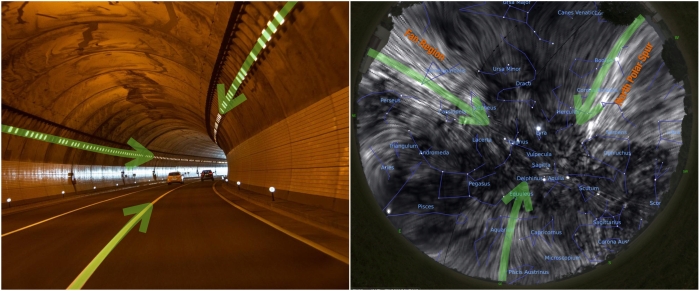
Not only could the strange cosmic ropes link the two regions, but they could form something akin to "a curving tunnel" where the tendrils are like "the lines formed by the tunnel lights and road lane marker," the researchers said.  TO READ MORE, CLICK HERE...

Survival


American Firms WARNED

Excerp from South China Morning Poas...   www.scmp.com

China

US intelligence warns American firms to protect 5 key technologies from China

  • Artificial intelligence, quantum computing, bioscience, semiconductors, and autonomous systems are five critical tech areas, says US intelligence
  • American firms and researchers need to pay more attention to protect research against threats from nation-states acquiring American know-how, officials add


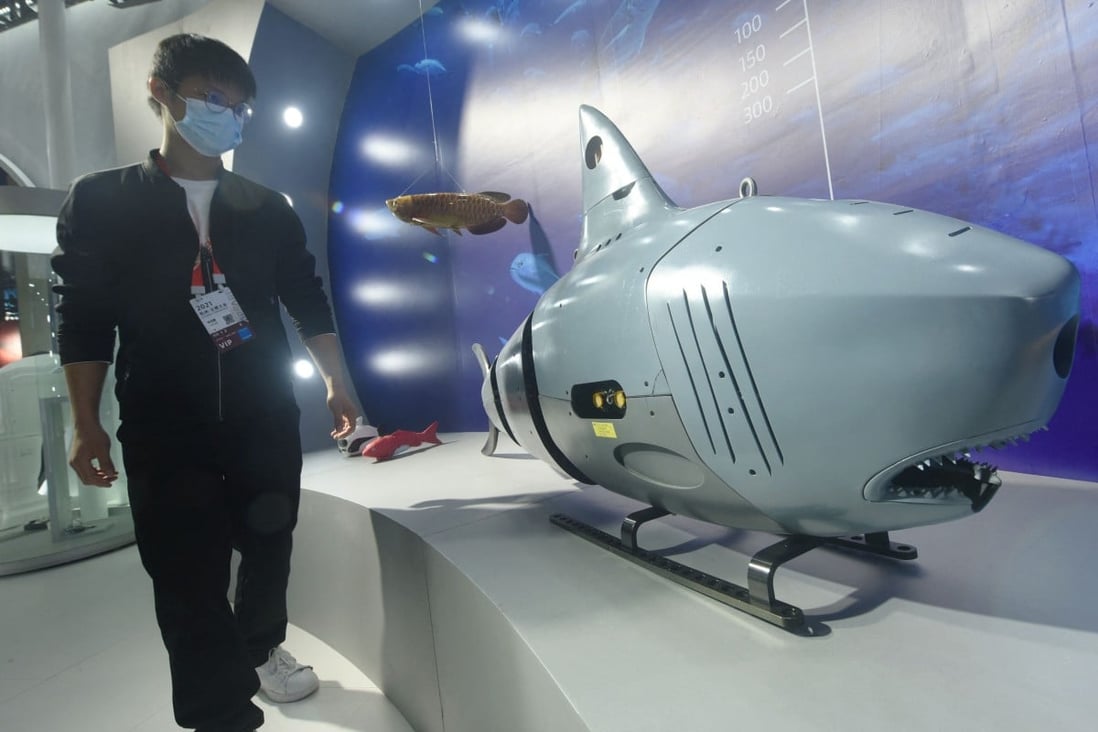
A robotic shark is seen at a cloud computing and artificial intelligence conference, in Hangzhou, in China’s eastern Zhejiang province on October 19. Photo: AFP
US intelligence officials issued a warning to American technology firms against working with China in five crucial areas.

Artificial intelligence, quantum computing, bioscience, semiconductors, and autonomous systems are sectors “where the stakes are potentially greatest for US economic and national security”, the National Counterintelligence and Security Centre (NCSC) said in a new paper.

Sunset Waves


Robot Artist Detained

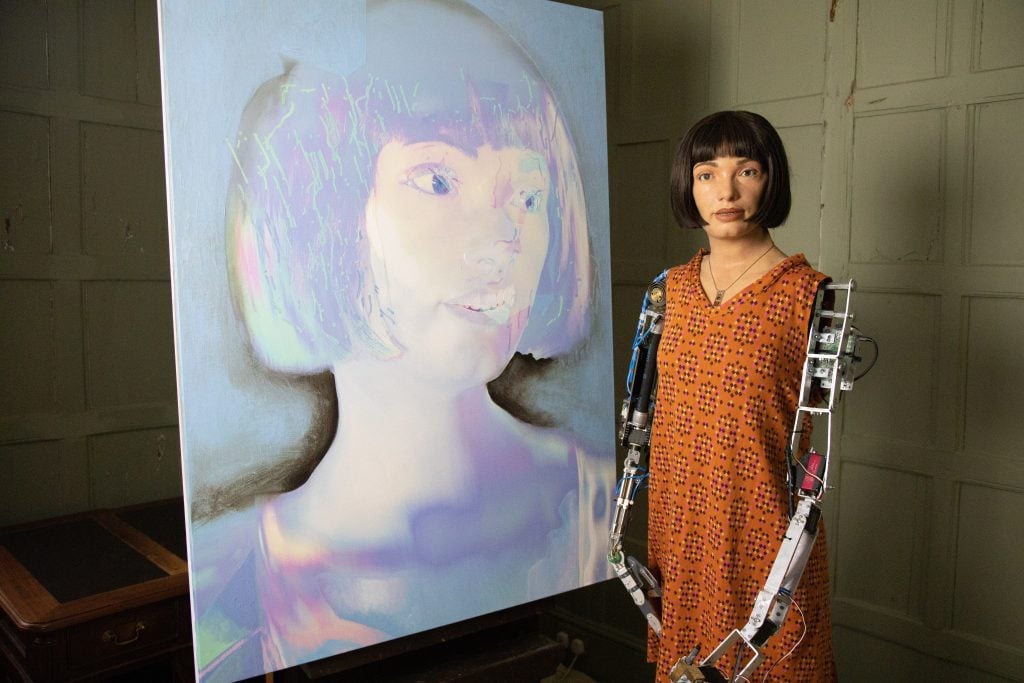
Border agents kept the robot artist Ai-Da in custody for 10 days and debated removing her eyes, which have built-in cameras.
Ai-Da the artist robot with her self-portraits. Photo courtesy the Design Museum.Ai-Da the artist robot with her self-portraits. Photo by Lucy Seal, courtesy the Design Museum and Aidan Meller.
The British artist Ai-Da was looking forward to the opening of her first show in Egypt, until security forces denied her entry into the country. The issue? Officials suspected she was part of an espionage plot—because, you see, Ai-Da is actually a robot.

Ai-Da was held by customs officials for 10 days before her release earlier today. Her work is set to appear in the first contemporary art show ever staged at the Great Pyramid of Giza, opening tomorrow. The extended detention led to something of a diplomatic crisis between Egypt and the U.K.

“The British ambassador has been working through the night to get Ai-Da released, but we’re right up to the wire now,” Aidan Meller, an Oxford art dealer who is both Ai-Da’s creator and representative, told the Guardian before she was cleared by customs. “It’s really stressful.”

Ai-Da’s creators have billed her as the world’s first ultra-realistic robot artist. But her high-tech capabilities raised the suspicions of border guards, who had concerns about her built-in modem as well as the cameras in her eyes, which Ai-Da uses to draw based on algorithmic responses to her observations. (She can also hold a conversation, thanks to a combination of human inputs and an AI language model.)


Ai-Da with Her Paintings. Photo by Victor Frankowski.

“Let’s be really clear about this. She is not a spy,” Meller said. “People fear robots, I understand that. But the whole situation is ironic, because the goal of Ai-Da was to highlight and warn of the abuse of technological development, and she’s being held because she is technology.” He added: “Ai-Da would appreciate that irony, I think.”  TO READ MORE ABOUT THIS ARTIST, CLICK HERE...

Idiot


Sunday, October 24

Dean Martin


Stone ChambeerTombs

Restorative work reveals the designs painted on the stone-cut tombs' ceilings. (Image credit: Blaundos Archaeological Excavation Project Archive)

Archaeologists in Turkey have discovered 400 rock-cut chamber tombs that date to 1,800 years ago and make up part of one of the largest rock-cut chamber tomb necropolises in the world.

The team found the tombs in the ancient city of Blaundos (also spelled Blaundus), located about 110 miles (180 kilometers) east of the Aegean Sea in what is now Turkey. The city was founded during the time of Alexander the Great and existed through the Roman and Byzantine periods.

The tombs are filled with sarcophagi, many of which contain multiple deceased individuals — a clue that families used these tombs for burials over many generations, said Birol Can, an archaeologist at UÅŸak University in Turkey and head of the Blaundos Excavation Project.

"We think that the Blaundos rock-cut tomb chambers, in which there are many sarcophagi, were used as family tombs, and that the tombs were reopened for each deceased family member, and a burial ceremony was held and closed again," Can told Live Science in an email.

The city of Blaundos sits on a hill surrounded by a valley, which is actually a branch of the vast UÅŸak canyons, one of the longest canyon systems in the world, Can said. The people of Blaundos built the necropolis into the slopes of the canyon. "Due to the rocky nature of the slopes surrounding the city, the most preferred burial technique was the chamber-shaped tombs carved into the solid rocks," he said.  READ MORE...

Classic Sunday Newspaper Cartoons


Photosynthesis


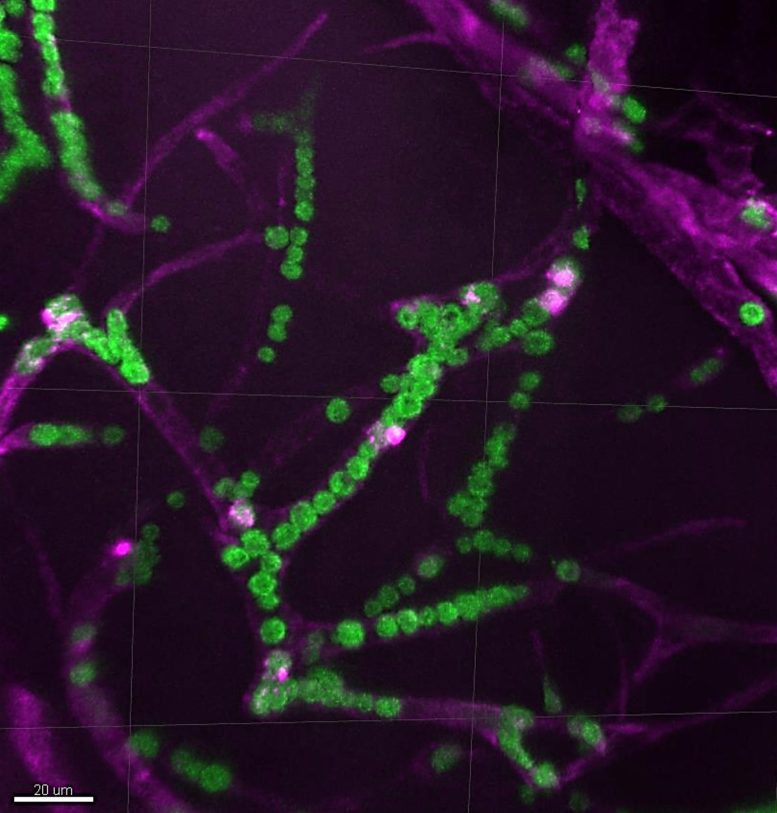
The injected green algae (green) sit inside the blood vessels (magenta) like a string of pearls. Credit: Özugur et al./iScience

Photosynthesizing algae injected into the blood vessels of tadpoles supply oxygen to their brains.

Leading a double life in water and on land, frogs have many breathing techniques – through the gills, lungs, and skin – over the course of their lifetime. Now German scientists have developed another method that allows tadpoles to “breathe” by introducing algae into their bloodstream to supply oxygen. The method developed, presented October 13 in the journal iScience, provided enough oxygen to effectively rescue neurons in the brains of oxygen-deprived tadpoles.

“The algae actually produced so much oxygen that they could bring the nerve cells back to life, if you will,” says senior author Hans Straka of Ludwig-Maximilians-University Munich. “For many people, it sounds like science fiction, but after all, it’s just the right combination of biological schemes and biological principles.”

Straka was studying oxygen consumption in tadpole brains of African clawed frogs (Xenopus laevis) when a lunch conversation with a botanist sparked an idea to combine plant physiology with neuroscience: harnessing the power of photosynthesis to supply nerve cells with oxygen. The idea didn’t seem far-fetched. In nature, algae live harmoniously in sponges, corals, and anemones, providing them with oxygen and even nutrients. Why not in vertebrates like frogs?  READ MORE...

Bye-bye...


Where Flight Attendants Rest


Airlines are constantly raising the bar when it comes to luxury and comfort for passengers, as airliners are flying farther than ever before.

An Airbus A350-1000 XWB aircraft. Andreas Zeitler/Shutterstock.com


But while passengers reap the benefit of glitzy lie-flat business-class seats and even couches in economy on some airlines, not all those onboard — namely flight attendants — get to enjoy the same opulence.

Touring Scandinavian Airlines' Airbus A350-900 XWB. Thomas Pallini/Insider


Hidden in the back of wide-body aircraft are the small compartments in which flight attendants spend their downtime. They're aptly named crew rest areas and are where flight attendants will go when they have a break from service or their other responsibilities.

The crew rest area on an Airbus A350-900 XWB aircraft. Thomas Pallini/Insider

The areas are off-limits to passengers, and even their entryways are discreetly embedded into an aircraft's architecture to help protect against unwanted visitors.  READ MORE...

The Three Little Bears


Saturday, October 23

Have a Little Faith


Planned???


Foods of a Nutritionalist


Francesco Carta Fotografo | Getty


As a dietitian, I always tell people to think of the brain as the mastermind behind almost everything — our thoughts, memory, focus, movements, breathing, heartbeat — and that certain foods can help make it stronger, sharper and smarter.

Our brain and diet also play a key role in longevity. According to the National Institute on Aging, what we eat can directly impact inflammation and oxidative stress in our bodies — both of which can affect our risk of neurodegenerative diseases, including Alzheimer’s and Parkinson’s.

I spoke with Dr. Uma Naidoo, a nutritional psychiatrist, faculty member at Harvard Medical School and author of “This Is Your Brain on Food,” about what she eats to sharpen her memory, focus and overall brain health:

1. Extra dark chocolate

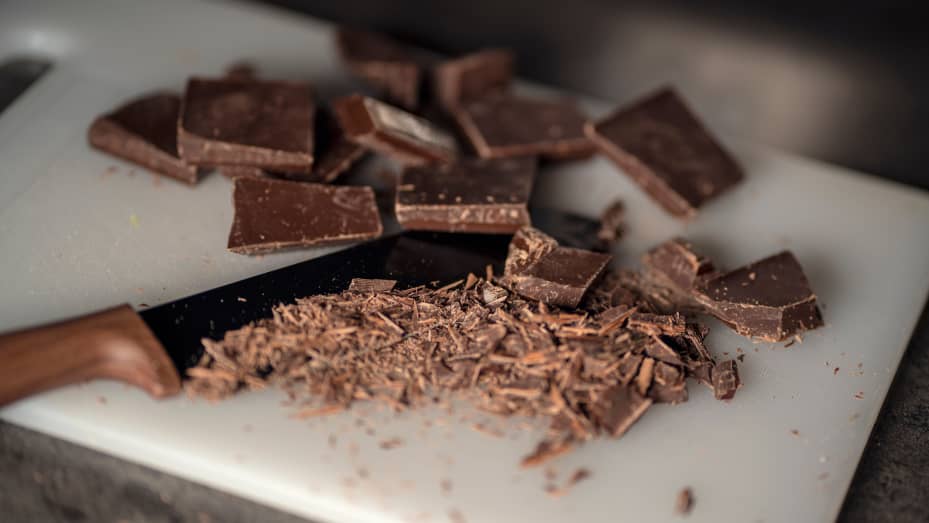
Chopped dark chocolate
Julia Malynovska | Twenty20


“Extra dark chocolate is full of antioxidants and cacao flavanols that help preserve the health of brain cells,” Naidoo tells CNBC Make It. “It also contains fiber to help reduce brain inflammation and prevent cognitive decline.”

A 2020 study looked at how dark chocolate and white chocolate can affect the memory of healthy young adults. Participants who were given dark chocolate had better verbal memory performances two hours after consuming the chocolate, compared to the group that received white chocolate.  TO FIND OUT ABOUT HER OTHER FOODS, CLICK HERE...

Sunset Waves


Quantum Artificial Intelligence

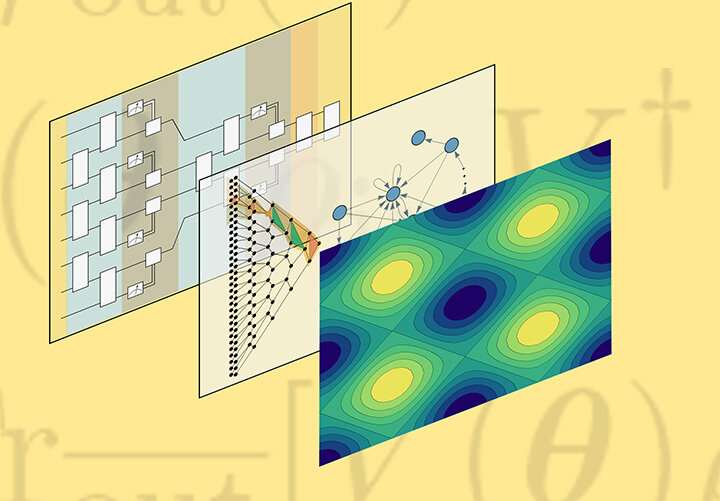
A novel proof that certain quantum convolutional networks can be guaranteed to be trained clears the way for quantum artificial intelligence to aid in materials discovery and many other applications. Credit: Los Alamos National Laboratory


Convolutional neural networks running on quantum computers have generated significant buzz for their potential to analyze quantum data better than classical computers can. While a fundamental solvability problem known as "barren plateaus" has limited the application of these neural networks for large data sets, new research overcomes that Achilles heel with a rigorous proof that guarantees scalability.


"The way you construct a quantum neural network can lead to a barren plateau—or not," said Marco Cerezo, co-author of the paper titled "Absence of Barren Plateaus in Quantum Convolutional Neural Networks," published today by a Los Alamos National Laboratory team in Physical Review X. Cerezo is a physicist specializing in quantum computing, quantum machine learning, and quantum information at Los Alamos. "We proved the absence of barren plateaus for a special type of quantum neural network. Our work provides trainability guarantees for this architecture, meaning that one can generically train its parameters."

As an artificial intelligence (AI) methodology, quantum convolutional neural networks are inspired by the visual cortex. As such, they involve a series of convolutional layers, or filters, interleaved with pooling layers that reduce the dimension of the data while keeping important features of a data set.

These neural networks can be used to solve a range of problems, from image recognition to materials discovery. Overcoming barren plateaus is key to extracting the full potential of quantum computers in AI applications and demonstrating their superiority over classical computers.  TO READ MORE, CLICK HERE...

Tiny Cat


Wanting out Attention


The energetic phenomena known as Fast Radio Bursts (FRBs) are one of the greatest cosmic mysteries today. These mysterious flashes of light are visible in the radio wave part of the spectrum and usually last only a few milliseconds before fading away forever. 

Since the first FRB was observed in 2007, astronomers have looked forward to the day when instruments of sufficient sensitivity would be able to detect them regularly.

That day has arrived with the completion of the 500-Meter FAST Radio Telescope (aka. Tianyan, “Eye of Heaven”). Since it commenced operations, this observatory has vastly expanded the number of detected FRBs. 

In fact, according to research led by the National Astronomical Observatories of the Chinese Academy of Sciences (NAO/CAS), the observatory detected a total of 1,652 independent bursts from a single source in 47 days.

The research, which recently appeared in the journal Science, was conducted by researchers from the Commensal Radio Astronomy FAST Survey (CRAFTS) project. 

CRAFTS includes researchers from the Cornell Center for Astrophysics and Planetary Science, the Max-Planck-Institut für Radioastronomie, the Commonwealth Scientific and Industrial Research Organisation (CSIRO), and multiple universities in China, Australia, and the U.S.  TO READ MORE, CLICK HERE...

Fish Out of Water


Friday, October 22

Swing Bones


Did Native Americans Originate from Japan?


The biological evidence "simply does not match up" 
with archeological finds.

Native Americans may not have originated in Japan as previous archaeological evidence has suggested, according to a new study of ancient teeth.
For years, archaeologists had predicted that the first people to live in North America descended directly from a group called the Jomon, who occupied ancient Japan about 15,000 years ago, the same time people arrived in North America around 15,000 years ago via the Bering Land Bridge, a strip of land that previously connected Russia to North America before sea levels rose above it. This theory is based on archaeological similarities in stone tools, especially projectile weapons, found in Native American and Jomon settlements.

However, the authors of the new study say this scenario is highly unlikely because the biological evidence "simply does not match up" with the archaeological findings, according to a statement from the researchers.
"The Jomon were not directly ancestral to Native Americans," lead author G. Richard Scott, an anthropologist at the University of Nevada, Reno, told Live Science. "They [the Jomon] are more aligned with Southeast Asian and Pacific groups than with East Asian and Native American groups."

Instead, the researchers suspect that Native Americans descended from a different group living somewhere in East Asia, although a lot of uncertainty remains about exactly where and when those ancestors lived.

An archaeological theory
Scott and his colleagues began their study because they were unconvinced by the main argument linking Native Americans with the Jomon — the stone tool similarities, they said.

"The artifact similarities between ancient Jomon and at least some of the earliest known Native American sites lie in the stemmed projectile points," co-author John Hoffecker, an archaeologist at the Institute of Arctic and Alpine Research at the University of Colorado Boulder, told Live Science. These similarities led previous researchers to suspect that the knowledge to make those tools had been passed down from one culture to the other, he added.  READ MORE...

Noses


We Know Where to Look on Mars

"We're definitely in the right place."

There's an air of relief in the science team running the American space agency's (Nasa) Perseverance rover on Mars.

The researchers are sure now they've sent the robot to a location that provides the best possible opportunity to find signs of ancient life.

"Percy" touched down in Jezero Crater in February and ever since has been snapping thousands of images of its surroundings.

The interpretation of these pictures forms the basis of the first scholarly paper to make it into print, in this week's edition of Science Magazine.

The analysis confirms the rover is sitting on the floor of a once great lake that was fed by a meandering river entering the deep bowl from the west. We're talking of events over 3.5 billion years ago when the Red Planet's climate was far more benign.


From Perseverance's observations, it's now certain that where the river system met the lake water, the flows suddenly slowed and the sediment in suspension fell out to form a delta - the kind of wedge-shaped "landform" you'll see all over the Earth.  READ MORE...


Turtle


Earth Surrounded by Giant Tunnel


Mysterious structures in the sky that have puzzled astronomers for decades might finally have an explanation – and it's quite something.

The North Polar Spur and the Fan Region, on opposite sides of the sky, may be connected by a vast system of magnetized filaments. These form a structure resembling a tunnel that circles the Solar System, and many nearby stars besides.


"If we were to look up in the sky," said astronomer Jennifer West of the University of Toronto in Canada, "we would see this tunnel-like structure in just about every direction we looked – that is, if we had eyes that could see radio light."

We've known about the two structures for quite some time – since the 1960s, in fact – but they have been difficult to understand. That's because it's really hard to work out exactly how far away they are; distances have ranged from hundreds to thousands of light-years away.

However, no analysis had ever linked the two structures together. West and her colleagues were able to show that the two regions, and prominent radio loops in the space between them, could be linked, solving many of the puzzling problems associated with both.

Comparison with a real tunnel showing orientation. (Left: Pixabay/wal_172619/J. West; Right: Dominion Radio Astrophysical Observatory/Villa Elisa telescope/ESA/Planck Collaboration/Stellarium/J. West)

"A few years ago, one of our co-authors, Tom Landecker, told me about a paper from 1965, from the early days of radio astronomy. Based on the crude data available at this time, the authors (Mathewson & Milne), speculated that these polarized radio signals could arise from our view of the Local Arm of the galaxy, from inside it," West explained.

"That paper inspired me to develop this idea and tie my model to the vastly better data that our telescopes give us today."  READ MORE...

Spinning Globe