Monday, September 15

At A Glance


The African island facing a yearlong internet shutdown.

Tooth-in-eye surgery helps man regain eyesight.

How scientists created the first cloned yak.

Drone show recreates Michelangelo's works above the Vatican.

See photographs of a herd of happy elephants.

"The Conjuring" house heads for auction on Halloween.

World's tallest sunflower is over three stories high.

Man travels over 26 miles in a mushroom kayak.

Clickbait: Inside the world of fantasy coffins.

Historybook: Mystery writer Agatha Christie born (1890); Muhammad Ali defeats Leon Spinks to win heavyweight title for the third time (1978); Prince Harry born (1984); Google.com registered as domain name (1997).

Quick Clips


Sovereign Oil Syndicate


What is OPEC

OPEC—the Organization of the Petroleum Exporting Countries—was founded in Iraq in 1960 to coordinate oil policy among major exporters. Initially a reaction to Western dominance of global oil markets, it evolved into a powerful bloc capable of reshaping global energy prices, geopolitics, and development.

OPEC works by setting production quotas for each member country. By coordinating supply cuts or increases, the group can tighten or loosen global oil supply, pushing prices up or down.

Today, OPEC has 12 member countries spanning the Middle East, Africa, and South America—Algeria, Congo, Equatorial Guinea, Gabon, Iran, Iraq, Kuwait, Libya, Nigeria, Saudi Arabia, the United Arab Emirates, and Venezuela—and works closely with nonmember oil-producing allies in the wider OPEC+ group.

... Read our full explainer on the group here.

Also, check out ...
> How OPEC first used oil as a geopolitical weapon in 1967. (More)
> Trace the rise of oil from early drilling to global power. (More)
> How does the broader OPEC+ group work? (More)


'Defence of Fort M'Henry'
What is the national anthem of the US?

“The Star-Spangled Banner” is the national anthem of the United States. The song is based on a poem written by Francis Scott Key 211 years ago, on Sept. 14, 1814, during the War of 1812, while watching American troops hold off British forces at the Battle of Baltimore. Written in the battle’s immediate aftermath, the original poem borrowed a melody from a popular British song of the time.

“The Star-Spangled Banner” grew popular with Americans. In 1931, President Herbert Hoover approved a bill that finally designated it the national anthem. Soon after, other sports leagues made its performance a regular feature before games.

It’s become an American tradition for artists to put their spin on the anthem when performing it (see Whitney Houston's iconic 1991 Super Bowl rendition).

The song is still popular some 200 years later, with Americans overwhelmingly saying they would not prefer a change.

... Read our full overview on the anthem here.

Also, check out ...
> How printers eventually changed the name of the national anthem. (More)
> The 1918 origins of performing the anthem at sporting events in the US. (More)
> Roughly 60% of Americans prefer to keep the existing national anthem. (More)


SOURCE:  1440 NEWS

Myrtle Beach


Twice a year, my wife and I take two week's long vacation in warm climates. The first one usually takes place in April/May which means we go to Florida or somewhere on the Gulf Coast, but not the western part of Florida.  In September of that same year our second vacation takes place at Myrtle Beach, SC and we stay at the same condo in South MB that we have stayed at for the last 12 years.


When we retired in 2015, we took vacations every other month for a week until COVID hit, but we always found time to spend at least a week or two at Myrtle Beach.


Myrtle Beach is about six and a half hours from where we live in East TN, if we drive just a few miles over the speed limits.  If we try to drive faster, we may get there in a tad under five hours, but we have burned more gasoline and increased our stress by looking out for highway patrol who have gotten more sneaky.


We may take open snacks with us along with ground coffee and filters but everything else we buy down there, knowing it will be more expensive.  Our condo comes with a fully equipped kitchen, but we only use it for breakfast and lunch.  We always go out to dinner, making sure that we eat at a nice restaurant at least half of the nights.


We always rent chairs and umbrellas and take beach towels that I place in the chair because my butts starts to hurt after a few hours.


Each morning, we are under the umbrella by 9:00 am and we leave when the lifeguards start taking down the umbrellas at 4:00 pm.  During the day, my wife reads while I either write poetry or listen to audio books on tape.  Sometimes, we walk along the shoreline and sometimes, we just sit and watch the waves.


Myrtle Beach, when I was growing up, was considered to be the POOR MAN's VACATION...  which typically meant back then that uneducated families went to Myrtle Beach, not the educated, sophisticated ones.  I would say that philosophy has changed substantially over the last 50-60 years.

Somewhat Political


A Glittering Stellar Nursery Shines In New JWST Image

Pismis 24-1 is in the Pismis 24 star cluster. The star is in the center of this image, where the filament of gas points upward. 
Image Credit: NASA, ESA, CSA, and STScI, A. Pagan (STScI)


The JWST has a well-earned reputation for delivering incredible images of the cosmos. From its very first image, the powerful space telescope has regularly wowed us with images of galaxies, nebulae, star clusters, and other cosmic objects. One of the telescope's main science themes concerns the birth of stars, and in a new image, the JWST zoomed in on Pismis 24-1, a brilliant young star in the Pismis 24 cluster.

The Pismis 24 cluster an active star forming region more than 5,000 light-years away in the Lobster Nebula. Pismis 24-1 is the brightest star in the cluster, and it and the entire cluster represent one of astronomers' best opportunities to study the birth of stars.


Don McLean - American Pie (Live in Austin)

Sunday, September 14

Shrooooms


The Amber May Show


Sarah Westall


Dancing


Dinesh D'Souza


The Alex Jones Show


Moonlight


Bongino Report


Diamond & Silk


Vaarooom

Russell Brand


TimcastIRL


Concentrate


Brookings Brief

Corps to careers: Expanding career opportunities for young adults involved in service and conservation programs

Our Future


Apple has a chance to make foldable phones cool


Jung Yeon-je/AFP via Getty Images


The flip-phone smartphone could soon shed its reputation as the toe shoe of cellular devices, especially now that Apple is getting involved. The iPhone-maker is widely reported to be releasing its first foldable phone next year, capitalizing on a niche trend right as it’s gaining momentum.

Similar to the Galaxy phones you always see advertised but rarely encounter IRL, Apple’s foldable iPhone (code-named V68) will open like a book, transforming from a phone to a small tablet, according to Bloomberg’s Mark Gurman. Since The Information broke the news about Apple’s origami foray last year, multiple analysts have predicted that it’ll launch in September 2026 for ~$2,000.

Androids greased the wheels. Apple’s foldable would come seven years after Samsung’s and Motorola’s respective first attempts, and three years after Google’s. Foldables—which now represent 1% to 2% of the smartphone market—have made major strides since the early, clunky days:Samsung’s new Z Fold 7 (pictured above) launched this year to the best types of reviews a foldable can ask for—it reportedly feels just like a regular smartphone, but with more screen.
A fast-growing Chinese smartphone manufacturer, Honor, just released the world’s thinnest book-style smartphone—it’s 0.1mm slimmer than the Z Fold 7.

Sign of the times: First-week sales for Honor’s Magic V5 in Western Europe and the UK roughly doubled that of its previous iteration, the company said, suggesting that the world may finally be warming up to foldables.

Where there’s opportunity, there’s Apple: The iPhone-maker isn’t afraid to be a follower. It pulled the rug out from Pebble, Garmin, Fitbit, and Samsung and ended up leading the global smartwatch market with a 20% share. But the wait-and-release tactic doesn’t always work—Apple reportedly slashed production of its Vision Pro headset after realizing barely anybody wanted a wildly more expensive version of the Meta Quest.—ML


Robert Reich


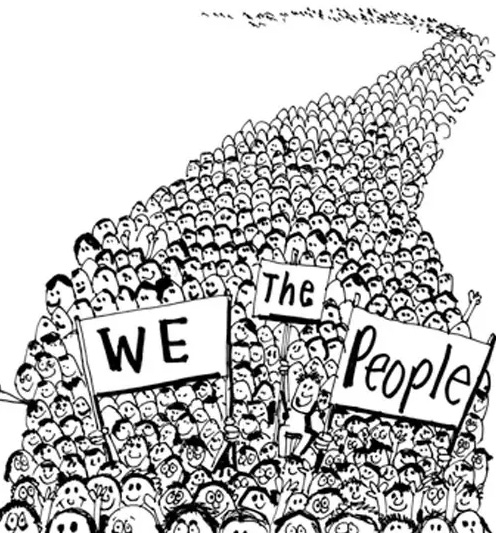
Sunday thought: What unites us


Friends,

After a horrifying week — horrifying not just because of a politically motivated assassination but also the brutish and angry response from people who should be pulling the nation together rather than adding fuel to its divisions — many of you are understandably worried about America’s future.

As I travel around the United States, I hear concerns that America is losing its identity.

But what is that identity? If you examine our history, you’ll see that the core of that identity has not been the whiteness of our skin, or the uniformity of our ethnicity, or agreement on religion, or like-mindedness about sexual preference or orientation.

The core of our national identity has been the ideals we share: our commitments to the rule of law, to democratic institutions of government, to truth, to tolerance of our differences, to equal political rights, and to equal opportunity.


At A Glance


Illinois harvested 15,000 acres of pumpkins in 2024—the highest among US states.

... and Washington and New York are the top apple-picking locales.

High-growth restaurant Shake Shack started as a hot dog cart in New York City.

Breaking down the connection between tariffs and consumer goods prices.

Ten magnificent photos of lions.

Why personality changes in later life are most often caused by brain changes.

What is the basis of Superman's hometown of Metropolis? Probably Delaware.

How to make sense of the rock layers in a roadcut.

The value of a $100K salary in America's biggest cities.

Why patterns in art are so pleasing.

If it's so toxic, why is lead still used around the world?

Iron gives typical glass its green tint—clear glass requires hyperpure silica.

The technological limitations of the US air traffic control system.

Ten notable cities formed in the medieval world.

Why the US is behind on bidet usage.

What happens in the small and hidden Dark Web.

How to Fix your Gut Health Naturally

Quick Clips


CoPilot's Truth


Microsoft Office 365 has an AI program called CoPilot.  I asked CoPilot how old the universe was according to the BIBLE...  Below is the answer...

Here’s how that estimate is typically derived:

  • Genesis 1 describes God creating the universe in six days, with the Earth, stars, animals, and humans all formed during that week.
  • The genealogies in Genesis 5 and 11, along with other chronological markers throughout the Old Testament, are used to trace time from Adam to later historical events.
  • Adding up these ages, many young-earth creationists conclude that the universe was created roughly 6,000 years ago, though some stretch it to 10,000 years depending on textual interpretations.
This view contrasts sharply with the scientific consensus, which estimates the universe to be 13.8 billion years old based on astronomical observations and physics.


I understand the Bible is taken on faith, but many religious scholars' belief the Bible is a FACTUAL DOCUMENT...

I also understand that the Bible was written for the people thousands of years ago in such a way that they could understand what was being told to them.  However, God is the Alpha and Omega and should know that science at some point in the future is going to prove the Bible as being inaccurate...  and yet, there is nothing in the Bible to account for that change in knowledge.

Logic dictates that there must be some sort of CREATOR of the universe and of those who live in the universe even if their lives are only temporary.  How this creator operates seems to be what is in question.

Since there must be a CREATOR why does this creator decide to hide creation in a cloud of uncertainty?

FAITH = uncertainty

but then one must have HOPE that their FAITH is CERTAIN...

Somewhat Political


3D-printed micro ion traps could solve quantum tech's miniaturization problem


The existing bottleneck in efficiently miniaturizing components for quantum computers could be eased with the help of 3D printing.


Quantum computers tackle massive computational challenges by harnessing the power of countless tiny parts working seamlessly together. Trapped ion technology, where charged particles like ions are trapped by manipulating the electromagnetic fields, is one such component.


Current microfabrication techniques fall short when it comes to producing the complex electrode structures with optimal ion confinement suitable for quantum operations.