Tuesday, November 9

Race for Nuclear Fusion Power

Nuclear fusion, the ‘holy grail’ of energy, has long eluded scientists. In a fusion reaction, hydrogen plasma fuses to become helium under enormous heat and pressure, and releases huge amounts of clean, renewable energy in the process. However, this virtually limitless source of energy faces technical challenges that have thus far been insurmountable.

Scientists have said for decades that generating power from nuclear fusion is only a few decades away – this time, could it be true? Take a look inside the fusion reactors around the world that are bringing us closer to achieving the dream.

Alcator C-mod reactor, MIT Plasma Science and Fusion Center, USA

Inside the doughnut-shaped vacuum chamber of the Alcator C-mod reactor at MIT Plasma Science and Fusion Center © Bob Mumgaard/Creative Commons

Experimental Advanced Superconducting Tokamak (EAST) reactor, China

The team at China’s EAST reactor inspect and adjust the device ahead of its record-breaking demonstration in June 2021 © Shutterstock


In a world-first, China’s EAST reactor managed to maintain plasma at 120,000,000°C for 101 seconds © Shutterstock

National Spherical Torus Experiment (NSTX-U), Princeton Plasma Physics Laboratory, USA

The NSTX-U reactor has been designed to create a spherical plasma, in contrast to the toroidal (doughnut-shaped) plasmas of other tokamaks © Elle Starkman/Princeton Plasma Physics Laboratory

International Thermonuclear Experimental Reactor, France

35 nations have invested in the ITER, which is being built in France © ITER Organisation


The doughnut-shaped chamber at the heart of ITER © ITER Organisation

TO READ ENTIRE ARTICLE, CLICK HERE...

Collapse


Controlling Artificial Intelligence

The idea of artificial intelligence overthrowing humankind has been talked about for many decades, and in January 2021, scientists delivered their verdict on whether we'd be able to control a high-level computer super-intelligence. The answer? Almost definitely not.

The catch is that controlling a super-intelligence far beyond human comprehension would require a simulation of that super-intelligence which we can analyze. But if we're unable to comprehend it, it's impossible to create such a simulation.

Rules such as 'cause no harm to humans' can't be set if we don't understand the kind of scenarios that an AI is going to come up with, suggest the authors of the 2021 paper. Once a computer system is working on a level above the scope of our programmers, we can no longer set limits.

"A super-intelligence poses a fundamentally different problem than those typically studied under the banner of 'robot ethics'," wrote the researchers.

"This is because a superintelligence is multi-faceted, and therefore potentially capable of mobilizing a diversity of resources in order to achieve objectives that are potentially incomprehensible to humans, let alone controllable."

Part of the team's reasoning comes from the halting problem put forward by Alan Turing in 1936. The problem centers on knowing whether or not a computer program will reach a conclusion and answer (so it halts), or simply loop forever trying to find one.  READ MORE...

Hop Inside


Gold in Backyard


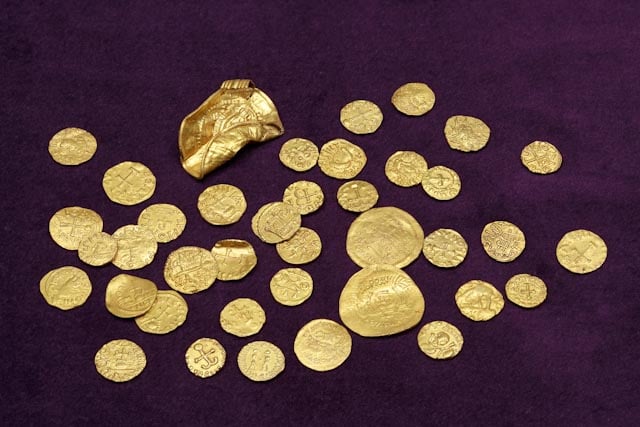
The hoard of gold. Courtesy Norfolk Castle Museum


One man, in one field, has amassed what is now being declared the largest-ever haul of Anglo-Saxon gold coins. The metal detectorist, who wishes to remain anonymous, discovered the 131 coins over the course of 30 years on his own land, finding a few at a time until he gradually built up what is now considered the largest trove ever found.

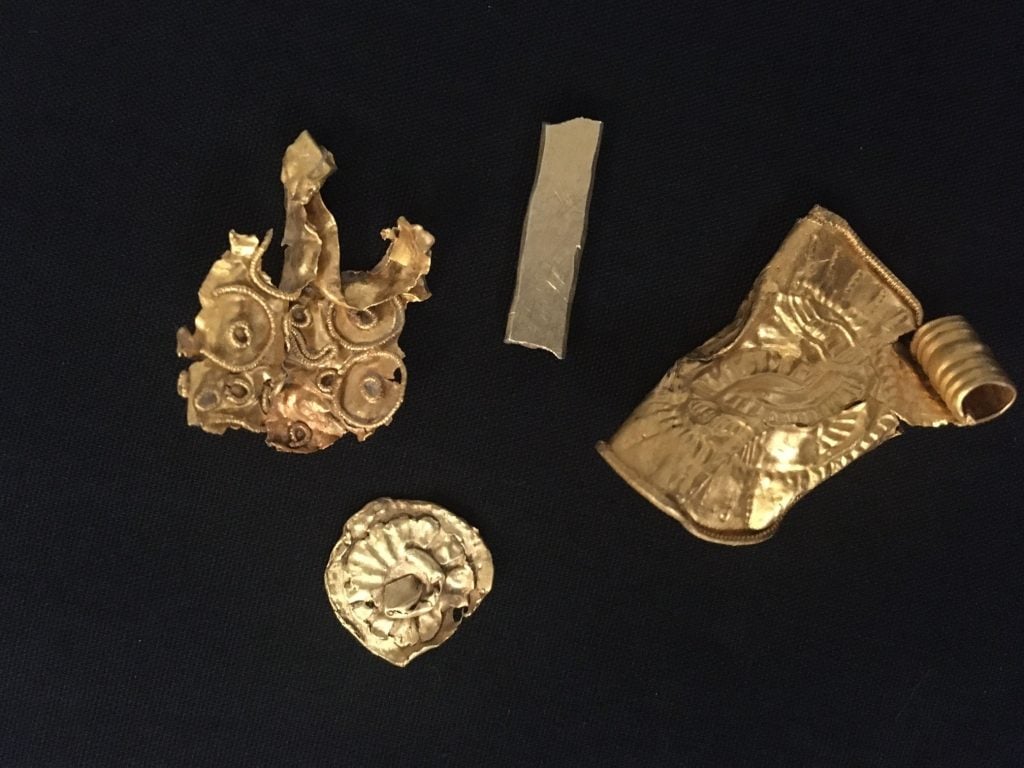
The East Norfolk-based man first found a coin around 1990, but most of the treasure was discovered between 2014 and 2020. Classed as bullion, the find is made up of mostly Frankish tremisses dating from 580 A.D. to 630 A.D. and contains nine Roman gold solidi, a larger coin worth three tremisses, a gold pendant, two pieces of gold, a small gold bar, and smaller parts of what are believed to be items of jewelry.


Items of gold discovered. Courtesy Norfolk Castle Museum

In a strange twist, an ex-policeman found 10 coins in the same field, tried to pass them off as several different finds to sell them, but was busted in 2017. He was fired from the police and sentenced to 16 months in prison.

“This internationally significant find reflects the wealth and Continental connections enjoyed by the early Kingdom of East Anglia,” said Tim Pestell, senior curator of archaeology at Norwich Castle Museum and Art Gallery. “Study of the hoard and its findspot has the potential to unlock our understanding of early trade and exchange systems and the importance of west Norfolk to East Anglia’s ruling kings in the seventh century.”  READ MORE...

Pig


Monday, November 8

TRUTH

Truth is the property of being in accord with fact or reality.  In everyday language, truth is typically ascribed to things that aim to represent reality or otherwise correspond to it, such as beliefs, propositions, and declarative sentences.

Truth is usually held to be the opposite of falsehood. The concept of truth is discussed and debated in various contexts, including philosophy, art, theology, and science. Most human activities depend upon the concept, where its nature as a concept is assumed rather than being a subject of discussion; these include most of the sciences, law, journalism, and everyday life. Some philosophers view the concept of truth as basic, and unable to be explained in any terms that are more easily understood than the concept of truth itself.  Most commonly, truth is viewed as the correspondence of language or thought to a mind-independent world. This is called the correspondence theory of truth.

Various theories and views of truth continue to be debated among scholars, philosophers, and theologians.  There are many different questions about the nature of truth which are still the subject of contemporary debates, such as: How do we define truth? Is it even possible to give an informative definition of truth? What things are truth-bearers and are therefore capable of being true or false? Are truth and falsehood bivalent, or are there other truth values? What are the criteria of truth that allow us to identify it and to distinguish it from falsehood? What role does truth play in constituting knowledge? And is truth always absolute, or can it be relative to one's perspective?  SOURCEWikipedia

Sleepy


English Law Effects US Gun Control


IMAGE SOURCE,GETTY IMAGES
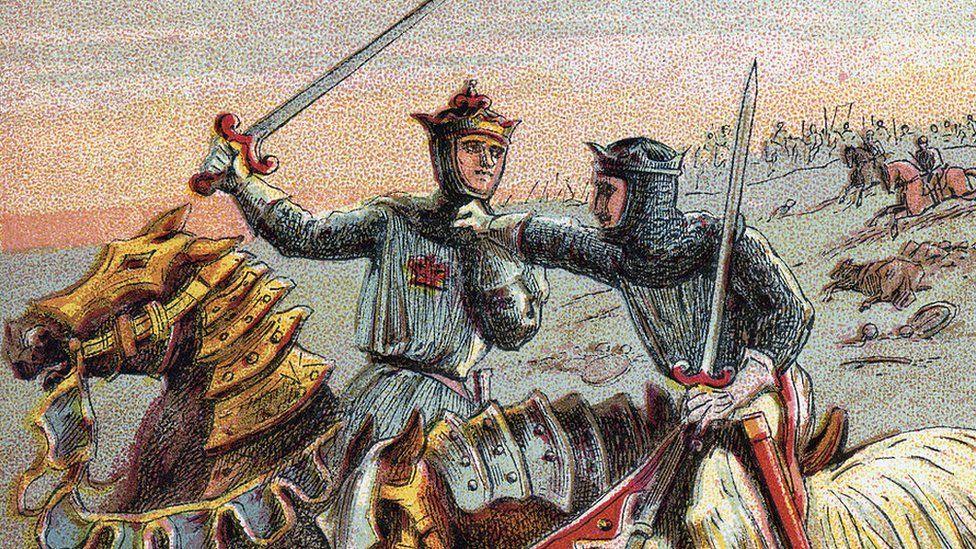
Image caption, Guns did not exist in Europe when the statute was passed


A medieval English law dating back nearly seven centuries is now at the heart of the most important US Supreme Court gun case in a decade.

The case - which stems from a New York legal battle - challenges a state law that requires that gun users who want a concealed carry permit first prove they have a valid reason.

To help them determine how broad the rights of America's many gun owners go, the country's nine supreme court judges are also looking back to the 1328 Statute of Northampton, which dates back to the reign of Edward III.

Here's what we know.

What's the case?
On Wednesday, the Supreme Court heard oral arguments in the case of the New York Rifle and Pistol Association v Bruen, which revolves around New York's laws governing concealed carry licenses.

The laws require that residents who want a license to carry a concealed pistol must prove they have "proper cause" for it and that they face "a special or unique" level of danger.

The plaintiffs in the case, Robert Nash and Brandon Koch, applied for a concealed carry permit but were denied, although they were given licenses that allow them to carry guns for recreational purposes such as hunting and target shooting.

With the support of the New York Rifle and Pistol Association - which is affiliated with the National Rifle Association (NRA) - in 2018 Mr Nash and Mr Koch filed a lawsuit challenging the constitutionality of New York's "proper cause" requirement and handgun regulations.

Their case was dismissed by a federal court in New York, a decision that was affirmed by an appeals court. This, in turn, led the Supreme Court to hear the case.  READ MORE...

Over the Water


Megafires New Norm


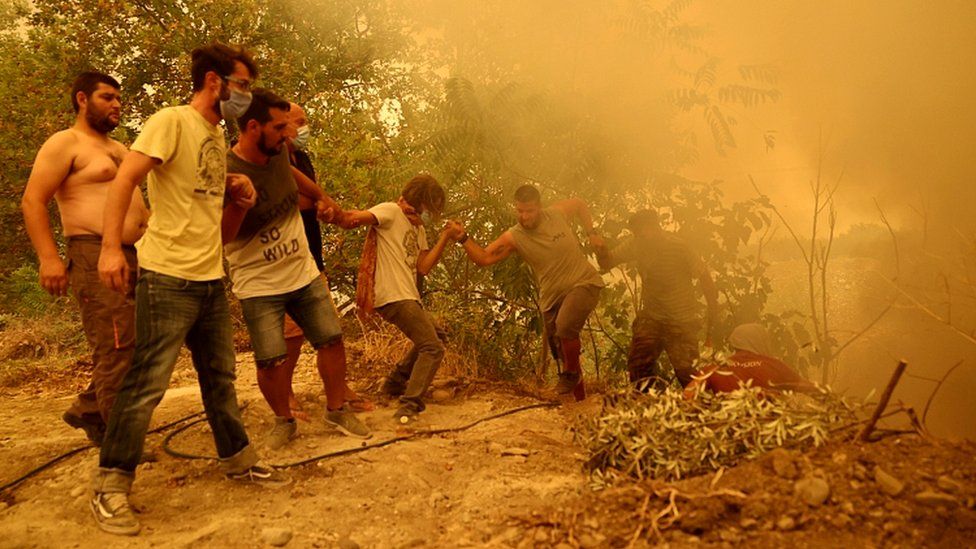
Image caption,The megafire on Evia led to thousands of residents fleeing their homes


World leaders at the COP26 summit in Glasgow are under pressure to respond to global warming, and intense heatwaves and frequent forest fires are becoming an increasing threat around the Mediterranean.

This summer alone Greece was hit by thousands of wildfires, fanned by its worst heatwave in decades. Turkey, Italy and Spain all witnessed dramatic fires in recent months and the fire on the Greek island of Evia was the biggest in Greece since records began.

What happened on Evia was a megafire, an intense conflagration, which took almost two weeks to bring under control.

With more heatwaves forecast for future summers, there are fears that megafires could become the new normal.

"We never expected this," says Nikos Dimitrakis, a farmer who was born and raised in northern Evia. "We thought a part might burn, as in previous fires. But now the entire area was burned."

Image caption, Greeks evacuated the island as the fires turned the sky orange

When the fire reached his land, he told me there was no-one there to help. Surrounded by flames, he grabbed tree branches in a desperate attempt to put out the blaze.  READ MORE...

Pawing


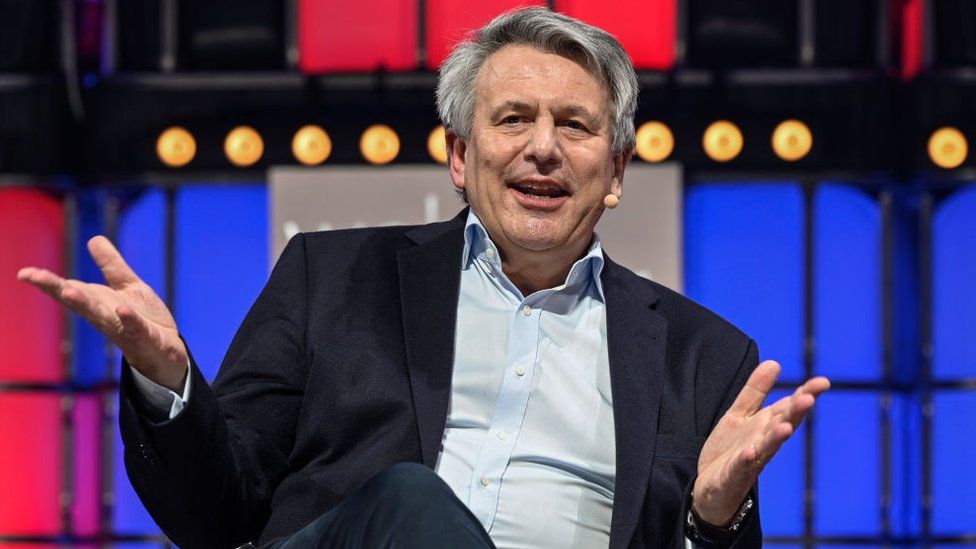
Shell Needs Oil to Pay for Green


IMAGE SOURCE,GETTY IMAGES


The boss of oil giant Shell has insisted it can transition to net zero by 2050, but it will need the cash from its oil and gas business to pay for it.

Ben van Beurden dismissed splitting its legacy oil and gas business from its renewables investment, a move urged by activist shareholder Third Point.

Talking exclusively to the BBC, he said the company's plans for greener energy could only be funded by oil and gas.

"At this point in time [the cash] comes from our legacy business," he said.

Mr van Beurden was speaking at Europe's biggest oil refinery at Pernis near Rotterdam, a facility he plans to transform from refining petrol and diesel, to making biofuels and hydrogen over the next decade.

"These things can only be done if you have a facility (like Pernis) to work with and if you have the cash.

"If we have to build a hydrogen plant from a wind farm that we build in the North Sea for a billion dollars that is not going to be funded by a hydrogen business - it will be funded by the oil and gas business," he said.  READ MORE...

Grasses


Sunday, November 7

Political Humor


Trying to Sit Down

Fastest Programmable Quantum Computer In CHINA


China's leapfrogging capabilities in terms of technology development are well documented. Now, scientists from China claim to have developed the world's fastest programmable quantum computers.

Created by researchers from the University of Science and Technology of China (USTC) and led by Pan Jianwei, the quantum computing system called "Zuchongzhi 2.1" is at least a million times more powerful than its nearest competitor.

Unsplash

World's fastest supercomputers
Named after a mathematician from 5th century, Zuchongzhi 2.1 performs quantum computing 10 million times faster than Google's Sycamore computing system.  READ MORE...

Classic Sunday Newspaper Cartoons


Space Missions Cause Brain Damage

Puppy