Saturday, December 27


Accuracy
.jpg)
In 1990 I moved from NC to TN because I left my job at a community college in NC to work for a community college in TN because the President wanted me to start a Center for Quality and Productivity Training in his service area. My main focus was TQM or Total Quality Management and specifically Team Oriented Problem Solving using SPC or Statistical Process Control.
The TQM movement was started in Ohio and revolved around the teachings of Dr. Edwards W. Deming, a statistician who taught this same program to the Japanese in 1950 because their economy had been totally destroyed during WWII and he was sent there by our government to help them rebuild it.
Executives from the Ford Motor Company saw an NBC White Paper entitled: IF JAPAN CAN WHY CAN'T WE. So, it was Ford that brought Deming's teachings back to the US and I was one of a select few who had been trained by Drs. Deming and Joiner in the late 1980s.
During my SPC training, I became aware of SIX SIGMA versus THREE SIGMA. See chart below for a comparison.
Comparing 99.7% Accuracy to Six Sigma
| Category | 99.7% Accuracy (3 Sigma) | Six Sigma (6 Sigma) |
| Babies | 12 given to wrong parents daily | 1 baby given to wrong parents every 230 years. |
| 20,000 lost pieces per hour | 35 lost pieces per year. | |
| Airlines | 2 unsafe landings daily (O'Hare) | 1 unsafe landing every 10 years. |
| Prescriptions | 20,000 wrong drugs per year | 1 wrong drug every 25 years. |
| Checks | 22,000 wrong deductions per hour | 1.3 wrong deductions per year. |
| Electricity | 7 hours of outages per month | 2 minutes of outages per year. |
| Surgery | 500 incorrect surgeries per week | 1 incorrect surgery every 20 years. |


Flying cars take off

The sky’s no longer a limit for automobiles.
Alef Aeronautics is turning sci-fi into reality by beginning production on the world’s first flying car, the Alef Model A Ultralight, which will likely be available to customers by early 2026.
“We are happy to report that production of the first flying car has started on schedule,” Jim Dukhovny, CEO of the California-based startup, said in a statement. “We’re finally able to get production off the ground.”
Manufactured at Alef’s Silicon Valley facility, the veritable electric Pegasus will take several months to complete.
Friday, December 26

Thursday, December 25

Wednesday, December 24

Tuesday, December 23

In The NEWS

Sports, Entertainment, & Culture
> Four teams advance to join the four top seeds in the College Football Playoff quarterfinals; see preview of the matchups, scheduled to begin Dec. 31 (More)
> Bowen Yang ends run at "Saturday Night Live," bidding farewell to the show midseason (More) | Third "Avatar" installment earns $88M at the domestic box office, $345M globally (More)
> Boxer and influencer Jake Paul loses to former world heavyweight champion Anthony Joshua in Netflix match Friday, confirms jaw broken in two places (More)
Science & Technology
> Self-driving company Waymo temporarily suspends service in San Francisco after widespread blackout knocks out traffic lights, leaving cars unable to function safely (More) | See our favorite insights on autonomous cars (1440 Topics)
> Commerce Department reportedly cancels five-year, $285M contract with the public-private SMART Institute; consortium focused on using digital replicas to speed up chip manufacturing (More)
> Evolutionary study suggests ant species with weaker individual exoskeletons free up nutritional resources to create more worker ants, tending to lead to more successful colonies (More)
Business & Markets
> US stock markets close up Friday (S&P 500 +0.9%, Dow +0.4%, Nasdaq +1.3%), driven by a rebound in AI stocks; Oracle rises 6.6% on news of impending TikTok sale (More)
> Analysis shows a record $61B flowed into data center construction deals in 2025, with roughly 75% made in the US and Canada (More)
> Delaware Supreme Court reinstates Tesla CEO Elon Musk's $56B bonus package from 2018, which was rescinded by a lower court last year; Musk becomes first person to surpass $700B in net wealth (More)
Politics & World Affairs
> Gunmen kill at least nine people, wound 10 others in mass shooting in Bekkersdal, South Africa (More)
> Files released by the Justice Department Friday include copy of the earliest known complaint against sex offender Jeffrey Epstein, submitted to the FBI in 1996; the government did not bring charges until more than a decade later (More)
> French authorities arrest three employees at the Élysée Palace on suspicion of stealing thousands of dollars' worth of silverware (More)
SOURCE: 1440 NEWS
My Writing (1972 to present)
.jpg)
What I started writing was poems... not sure why I began with poetry but I did. What I would do is go to McDonalds and get a large cup of coffee (free refills), sit in a corner with a little notebook and begin writing about my thoughts putting it into a poetic rhythm, not trying to rhyme. At th end of each month, I would put those pages in an envelope, label the month-year-amount.
I gradually stopped doing this in 2009 when I started my blog and completed stopped doing this in 2012 when I started posting a poem each day. Interestingly, when I thought about halting my morning writing routine, I had amassed over 42,000 poems.
In the 1970's I joined a local writer's club and began writing short stories along with my poems but my journey into short stories did not last long as I only wrote about 10/12 of them.
Around the 1980s, I joined LinkedIn and began posting essays and opinion articles. When I left LinkedIn in the late 1990s earlier 2000s, I had managed to publish right around 1500 of these essays. This achievement seemed rather important to me but I really did not do anything about it.
In 2015, my wife and I retired and I started writing novels. By the end of this month, or ten years later, I have written 22 novels, each of which is over 100,000 words. Totaling the word count, I have written over 2.200,000 words which is rather a remarkable achievement.
My Writing Totals:
42.000+ poems
1500 essays/opinion articles
22 Novels at 2,200,000+ words


Plasma Turbulence Is Doing Surprising Things Inside Fusion Reactors

The interiors of fusion reactors can get seriously chaotic. But for obvious reasons—like extreme temperatures and pressures—researchers aren’t typically able to peek directly inside a reactor. Some physicists have found workarounds, and when they do, the results appear to contradict conventional theory on what scientists think should be happening inside.
Monday, December 22
At A Glance

See the world's first beer vaccine.
How Earth's atmosphere sheds onto the moon.
Denmark's postal service to end service after 400 years.
The ultra-efficient power of the human brain. (w/video)
Thousands gather to see winter solstice sunrise at Stonehenge.
... and words for winter from around the world.
A roundup of good news stories from 2025.
Everything you need to know to play white elephant.
Clickbait: Is swearing good for us?
... and want to see something cool? Surprise me.
Historybook: Beethoven’s "Fifth Symphony" premieres (1808); Former first lady Lady Bird Johnson born (1912); Maurice and Robin Gibb of the Bee Gees born (1949); Colo becomes first gorilla born in captivity (1956); “Don’t ask, don’t tell” military policy repealed (2010).


Headlines

Anadolu/Getty Images
 Waymo paused robotaxi service in San Francisco due to power outage. A widespread blackout in the city that began on Saturday afternoon affected about 130,000 customers at its peak. Photos and videos proliferated across social media showing Waymo vehicles stuck in traffic. Once the stoplights went out, the cars could no longer navigate the streets safely, apparently putting them in a freeze mode. Waymo retrieved vehicles and suspended service until Sunday. A researcher at the MIT Center for Transportation told CNBC that Waymo’s failure during an “entirely predictable” power outage suggests that robotaxis are not yet ready to be a widespread solution for cities.
 The US pursued a third oil tanker off the coast of Venezuela. After seizing a second oil tanker this month on Saturday, a US Coast Guard official told multiple outlets on Sunday that the third one was “a sanctioned dark fleet vessel that is part of Venezuela’s illegal sanctions evasion” and that it was flying a false flag, though the statement was provided anonymously. Last week, President Trump ordered a “total and complete blockade” on oil tankers under sanctions entering or leaving Venezuela in an attempt to put pressure on Venezuelan President Nicolás Maduro, whom the Trump administration wants to force out of office. Experts say cutting off Venezuela’s oil trade could devastate its economy. Trump has accused Maduro of using oil to finance “Drug Terrorism,” which Maduro denied. The US has not imposed sanctions on Venezuelan oil.
 Thousands of people flocked to Stonehenge to celebrate the winter solstice. There went the sun. Yesterday, the shortest day of the year, saw thousands of visitors assemble at the prehistoric stone circle, which was built to align with the sun on solstices. The site in Wiltshire, England, announced it had completely sold out of parking for its annual event and encouraged would-be revelers to tune into livestreams. Many attendees gathered before dawn for what they consider a spiritual experience. Why get happy over the longest night of the year? Because in the Northern Hemisphere, it means every day from here until June 21 will get a little brighter.—HVL
Robert Reich
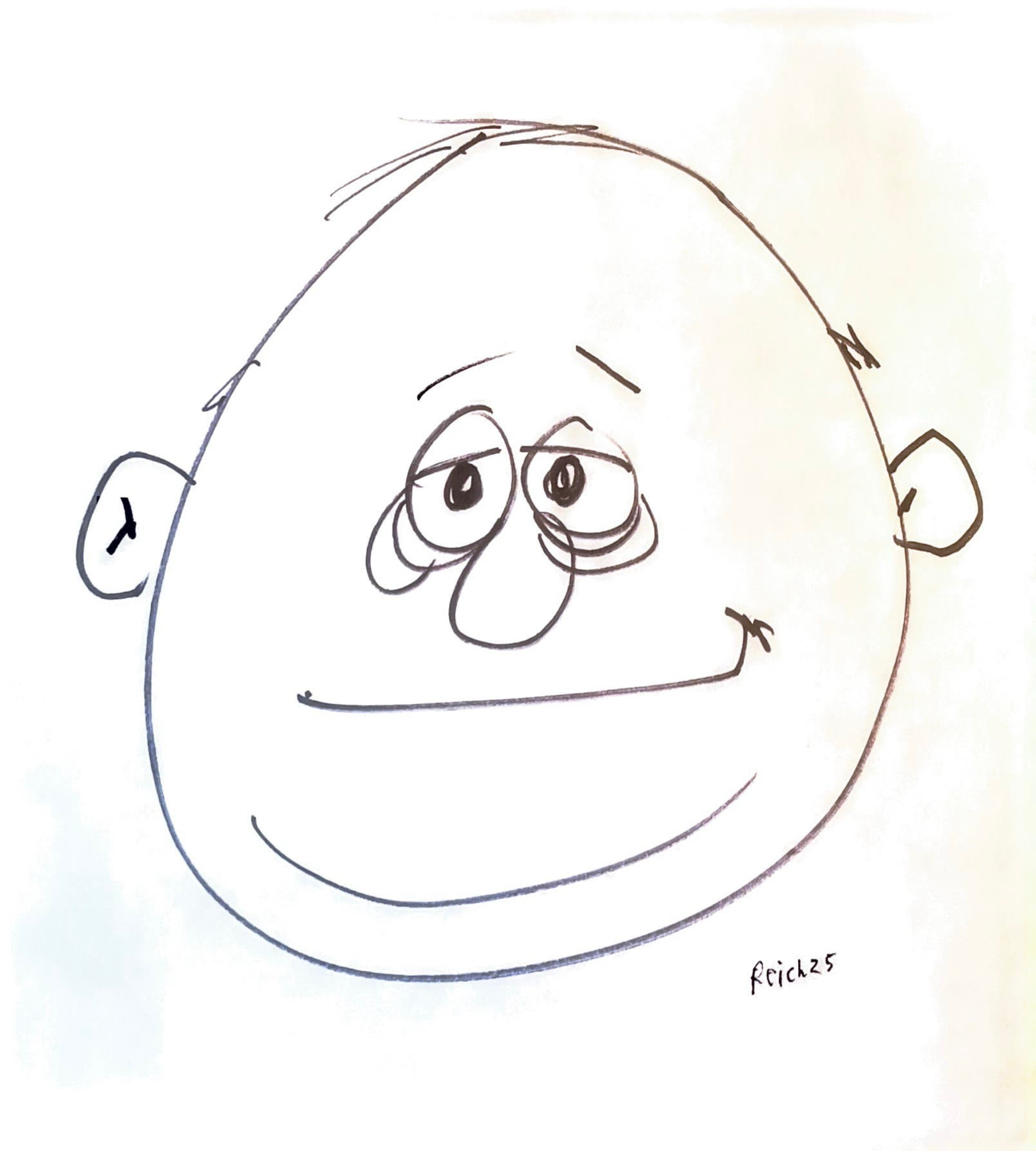
How older humans greet each other in the cosmos
Friends,
I was sitting in the waiting room of a doctor’s office last week when someone I hadn’t seen for many years came in. When he saw me, he said “Bob! How are you? You look great!”
I don’t look great. Since I last saw him, my hair has turned from gray to white, and there’s far less of it. My skin has gone blotchy. The bags under my eyes have gone from brown to blue. And my wattle has become the size of a bullfrog.
“You look great, too, George.”
I lied. George looked about a hundred years older than I remembered him.
Why do we feel compelled to say “You look great” to someone who looks like a fossil?
I’m nearing 80. George must be 82 or 83. No one looks great at our age (unless they’ve had lots of “work” done).
In The NEWS

'Joy to the World'
The meaning of Christmas
Christmas is a Christian holiday celebrating the belief in God's birth as a first-century Judean man, Jesus Christ, celebrated each year on Dec. 25. Faithful observers believe the all-powerful, uncreated God became "incarnate" to redeem humanity from a fallen state by dying and rising again at Easter (though sects disagree on specifics). In recent centuries, the religious feast expanded into a major holiday season of gift-giving, celebrated by an estimated 2.6 billion people worldwide.
Its timing and many of its customs trace back to ancient seasonal festivals, such as Saturnalia and Yule, when communities in Europe celebrated the winter solstice. As Christianity spread through the continent in the fourth century, church leaders placed Christmas on Dec. 25 and adopted some of these long-standing traditions.
Amid the holiday's gradual secularization, the legend of Saint Nicholas’s gift-giving and the Dutch tradition of “Sinterklaas” helped shape the modern conception of Santa Claus (what we've learned about the figure). Customs solidified in Victorian England transformed Christmas into the family centered celebration recognized today—popularizing Christmas trees, cards, and carols. The holiday season brings in nearly $1T in revenue for retailers in the US.
... Read what else we learned about the holiday here.
Also, check out ...
> See Christmas traditions from around the world. (Read)
> The title of "World's Largest Christmas Tree" is disputed. (Watch)
> Before electric lights, Christmas trees were lit with candles. (Watch)
> A Swedish town erects a giant straw Christmas goat each year—often burned down by pranksters. (View)
Home Sweet Home
Homeownership, 101
Historically, homeownership has been considered a cornerstone of the American Dream. Today, about 65% of American households own a home, and roughly 5% own more than one. Homeowners view these residences as not only a place to live, but also a path to building substantial wealth.
Centuries ago, homeownership became more common as political systems evolved to allow individuals, rather than governments, to own land. In the US, the number of homeowners increased as mortgages became more accessible: Roughly 74% of today’s US homeowners used a mortgage to finance their home.
Real estate makes up roughly half of the typical American homeowner’s household net worth. The financial benefits of homeownership include diversifying one’s financial portfolio while protecting it from inflation, building equity, and more. The numerous costs associated with homeownership are often cited in the ongoing debate over whether renting or owning makes more financial sense, including homeowners insurance, property taxes, and budgeting for maintenance and repairs.
... Read our full explainer on homeownership here.
Also, check out ...
> The vast majority of homeowners feel that they've made a good investment. (Read)
> See a guide to home buying. (Read)
> Is it better to rent or buy? (Calculate)
> The income needed to buy a home in each state. (Explore)
Homeownership, 101
Historically, homeownership has been considered a cornerstone of the American Dream. Today, about 65% of American households own a home, and roughly 5% own more than one. Homeowners view these residences as not only a place to live, but also a path to building substantial wealth.
Centuries ago, homeownership became more common as political systems evolved to allow individuals, rather than governments, to own land. In the US, the number of homeowners increased as mortgages became more accessible: Roughly 74% of today’s US homeowners used a mortgage to finance their home.
Real estate makes up roughly half of the typical American homeowner’s household net worth. The financial benefits of homeownership include diversifying one’s financial portfolio while protecting it from inflation, building equity, and more. The numerous costs associated with homeownership are often cited in the ongoing debate over whether renting or owning makes more financial sense, including homeowners insurance, property taxes, and budgeting for maintenance and repairs.
... Read our full explainer on homeownership here.
Also, check out ...
> The vast majority of homeowners feel that they've made a good investment. (Read)
> See a guide to home buying. (Read)
> Is it better to rent or buy? (Calculate)
> The income needed to buy a home in each state. (Explore)
SOURCE: 1440 NEWS
Speculation
.jpg)
Does life just happen regardless of what we think, do, or say; or, does it happen out of coincidence; or, does it happen because something or someone is orchestrating our lives?
Interesting question, yes? no?
Have you ever wondered why the HUMAN RACE is the only race that is in existence in a universe that is a billion light years long?
Even our solar system is extensive with its dimensions preventing anyone from crossing it in their lifetimes if we had the ability to move at the speed of light which we don't. Yet, even our science and scientists claim there is no proof of other life without evidence. And, since there is no evidence, then there is no other life.
This sounds childish...
It doesn't take a brain surgeon, or maybe it does, to speculate based upon technology and logic, that there are other living beings in the world, even though there is no evidence.
Look at our belief in God...
Many of the global religions/philosophies believe in a God or super being or something superior simple because our eyes see creation all around us. The fact that our universe is around, is an example of creation. However, there are some that don't believe in creation because they believe that SOMETHING came from NOTHING.
Well, if something did come from nothing... then please explain to me who created the nothing?
Just because we do not have any evidence does not mean that we cannot logically speculate based upon what we have heard, read, or learned. To not speculate and just live our lives, is a narrow view of life and what she has to offer.


Sunday, December 21

Subscribe to:
Posts (Atom)