Tuesday, December 16
In The NEWS
Sports, Entertainment, & Culture
> Two people are found dead at film director Rob Reiner's home in Brentwood, California; police had not identified the deceased as of this writing, though the age descriptions appeared to match those of Reiner and his wife, Michele (More)
> John Cena retires from wrestling after losing his final WWE match to Gunther; the 17-time WWE world champion is considered one of the greatest professional wrestlers of all time (More) | Explore what we've learned about pro wrestling (More)
> New York Knicks, San Antonio Spurs advance to NBA Cup finals, streaming tomorrow at 8:30 pm ET on Amazon Prime Video (More)
Science & Technology
> SpaceX Falcon 9 launch marks the 550th time the company has successfully recovered its reusable rocket booster; milestone comes days ahead of the 10-year anniversary of its first demonstration (More) | Explore our favorite resources on SpaceX (1440 Topics)
> US health regulators approve two new drugs to treat gonorrhea; the sexually transmitted disease infects about 80 million people globally per year, with drug-resistant strains becoming prevalent (More)
> Scientists create first human heart organoid that can replicate atrial fibrillation; organoids are 3D, lab-grown organ-like structures (More)
Business & Markets
> US stock markets close down Friday (S&P 500 -1.1%, Dow -0.5%, Nasdaq -1.7%), driven by anxiety in AI stocks; Broadcom falls 11% despite beating Q4 projections (More)
> United Kingdom GDP unexpectedly shrinks 0.1% in October; analysts say data increases likelihood Bank of England cuts interest rates this week (More)
> US software firm ServiceNow reportedly close to acquiring cybersecurity company Armis for $7B; would be ServiceNow's largest deal in company history (More)
Politics & World Affairs
> ISIS shooter kills at least three Americans—two US soldiers and one civilian interpreter—in Palmyra, Syria; President Donald Trump vows retaliation (More)
> Israel kills a senior Hamas commander in Gaza, the most high-profile killing since ceasefire took effect two months ago (More) | Thailand says Cambodia rocket killed a Thai civilian, first civilian death amid renewed border clashes (More)
> Chileans elect right-wing candidate José Antonio Kast as president in runoff election (More)
SOURCE: 1440 NEWS
Upside Down
Our world is UPSIDE-DOWN as we are experiencing things that we should never experience to the degree that we are experiencing them.
So, what am I talking about?
- The DOJ attacks on Trump
- The reckless inflow of illegal immigrants
- The insane resistance to everything President Trump tries to do
- The needless killing of people in the USA
- Mainstream media that distorts the truth to change the narrative
- The demand of Americans for illegal drugs
- The LIES that Democrats share with the public
- The FRAUD that the Democrats have perpetuated since Obama
- The insatiable wealth gap
- The lack of K-12 education
While our country is still the most powerful economically and militarily, CHINA is making extraordinary GAINS on us like the generation of twice the electricity that we are currently generating.
Why is that important?
Electricity is exactly what we need to support our DEMAND for Artificial Intelligence.
Whoever wins the battle for AI, will have complete control of the future as AI is in the process of being a part of LIFE that will control 110% of everything that is going on...
If China wins, where does that leave NUMBER TWO?
The art of understated genius
We often assume that intelligence reveals itself loudly—through big accomplishments, impressive vocabulary, or the kind of confidence that fills a room. But the truth is far more interesting.
Some of the most intelligent people you’ll ever meet don’t broadcast it at all. They blend in. They observe. They listen more than they speak. And because they don’t feel the need to prove themselves, their depth often goes unnoticed.
I’ve always been fascinated by this kind of quiet, understated genius—the kind that never needs a spotlight, yet shapes conversations, relationships, and ideas in subtle but powerful ways.
Here are 10 signs someone may be far more intelligent than they let on.
Monday, December 15
Headlines
David Gray/Getty Images
Robert Reich
The Joseph Welch Award for Standing Up to Tyrants Goes To …
Republican senators in the Hoosier State, whose civic tradition won out over fanatical political warfare
Friends,
Especially in these dark times, it’s important to salute courageous individuals who stand up to Trump’s tyranny.
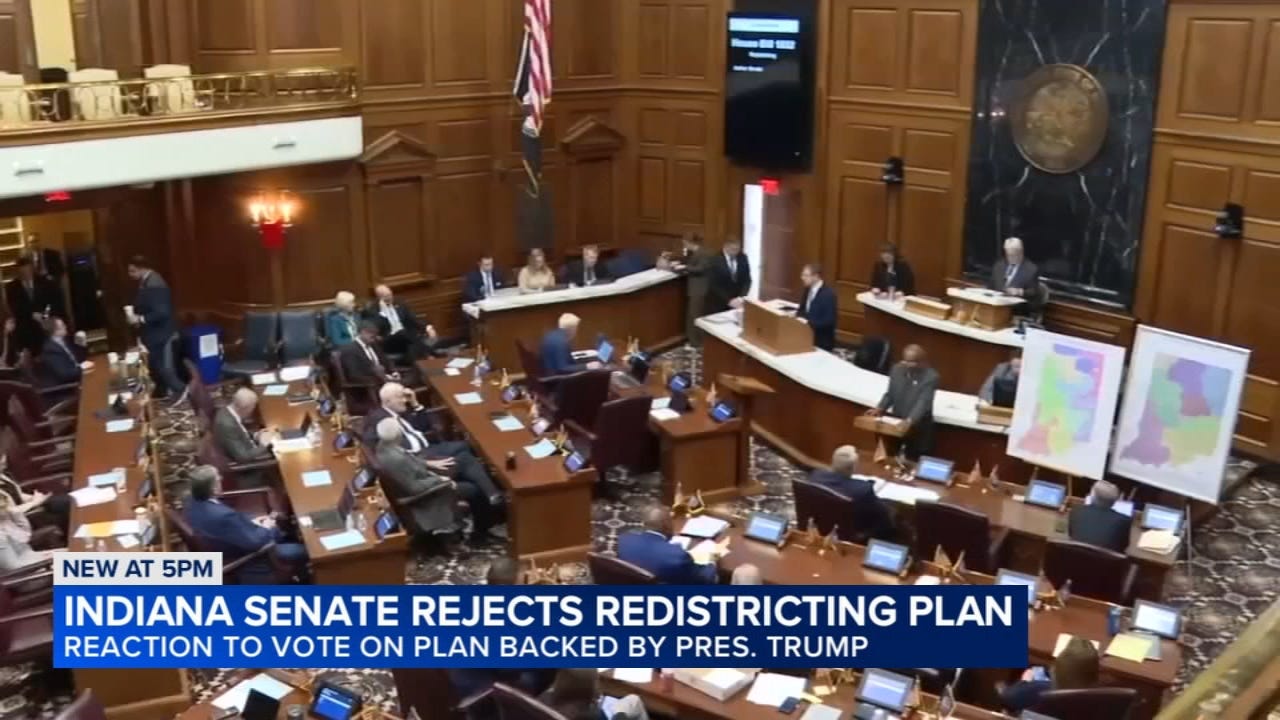
My latest Joseph Welch Award (named after the courageous attorney who stood up to Joseph McCarthy in the 1954 Army-McCarthy hearings) goes to the 21 Indiana Senate Republicans who stood up to Trump last Thursday.
Indiana’s GOP-controlled state Senate rejected 31 to 19 the map that would have gerrymandered two more safe red seats. The vote may have imperiled the Republican Party’s chances of holding control of Congress next November, but it strengthened American democracy.
The failed vote was the culmination of a no-holds-barred, four-month pressure campaign from Trump and his White House on recalcitrant Indiana Republicans. The pressure included private meetings and public shaming from Trump, along with Trump’s threats to primary them next time they’re up for election (“They … should DO THEIR JOB, AND DO IT NOW!” Trump posted. “If not, let’s get them out of office.”).
Republican senators in the Hoosier State, whose civic tradition won out over fanatical political warfare
Friends,
Especially in these dark times, it’s important to salute courageous individuals who stand up to Trump’s tyranny.
My latest Joseph Welch Award (named after the courageous attorney who stood up to Joseph McCarthy in the 1954 Army-McCarthy hearings) goes to the 21 Indiana Senate Republicans who stood up to Trump last Thursday.
Indiana’s GOP-controlled state Senate rejected 31 to 19 the map that would have gerrymandered two more safe red seats. The vote may have imperiled the Republican Party’s chances of holding control of Congress next November, but it strengthened American democracy.
The failed vote was the culmination of a no-holds-barred, four-month pressure campaign from Trump and his White House on recalcitrant Indiana Republicans. The pressure included private meetings and public shaming from Trump, along with Trump’s threats to primary them next time they’re up for election (“They … should DO THEIR JOB, AND DO IT NOW!” Trump posted. “If not, let’s get them out of office.”).
At A Glance
Explore the size of life—from DNA to humans and beyond.
Extinct animals you likely don't know about.
See Reuters' best aerial photographs of the year.
How Reese's Peanut Butter Cups are made.
Exploring the etiquette around Venmo requests.
Imagining out-of-the-box Christmas tree styles.
Third-century fresco of Jesus in a toga found in Turkey.
Tiny orange toadlet discovered in Brazil.
Clickbait: Watch albatrosses incubating other albatrosses.
... and want to see something cool? Surprise me.
Historybook: US Bill of Rights ratified, becomes law (1791); Eiffel Tower builder Gustave Eiffel born (1832); Hunkpapa Lakota leader Sitting Bull killed (1890); Walt Disney dies (1966); Actress Joan Fontaine dies (2013).
In The NEWS
First in (Controlled) Flight
What's the significance of the Wright brothers?
Brothers Wilbur and Orville Wright are credited with creating and flying the world’s first sustained, controlled, heavier-than-air aircraft. One-time bicycle mechanics with only some public high school education, the two made history in Kitty Hawk, North Carolina, on Dec. 17, 1903, when they successfully flew a 600-pound, 40-foot-wide plane over 120 feet in 12 seconds under its own power.
Building on the work of gliding pioneers, the pair invented the three-axis system—a standard in aircraft today—to control the plane’s flight at every stage, allowing pilots to direct movement from nose to tail (pitch), wing to wing (roll), and top to bottom (yaw) (watch breakdown). Their scientific, documented approach to aviation pioneered the use of wind tunnels, aluminum crankcases in engines, and more, laying the foundation for the industry.
Adoption and large-scale production of their airplanes took time, in part because many observers doubted their claims and the practicality of powered flight. In 1908, a series of public demonstration flights in the US and France finally convinced skeptics and brought the Wright brothers international fame, spurring a wave of competitors, imitators, and lawsuits.
... Read our full explainer on the duo here.
Also, check out ...
> Peruse the Wrights' personal collection of more than 300 photos. (Look)
> Inspiring takeaways from famed historian David McCullough's popular 2015 "Wright Brothers" book. (Listen)
> There's debate about who really was "first in flight." (Read)
> A piece of the Wright Flyer flew on the first powered flight on Mars. (Read)
Digitized Collectibles
NFTs, explained
Nonfungible tokens, or NFTs, are unique digital assets stored on a blockchain that represent ownership of images, GIFs, songs, videos, virtual plots of land, and more.
Unlike “fungible” assets that can be exchanged for an identical asset, including the US dollar and bitcoin, NFTs are not interchangeable, making them more similar to fine art than currency. Each NFT is unique and verifiable on the blockchain.
NFTs helped bring a huge wave of attention and investment to the crypto space, despite hype for the digital assets fading over time.
As NFT scams have become increasingly common, the space’s credibility has been questioned. Proponents don’t think these incidents overshadow the space’s potential, given that NFTs can benefit artists and other creators by generating new income sources through the assets’ initial sale and, potentially, ongoing royalties when they’re resold.
... Read our full write-up on NFTs here.
Also, check out ...
> The most expensive NFT ever sold for $92M. (Read)
> NFT trading peaked in 2021 and has since significantly declined. (Read)
> A celebrity's NFT was "kidnapped" in 2022. (Listen)
> Examine the pros and cons of NFTs. (Read)
SOURCE: 1440 NEWS
Twp Hundred and Fifty Years
The USA is 250 years old in 2026 (1776), specifically July 4th because that is when the Declaration of Independance was adopted.
THIRTEEN BRITISH COLONIES declared that they were free of British controlled and were officially a sovereign nation.
That declaration was an ACT OF TREASON and was punishable by death; however, death was averted because the USA won the war against Great Britain.
TREASON IS IN OUR BLOOD.
Defending our rights and beliefs is in our blood.
Defending our freedom is in our blood.
Convicts from British prisons were sent to the USA specifically in the southern states like Virginia and Maryland. They were sent there as indentured slaves until the practice was ended in 1776.
Aristocrats settled in the northern states which is one of the biggest reasons why the NORTH looks down upon the SOUTH.
In 2026, we will celebrate our birthday, two hundred and fifty years old and considered one of the greatest, if not the greatest nation in the world today. It is interesting how powerful we became in 250 years when all other countries are much older than we are.
Was it OUR FREEDOMS that caused this to happen?
Scientists Confirm the Incredible Existence of Time Reflections
The explanation of spatial reflections—whether by light or by sound—are pretty intuitive. Electromagnetic radiation in the form of light or sound waves hit a mirror or wall, respectively, and change course. This allows our eyes to see a reflection or echo of the original input. However, for more than 50 years, scientists have theorized that there’s another kind of reflection in quantum mechanics known as time reflection.
This term might conjure up images of a nuclear-powered DeLorean or a particular police box (that’s bigger on the inside), but that’s not quite what scientists mean by the term. Instead, time reflections occur when the entire medium in which an electromagnetic wave travels suddenly changes course. This causes a portion of that wave to reverse and its frequency transforms into another one.
Sunday, December 14
DECOR
Christmas can be about seeing a forest for the trees

Allison Joyce / AFP via Getty Images
People celebrating Christmas must make a choice when it comes to a tree (assuming they can fit one in their place)—fake or real? Whether it’s a Balsam Hill or a Douglas fir, they’re all part of a multibillion-dollar industry that wants you stepping on needles in your home during December.
Americans will spend about $6 billion on around 50 million trees (real and fake) this year, per the global fintech comparison site Finder. Both leaving a department store with an artificial tree and cutting down a real one from a farm have their fans and their use cases.
They’re real and they’re spectacular
On average, ~25 million to 30 million real trees are sold annually, according to the National Christmas Tree Association. It’s easy to think that chopping down millions of trees so you can put gifts under them is bad for the environment, but the NCTA says it’s actually good for the environment:Of the 350 million to 500 million trees growing on farms in the US, less than 10% are destined to be decorated.
For every tree cut down each year, farmers plant 1–3 seedlings in its place, which benefits wildlife and the soil. Most trees become ready for sale when they are seven to 10 years old, while younger trees are left to grow.
Second life: When you take your real tree down in January (or February, or March…no judgment), it can be recycled, unlike most plastic trees. Real trees can be turned into chips that can be returned to the forests, used for mulch, or sunk into ponds to create habitats for aquatic life.
Allison Joyce / AFP via Getty Images
People celebrating Christmas must make a choice when it comes to a tree (assuming they can fit one in their place)—fake or real? Whether it’s a Balsam Hill or a Douglas fir, they’re all part of a multibillion-dollar industry that wants you stepping on needles in your home during December.
Americans will spend about $6 billion on around 50 million trees (real and fake) this year, per the global fintech comparison site Finder. Both leaving a department store with an artificial tree and cutting down a real one from a farm have their fans and their use cases.
They’re real and they’re spectacular
On average, ~25 million to 30 million real trees are sold annually, according to the National Christmas Tree Association. It’s easy to think that chopping down millions of trees so you can put gifts under them is bad for the environment, but the NCTA says it’s actually good for the environment:Of the 350 million to 500 million trees growing on farms in the US, less than 10% are destined to be decorated.
For every tree cut down each year, farmers plant 1–3 seedlings in its place, which benefits wildlife and the soil. Most trees become ready for sale when they are seven to 10 years old, while younger trees are left to grow.
Second life: When you take your real tree down in January (or February, or March…no judgment), it can be recycled, unlike most plastic trees. Real trees can be turned into chips that can be returned to the forests, used for mulch, or sunk into ponds to create habitats for aquatic life.
There are also pros to plastic
For one, plastic trees don’t need the potential pesticides that most real trees are given. And if real trees are sent to landfills as opposed to being composted, none of the aforementioned environmental benefits come into play.
Artificial trees can be reused for years. They’re also safe for people who have allergies to the pollen or sap in real trees. And for homes with pets, the artificial tree is safer because its needles are far less likely to fall off and there is no need for tree water that contains chemicals.
And while plastic trees are often more expensive than natural, they typically become a bargain when used over and over.—DL
For one, plastic trees don’t need the potential pesticides that most real trees are given. And if real trees are sent to landfills as opposed to being composted, none of the aforementioned environmental benefits come into play.
Artificial trees can be reused for years. They’re also safe for people who have allergies to the pollen or sap in real trees. And for homes with pets, the artificial tree is safer because its needles are far less likely to fall off and there is no need for tree water that contains chemicals.
And while plastic trees are often more expensive than natural, they typically become a bargain when used over and over.—DL
Subscribe to:
Comments (Atom)


.jpg)


.jpg)