Thursday, July 24

Brooking Brief


Social Security payments have become an increasingly relevant income support for children

Headlines


Tomohiro Ohsumi/Getty Images


Trump unveils “massive” trade deal with Japan, including a 15% tariff. President Trump announced that an agreement had been reached Tuesday night that would impose “reciprocal” tariffs on Japanese goods entering the US at 15%. That’s lower than the 25% Trump previously threatened, but still high for a tariff on a major trading partner—and the lower figure includes tariffs on cars, which have been facing a 25% duty since April. The deal also calls for Japan to invest $550 billion in the US, with the US receiving “90% of the profits,” according to Trump. The news pushed Japanese markets to a one-year high yesterday, with automakers getting the biggest boost. US car companies, which have recently reported big losses due to tariffs, criticized the deal.

Elon Musk says Tesla could have a “rough” road ahead after sales slumped. Tesla’s profit fell 16% last quarter to $1.17 billion compared to $1.4 billion for the same period a year ago as sales of its cars declined. With sales down and the loss of US incentives for consumers to buy EVs due to the recently passed Republican tax bill, Musk said the company would eventually be buoyed by an expanding robotaxi fleet, but that it may not happen until next year. “We probably could have a few rough quarters. I’m not saying we will, but we could,” Musk told analysts yesterday.

Alphabet’s sales are up from AI, but so is its spending. Alphabet’s $96.4 billion revenue haul for Q2 exceeded expectations, boosted by a 32% year over year revenue growth in its cloud computing business. But the Google parent also reminded investors that you need to spend money to make money—especially in the red-hot AI race. The company bumped its expected capital expenditures for the year up to $85 billion, which is $10 billion higher than the amount it reported in February. The company said the extra cash was necessary to support the “strong and growing demand for our Cloud products and services.”—AR

Ship


Robert Reich

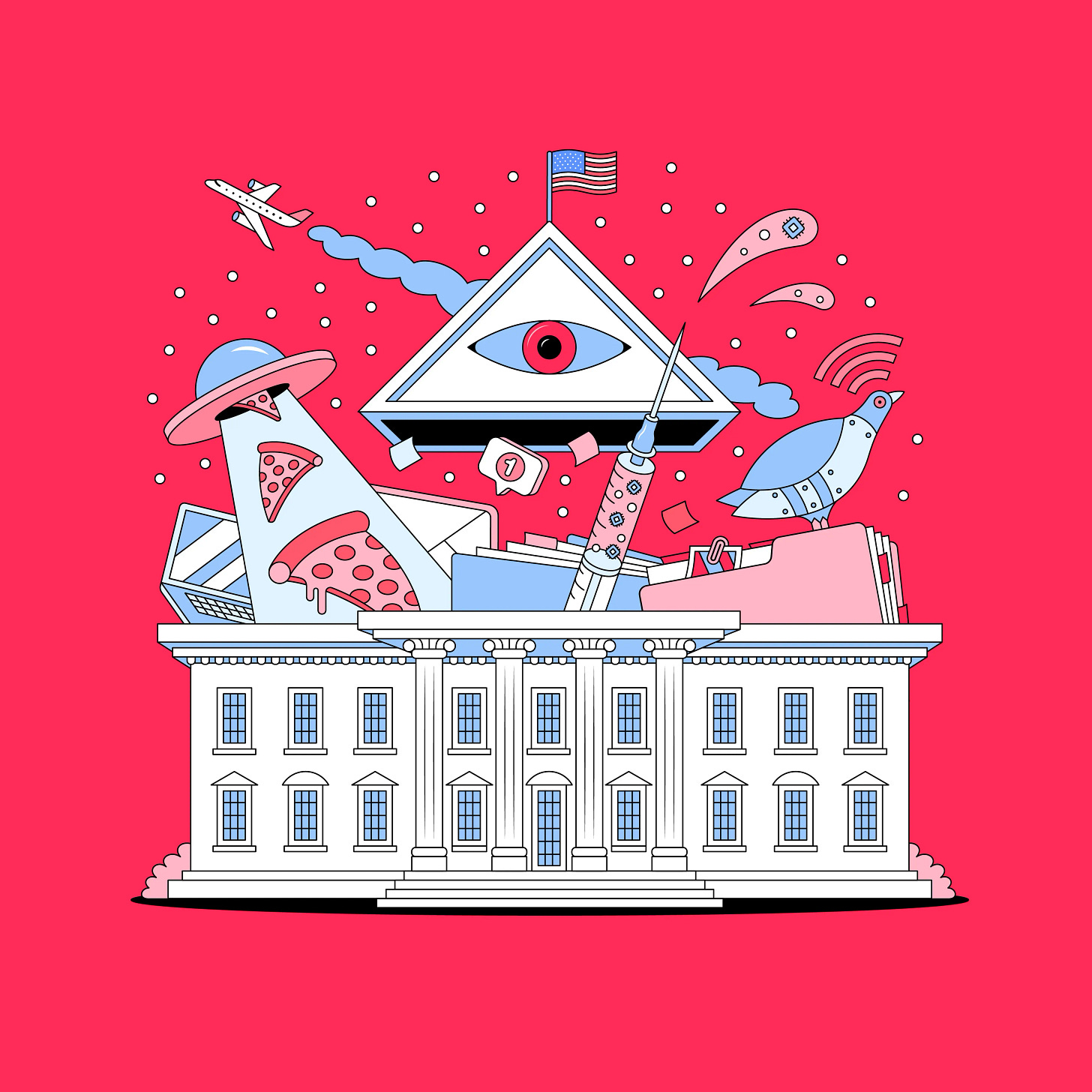
Illustration by Till Lauer for The New Yorker

What did he know, and when did he know it?
From Watergate to Epsteingate


Friends,

Here are the two contradictions lying at the heart of the contretemps over Trump and Jeffrey Epstein:

1. As early as May, Trump knew his name was in the Epstein files. Attorney General Pam Bondi and her deputy informed Trump at a meeting in the White House that his name appeared “multiple times.”

But on July 15, when a journalist asked Trump, “Did [Bondi] tell you at all that your name appeared in the files?” Trump responded, “No, no.”

2. Bondi said in February that Epstein’s client list was “sitting on my desk right now to review.”

But on July 7, the Justice Department stated that a thorough review had turned up no list of Epstein’s clients.

Neither of these is evidence that Trump was involved in Epstein’s activities with underage girls. But together they suggest a cover-up — which can kill a presidency.


At A Glance


Uber rolls out feature connecting women riders with women drivers.

A look at the US Postal Service before its 250th birthday.

Feisty felines get their moment in front of the camera.

More than 70% of teens have used AI for companionship.

How crops across the Corn Belt make hot days hotter.

What happened to squirrel pot pie?

Experts say exercise in the morning for a healthier heart.

Lightning kills 320 million trees each year.

Clickbait: How germy is the public pool?

How to make the best hummus of your life

Quick Clips


In The NEWS


Sports, Entertainment, & Culture

> Ozzy Osbourne, legendary rock star and Black Sabbath frontman, dies at age 76 just over two weeks after performing in his final concert, which raised $190M for charity (More) | See previous write-up on Osbourne's last concert (More)

> US Olympic and Paralympic Committee bans transgender women from competing in women's sports, complying with recent President Donald Trump executive order (More)

> "South Park" creators Trey Parker and Matt Stone sign five-year, $1.5B deal with Paramount for global streaming rights to the animated series (More)


Science & Technology

> Japan proposes first new nuclear power plant since the deadly 2011 Fukushima disaster; meltdown followed a tsunami that left more than 2,300 people dead post-evacuations (More) | Nuclear provides about 20% of US electricity; learn more (1440 Topics)

> Brain scan study suggests the COVID-19 pandemic caused brains to age roughly five and a half months faster than prepandemic era; effect was seen regardless of infection status, more pronounced in older subjects (More)

> Octopuses can be tricked into thinking rubber tentacles are part of their body; findings suggest the creatures have a sense of "body ownership," similar to humans (More)


Business & Markets
> US stock markets close mixed (S&P 500 +0.1%, Dow +0.4%, Nasdaq -0.4%) (More) | Kohl's shares close up 38% in apparent meme stock rally; trading halts briefly due to volatility (More) | Universal Music Group—owner of record labels behind Taylor Swift, Drake, and Lady Gaga—confidentially files for US initial public offering (More)

> UK court rules estate of Mike Lynch, who died last year when his superyacht sank off Italy's coast, and his former business partner owe HP Enterprise roughly $945M following an ill-fated deal with their software company, Autonomy (More) | See previous write-up on the superyacht tragedy (More)

> General Motors says Q2 earnings took a $1.1B hit from new tariffs on imported cars and auto parts, shrinking net income by 35% year over year; America's largest automaker still beat Wall Street estimates on Q2 earnings and revenue (More)


Politics & World Affairs
> President Donald Trump announces trade deal with the Philippines, landing on 19% tariffs; says US goods will not face tariffs in the Philippines in exchange for US military cooperation (More) | ... also announces trade deal with Japan, including 15% levy on imported goods; Japan to invest $550B in the US (More)

> Columbia University penalizes over 70 students for their participation in Israel-Gaza protests amid negotiations to restore $400M in federal funding; disciplinary action includes two-year suspensions, expulsions (More)

> Bryan Kohberger due to be sentenced today over fatal stabbing of four University of Idaho students in 2022 after pleading guilty to first-degree murder, burglary charges earlier this month (More)


SOURCE:  1440 NEWS

Teaching Young People


We teach reading, writing, arithmetic, history, foreign language, science, music, and the arts in high school but not finance.


High school classes are designed for students who want to attend college but are not designed for those students who do not want to attend college.


For me, this is a big mistake...


RULE OF 72 - take a percentage that represents some sort of interest rate and divide that number into 72.  The answer approximates the number of years it takes for one's money to double in value.


For instance, a mutual fund over a period of 40-80 years, averages during any 20-year period of time, 8-12% every year.  So, let's use 10%.  Dividing 10 into 72, results in 7.2 or one's money will double every 7 years.

Starting Amount

$10,000     2025 - your age is 20

$20,000     2032                       27

$40,000     2039                      34

$80,000     2046                      41

$160,000    2053                      47

$320,000    2060                     54

$640,000    2067                     61

$1,280,000  2074                     67 - retirement age


Think about this...

How much does college cost?

Where do you get the initial $10,000?

  • Work part-time during high school and save
  • Work after high school and live with parents and save
  • Ask parents for the money
  • Instead of starting at age 20, start at age 24

The point is that this type of financial knowledge should be taught to all students in high school, especially those who do not want to attend college.


Somewhat Political


Gravity and quantum ripples may explain cosmic origins


A team of scientists led by expert Raúl Jiménez, ICREA researcher at the University of Barcelona's Institute of Cosmos Sciences (ICCUB), in collaboration with the University of Padua (Italy), has presented a revolutionary theory about the origins of the universe. 

The study, published in the journal Physical Review Research, introduces a radical change in the understanding of the first moments after the Big Bang, without relying on the speculative assumptions that physicists have traditionally assumed.

For decades, cosmologists have worked under the inflationary paradigm, a model that suggests that the universe expanded extremely rapidly, in a fraction of a second, thus paving the way for everything we observe today. 

But this model includes too many adjustable parameters—the free parameters—which can be modified. Scientifically, this poses a problem, as it makes it difficult to know whether a model is truly predicting or simply adapting to the data.


Paul McCartney - SGT Pepper's Lonely Hearts Club Band/The End (Live)

Wednesday, July 23

Freedom


VINCE


The Shannon Joy Show


Fries


Russell Brand


The Amber May Show


Bob Dylan


Bob Dylan’s 1963 protest song reframes the assassination of civil rights leader Medgar Evers not as an isolated tragedy, but as an indictment of systemic racism and class manipulation in America.


Historical Context & Dylan’s Response
The Civil Rights Movement of the 1960s was not merely a reaction to visible violence and legal discrimination, but a profound confrontation with the invisible machinery of systemic racism embedded in American society. Among the tools activists employed, protest music arose as a powerful force for raising consciousness and exposing injustice. Bob Dylan’s 1963 song, Only a Pawn in Their Game, stands out not for its rousing calls to action, but for its unsettling and cerebral indictment of the political and economic systems that engineer racial division. Written in response to the assassination of NAACP leader Medgar Evers, the song interrogates not just the killer’s actions, but the broader architecture of white supremacy that weaponizes poor white Americans as instruments of racial oppression.

Through this framing, Dylan compels listeners to consider how racial violence is incentivized and perpetuated by systemic manipulation.


While controversial, the song’s unprecedented critique of classism, hidden under a medium uniquely positioned for publicity, makes it invaluable; it provides an unflinching structural critique of racist classism, which, due to Bob Dylan’s predetermined fame, was debated and spread throughout the country.

Systemic Critique over Individual Blame
Bob Dylan’s Only a Pawn in Their Game emerged in the volatile summer of 1963, following the assassination of Medgar Evers in Jackson, Mississippi. Evers, a field secretary for the NAACP, was gunned down in his driveway by Byron De La Beckwith, a known white supremacist. While this act of terror shocked the nation, Dylan responded not with outrage at the individual murderer, but with a meditation on the systemic forces that bred such violence. According to NPR’s coverage of the song’s legacy, Dylan sought to illuminate “the big picture,” portraying the assassin not as a monstrous outlier, but as a tool of a power structure that cultivated and directed racial hatred for its own ends. This reorientation of blame from the individual to the institution marked a radical departure from popular responses to Evers’ murder.

Dylan responded not with outrage at the individual murderer, but with a meditation on the systemic forces that bred such violence.


Dylan also performed the song at the historic March on Washington in August 1963, positioning his work alongside the most iconic voices in civil rights history. As David Lai observes, reactions to Evers’ murder were deeply polarized—while civil rights activists saw it as proof of systemic racism, Southern politicians dismissed it as an isolated act exacerbated by “outside agitators.” Dylan’s choice to center structural forces in his response positions the song not only as a reaction to a singular tragedy but as a critique of the very narratives that sought to de-politicize racial violence. Thus, the song’s origin lies not just in artistic inspiration but in direct confrontation with the myths that insulated white supremacy from systemic scrutiny.

Purpose of the Song
The core purpose of Only a Pawn in Their Game is to indict the systemic forces that manipulate poor whites into enacting racial violence against Black Americans. Rather than centering Dylan’s song on moral outrage alone, he delves into the mechanics of social control, emphasizing how political and economic elites sustain racial divisions to maintain their own power.

As Matt Schickling argues, Dylan’s framing mirrors W.E.B. Du Bois’ theory of the “psychological wage,” wherein poor white workers are granted symbolic racial superiority in place of real economic mobility. This arrangement keeps them loyal to the very system that oppresses them—a strategy of divide-and-conquer that forestalls solidarity across racial lines.

Lyricism as a Tool for Reflection
Tony Atwood notes that Dylan accomplishes this through deliberately ambiguous, layered lyricism that forces listeners to wrestle with their own assumptions about race, agency, and guilt. His use of understated language and metaphor, Atwood explains, encourages reflection rather than righteous indignation—inviting audiences to contemplate how structural racism operates invisibly through institutions, rather than through overt hatred alone.
Dylan’s purpose, then, is not to comfort or affirm, but to provoke discomfort—to peel back the veil of individual responsibility and reveal the invisible hands that set the chessboard.

Conclusion: A Legacy of Structural Critique
Dylan’s Only a Pawn in Their Game does not offer easy resolutions or emotional catharsis. Instead, it confronts the listener with a sobering theory of how violence is cultivated, justified, and deployed by systems of power. The song’s strength lies in its ability to disrupt prevailing narratives and demand a reckoning with the structures that perpetuate racial injustice—an enduring legacy of protest music with teeth.

By Declan McDonnell


Sources
Atwood, Tony. “Only a Pawn in Their Game: Meaning and Origins.” Untold Dylan, 2016. 

Lai, David. “Too Great a Price: National Responses to the Assassination of Medgar Evers.” The Martin Luther King, Jr. Research and Education Institute, Stanford University.

NPR Staff. “Bob Dylan’s Tribute to Medgar Evers Took on the Big Picture.” NPR, June 12, 2013.

Schickling, Matt. “White Identity, Economic Anxiety, and Dylan’s ‘Only a Pawn in Their Game’.” Sounding Out!, June 10, 2019. https://soundstudiesblog.com/2019/06/10/white-identity-economic-anxiety-and-dylans-only-a-pawn-in-their-game/

Source: Only A Pawn In Their Game?

The Alex Jones Show


The Big MIG


Foxy


News Variable


TimcastIRL


Burgers


The Big THINK


Siena, Italy (by Antonio Cinotti)


Headlines


Dia Dipasupil/Getty Images


Ozzy Osbourne died at 76. The Black Sabbath frontman and heavy metal legend was “with his family and surrounded by love,” according to a statement from the Osbourne family. No cause of death was mentioned, though Osbourne had been dealing with a range of health issues, including Parkinson’s disease. Osbourne died just weeks after he reunited with his original Black Sabbath bandmates for a farewell concert in England. Following his career as a rocker, Osbourne became a reality TV star in the 2000s with the MTV series The Osbournes, which chronicled his chaotic life alongside his wife, Sharon, and their children Jack and Kelly. Nicknamed the “Prince of Darkness,” Osbourne was inducted into the Rock & Roll Hall of Fame twice—once as a member of Black Sabbath, and again as a solo artist.

Johnson shut down the House early to avoid an Epstein vote. The US House of Representatives will start its summer break early today after Speaker Mike Johnson cut this week’s business short to prevent a vote to release files related to Jeffrey Epstein. Johnson, a Republican, accused Democrats of playing “political games” by trying to vote to force the DOJ to release information related to Epstein. Some GOP lawmakers have joined Democrats in seeking to make the information public, which President Trump campaigned on doing but has since disregarded. Trump is now suing the Wall Street Journal after the paper published a story about the president’s links to Epstein, who died by suicide in 2019 while awaiting trial on sex trafficking charges. The House will now be in recess until September.

GM’s profit hit adds to tariff woes for US automakers. A day after Stellantis reported a surprise $2.7 billion loss for the first half of the year in part due to tariffs on car parts, GM revealed that tariffs are hurting its bottom line, too. The owner of Chevrolet and Cadillac said its Q2 profit sank by 35% after tariffs cost the company $1.1 billion. It also warned that the impact from tariffs will be even bigger next quarter, as the White House’s 25% tax on imported autos sets in. Still, GM maintained its full-year forecast on the strength of international sales. Tesla reports its latest earnings today after the bell.—AE

Robert Reich


The three ways Trump is shafting his base
It’s the economy, stupid


Friends,

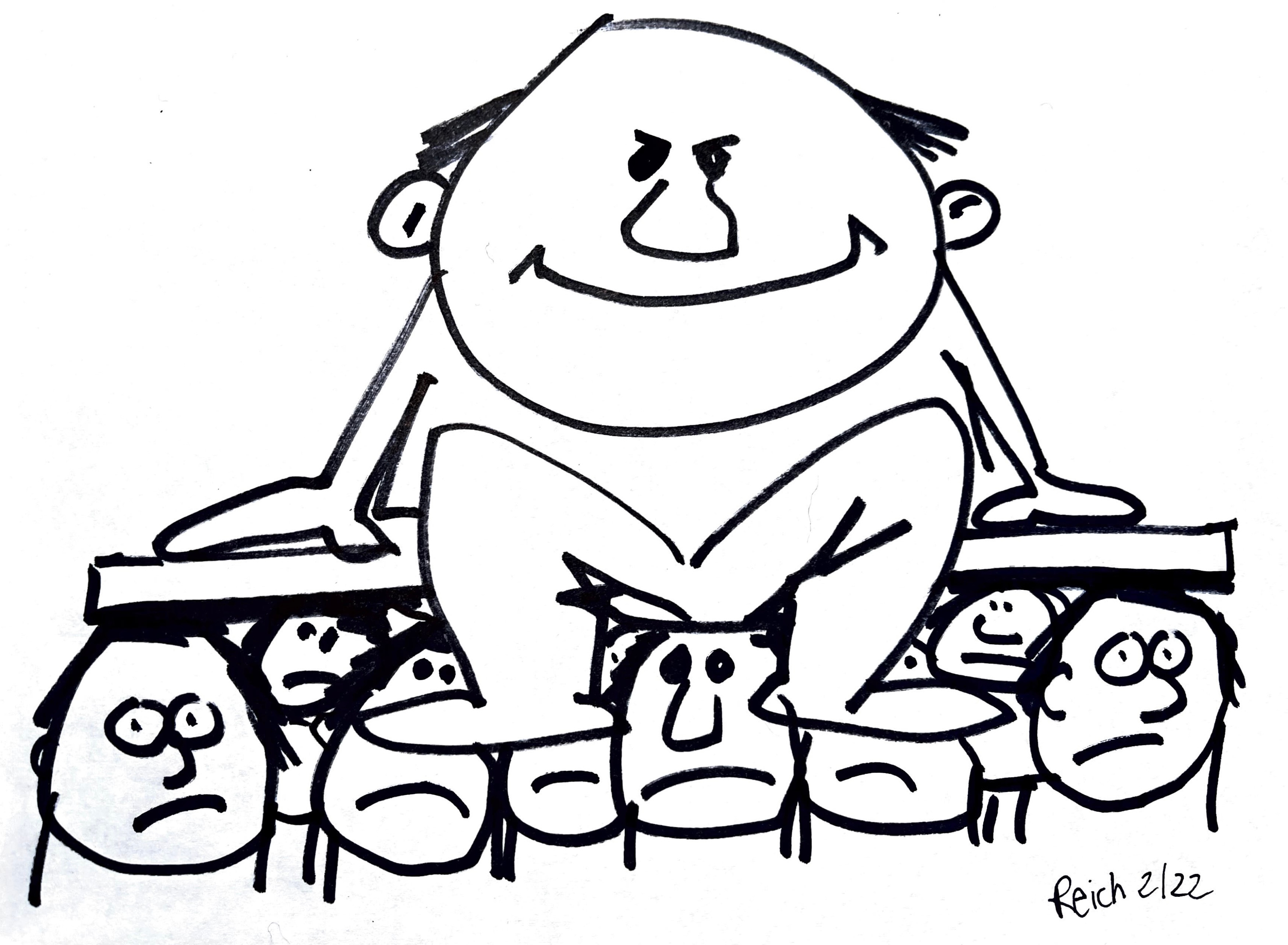
Trump is shafting his base economically in three ways most Trump voters don’t see or know. It’s important that they do.
Prices are rising


The Consumer Price Index has risen 2.7 percent from a year earlier. That’s the fastest pace since February. The trend is worrying, especially for working-class consumers who have to sacrifice a larger portion of their paychecks to buy what they bought before.

So-called “core” inflation — which strips out volatile food and energy prices and is therefore a more reliable measure for underlying price pressures — is rising even faster: up 2.9 percent from the same time last year.
Trump’s tariffs are to blame


Trump’s tariffs are the major culprit. Prices rose noticeably on appliances, clothing, and furniture — all products heavily exposed to Trump’s import taxes from Canada, China, and other major trading partners.


At A Glance


Introducing Tesla Diner, a 24/7 joint with 80 charging stations. (w/photos)

Dogs can be trained to smell Parkinson's disease.

Support in the US is rising for school cellphone bans.

World's richest woman opens a medical school.

The numerous benefits of walking backward.

Voting has opened to crown the UK's Tree of the Year.

Why some people celebrate Christmas in July.

Lucky man wins the lottery twice in one night.

Clickbait: NYPD is using drones to catch subway surfers.