Monday, July 14

At A Glance


Largest Mars rock on Earth goes to auction this week.

Cloned yak delivered via C-section weighing 74 pounds.

Oklahoma City tops US cities with fastest-selling homes.

Explore marital trends since 1930.

Beetle infestation threatens books in Hungary's oldest library.

Polish pyramids discovered dating back 5,500 years.

Girl's note to home residents found on empty toilet paper roll.

Animal genders in kids' storybooks.

Clickbait: Blaze of glory takes on new meaning.

Genius Ways To Cut Your Grocery Bill

Quick Clips


In The NEWS


Federal Budget, 101

The US federal budget outlines how the government plans to both raise revenue and spend it via its 3 million workers across more than 400 agencies in a given fiscal year. The president submits a detailed budget request to Congress. Congress then reviews this proposal and develops its own budget resolutions through 12 appropriations bills. If there's an impasse, "continuing resolutions" can be temporarily used to maintain funding while bills are debated.

Federal spending is divided into two main categories: mandatory and discretionary.

Mandatory includes expenses required by existing law (like Social Security, Medicare, and Medicaid). Discretionary spending includes funds for programs subject to annual review like defense, education, and transportation.

A federal deficit occurs when the government’s annual spending exceeds its revenues. The national debt is the cumulative total of these annual deficits and represents the government’s outstanding financial obligations.

... Read our full explainer on the federal budget here.

Also, check out ...
> Before 1921, there was no federal budget, and it was pretty chaotic. (More)
> What happens if we hit the national debt ceiling. (More)
> Track US spending this year. (More)


Barbecue, explained
Barbecue is an umbrella term for several culinary methods that involve live fire or smoke to cook meat. From Memphis-style dry-rubbed ribs to Argentine asado, the style is an integral part of cuisines around the world.

Barbecue can involve direct or indirect heat techniques. Direct heat, often called “grilling” in the United States, involves quickly cooking ingredients directly over the heat source (think hamburgers or Japanese yakitori skewers). Indirect heat, where the ingredients are placed adjacent to the flames to cook “low and slow,” is often associated with American barbecue dishes like smoked brisket (read more about the difference).

Modern barbecue originated in the precolonial Caribbean and Americas; the word is thought to come from “barabicu,” an Indigenous term referring to wooden frames used to cook meat high above the fire. While there are dozens of unique regional barbecue styles in the US, the “Big Four” are the best known: Carolina, Memphis, Texas, and Kansas City.

... Read our full deep dive on barbecue here.

Also, check out ...
> The delicious chemistry of barbecue. (More)
> Exploring the United States of barbecue sauces. (More)
> Why are barbecues considered patriotic? (More)


SOURCE:  1440 NEWS

Art Exposure


When I was a young lad, perhaps in junior high or the last year of elementary school, I cannot remember, my mother took me into Washington, DC to The National Theater, to see Broadway plays.  


I saw OKLAHOMA, WEST SIDE STORY, SOUND OF MUSIC, CAMELOT, STREETCAR NAMED DESIRE, MUSIC MAN...  are a few of the ones I can remember.


My mother had annual tickets to The National Theater, and I was invited when one of her club members could not attend.


When she was not taking me to the theater, she was taking me to a variety of Art Galleries in the Washington, DC area to familiarize me with that side of life.


I remember going to one art gallery to see a modern art show and the paintings made me wonder why anyone would buy them.  They were mostly one solid color with a circle of another color in the corner, or a strip of another color going down one side.  The price tag as I recall was $10,000.


Regardless of what my mother's intention may or may not have been, I had a strong interest in art galleries and the theater most of my life after I graduated from high school.


I also tried being an artist, fooling around with charcoal drawings, watercolors, acrylics, and oils.  My interest in being an artist lasted about five years when I finally realized that without lessons from someone who knew what they were doing, I was just wasting my time.


Somewhat Political


Scientists Unveil Quantum Leap That Could Make Silicon Obsolete With 1,000× Faster Electronics


In a remarkable breakthrough, researchers have developed a technique that could transform the electronics industry, propelling devices into a new era of speed and efficiency. 

By employing a method known as thermal quenching, scientists have discovered a way to switch a quantum material between conductive and insulating states, paving the way for electronics that are 1,000 times faster than current models. 

This innovation holds the potential to replace traditional silicon components, promising devices that are both exponentially smaller and significantly faster. 

As the demand for faster and more compact technology continues to grow, this discovery could revolutionize how we interact with electronic devices.


[126] SWEET CHILD O MINE - GUNS N ROSES - DJ LOCO CABANA-PERU FT. MASTER...

Sunday, July 13

Pillars


VINCE


Bread


The Amber May Show


Hilltop Retreat


TimcastIRL


Pine Marten in the Rain by Danny Green Photography


Dinesh D'Souza


Greenhouse


Bongino Report


Heads up for Travelers

Sarah Westall


Balcony View


The Alex Jones Show


Thrivetime


Always Standing


Lifestyle

Why are there so many pills to take in the morning?


D3sign/Getty Images


The Food and Drug Administration (FDA) estimates that about 100,000 different supplement products are sold in the US. That’s an umbrella term for vitamins, minerals, probiotics, and any other mystery powder you toss into your morning smoothie.

Over 75% of American adults take at least one daily supplement, according to the FDA. The domestic industry is estimated to be worth about $60 billion this year. But why?
How we got here

The US has been enamored of supplements for hundreds of years. The term “snake oil salesman” dates back to the 1800s. But around 1990, the FDA wanted to require standardized nutritional labeling (how modern).

The Nutrition Labeling and Education Act of 1990 was passed by Congress to hold supplements to the same scientific standards as medications, requiring proof for claims made on the labels. The dietary supplement industry revolted:The industry told people the FDA would lock up their vitamins or require prescriptions.
Celebrities spoke out against the tyranny. There were marches, and citizens sent thousands of postcards to Congress.
Mel Gibson even made this commercial.

In 1994, the Dietary Supplement Health and Education Act was passed, exempting supps from most of the FDA’s drug regulations. Instead, they’re regulated by the FDA as food—a big reason why a multitude of brands line drugstore shelves and pop up in influencer bios.

“Honey, I made fish oil for dinner.” Supplements can’t claim to treat or prevent diseases, but they can include broader, unscientific claims, like being “immune boosters”:Fiber, fish oil, and vitamin D are beneficial for certain groups of people suffering from deficiencies.
However, most studies on supplements are observational, allowing scientists to identify correlations between vitamin intake and health outcomes, but not to establish a definitive cause-and-effect relationship.

Deregulation isn’t a perfect science: The supplement industry has celebrated Robert F. Kennedy Jr.’s appointment as Health and Human Services Secretary, hoping he will clear the pathway to allow SNAP, HSA, and insurance funds to cover dietary supplements. But some industry experts have resisted his plans to get rid of an important pathway for ingredients to enter the market.—MM


Robert Reich


Sunday thought: On being a warrior


Friends,

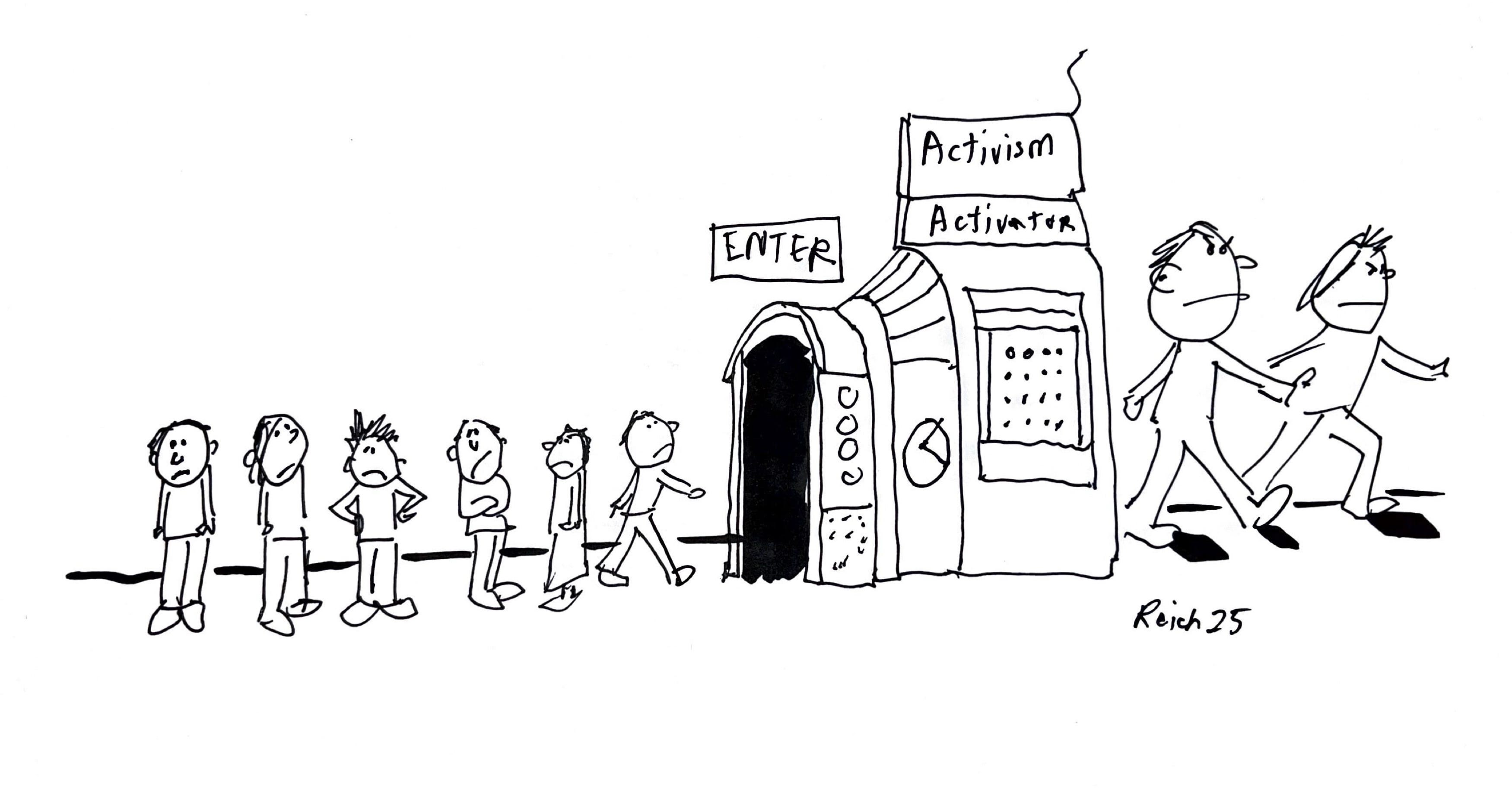
With the national and international news bringing anguish almost every day, I think it’s important to keep a tally of what is still good and beautiful in our lives and in the world, lest we succumb to despair.

A major part of not submitting to Trump’s tyranny is living our lives to the fullest — hopefully and cheerfully, in the face of him and his regime.

I had breakfast recently with a friend who defends immigrants.

I expected her to be overcome with anger and sadness. Instead, she was as happy as I’ve ever seen her.

“What gives?” I asked her. “You seem almost, well, joyful.”

“Not exactly joyful,” she laughed. “But I’m in a good place.”

“How can you be when you’re surrounded every day by people whose lives are being ruined by the orange menace?”


At A Glance


Was Shakespeare high when he wrote "Hamlet"?

How this rare coconut became the largest seed in the world.

Why do babies have nearly 100 more bones than adults?

How the ancients kept time with water clocks.

Picturing the booming business of space-based internet.

The 1880s-era, 109-foot hand-dug well in Greensburg, Kansas.

The universe is mostly a tint of beige dubbed "cosmic latte."

Why US chocolate tastes weird to the rest of the world.

A retired FBI agent interviews a jailed hit man about a cold case.

The worldwide effort to defend against asteroid 2024 YR4.

Cancer rates have been falling for nearly three decades.

A quick explainer on the science of bubbles.

Visualize the county-level effects of extreme weather events in the US.

Meet the durian, the divisive, spiky fruit of Southeast Asia.

Why no one wants to host the Olympics.

The Crispy Tofu Sandwich my boyfriend is OBSESSED with

Quick Clips


In The NEWS


The US State Department begins layoffs.

Over 1,300 domestic State Department employees were laid off yesterday as part of the Trump administration’s plans to downsize and reorganize the department. The firings come days after the Supreme Court cleared the way for the administration to undertake massive reductions to the federal workforce. A letter sent to Congress in May stated that the administration sought to cut the department’s domestic employees by almost ​​3,400 via layoffs and voluntary departures.


Trump announces 35% tariffs on Canadian imports.

The rate is set to go into effect Aug. 1 and exceeds the 25% tariffs imposed on Canadian goods in February. President Donald Trump cited Canada’s retaliatory tariffs and failure to control fentanyl smuggling to the US as the reason for the increase, though federal data shows relatively little of the drug enters via the northern border. Canadian Prime Minister Mark Carney said Canada would continue trade negotiations while defending its national interest.


Son of 'El Chapo' pleads guilty in US drug trafficking case.

Ovidio Guzmán López, son of Mexican drug lord Joaquín "El Chapo" Guzmán, pleaded guilty in a Chicago federal court Friday to drug trafficking, money laundering, and firearms charges related to leading a Sinaloa cartel faction that smuggled large amounts of fentanyl and other drugs into the US. As part of his plea, Guzmán López admitted to overseeing the production and distribution of narcotics that fueled the ongoing opioid crisis, though terms of his sentencing have not been disclosed. He is the first of the drug lord's sons to enter a plea deal.


Goldman Sachs to pilot an AI software engineer.

The global investment bank announced this week it will begin testing an autonomous software engineer created by Cognition, a $4B AI startup backed by venture capitalists Peter Thiel and Joe Lonsdale. The program, called Devin, will work alongside the firm’s 12,000 human developers to write code. Goldman's technology chief anticipates Devin, which will initially be supervised by humans, could boost worker productivity fourfold compared to previous AI tools. Goldman is the first major bank to deploy the technology.


Justin Bieber surprises fans with new album.

Canadian singer Justin Bieber released his seventh studio album, "Swag," at midnight yesterday, hours after teasing it on social media and billboards. The album marks the 31-year-old's first in four years. Bieber, who has taken several breaks from music to focus on his health, cut his last tour short in 2022 due to a battle with Ramsay Hunt syndrome. The new album cover appears to show him holding his son, Jack Blues, whom he welcomed last year with his wife, Hailey Rhode Bieber. See Billboard’s preliminary ranking of Bieber’s new songs here.


Dinosaur fossils found in Denver museum’s parking lot.

The Denver Museum of Nature and Science, known for its dinosaur exhibits, announced this week the discovery of a dinosaur fossil beneath its parking lot. The bone was unearthed 763 feet below the surface during a construction project in January and is estimated to be nearly 70 million years old, making it the deepest and oldest dinosaur fossil ever discovered within Denver’s city limits. It is currently on display in the museum’s “Discovering Teen Rex” exhibit.


SOURCE:  1440 NEWS