Tuesday, June 3
Robert Reich
Trump’s Vicious Attack on the American Mind
He wants America to be ignorant because ignorance is the handmaiden of tyranny
Friends,
Why is Trump trying to cancel “Sesame Street,” which has helped children learn to read and count for over half a century?
Why is he seeking to destroy Harvard University?
Why is he trying to deter the world’s most brilliant scientists from coming to the United States?
Because he is trying to destroy American education — and with it, the American mind.
Throughout history, tyrants have understood that their major enemy is an educated public. Slaveholders prohibited enslaved people from learning to read. The Third Reich burned books. The Khmer Rouge banned music. Stalin and Pinochet censored the media.
At A Glance
The best (and worst) places to raise a family.
Ranking countries with the highest life expectancy.
The seed oils at the center of heated online debates.
Banksy unveils new lighthouse mural in France.
Meet the world's happiest animals: the quokkas.
Seals play a video game for science. (w/video)
Watch a man backflip on fire to break world record.
Sri Lanka seizes record cocaine inside plush toys.
Clickbait: When the CIA created a fake "Star Wars" fan site.
In The NEWS
Sports, Entertainment, & Culture
> Paris Saint-Germain tops Inter Milan to win 2025 UEFA Champions League title (More) | Two killed, over 500 arrested as celebrations turn violent in Paris following PSG's victory (More)
> Loretta Swit, Emmy-winning actress best known for role on "M*A*S*H," dies at age 87 (More) | Valerie Mahaffey, Emmy-winning actress best known for "Northern Exposure," dies of cancer at age 71 (More)
> Miss Thailand Opal Suchata Chuangsri crowned 2025 Miss World; Miss Ethiopia Hasset Dereje Admassu named first runner-up (More)
Science & Technology
> President Donald Trump withdraws nomination of astronaut and billionaire Jared Isaacman to lead NASA (More) | NASA 101 (1440 Topics) | Health officials approve Moderna's alternative mRNA-based COVID-19 vaccine for at-risk groups (More)
> Genetic analysis reveals the bacteria responsible for leprosy existed in the Americas for at least 1,000 years, contradicting prevailing theory it was brought by European explorers (More)
> Black hole studies reveal gravitational waves of two intermediate black holes merging; current theories suggest the objects should be common, but only about 10 have been confirmed (More) | Black holes 101 (1440 Topics)
Business & Markets
> US stock markets close mixed Friday (S&P 500 -0.0%, Dow +0.1%, Nasdaq -0.3%); S&P 500 experiences best May since 1990 following announcement of US-UK trade deal (More)
> President Donald Trump announces steel and aluminum tariffs will double to 50% as of Wednesday; says merger between US Steel and Japan's Nippon Steel, not yet finalized, will involve $14B investment in US Steel facilities (More)
> United and JetBlue form new partnership, subject to regulatory review, allowing customers to earn and use points across both airlines (More) | Grammarly secures $1B in nonownership funding from investment firm General Catalyst (More)
Politics & World Affairs
> Gunfire near Gaza aid distribution center kills dozens of people, local officials say; Israel's military denies its soldiers were involved (More) | See the latest on a proposed Israel-Hamas ceasefire (More) | Two bridges collapse in western Russia near Ukraine, killing at least seven people (More) | Ukraine launches sweeping drone attack against Russian aircraft (More)
> Poland's presidential election is too close to call as of this writing, with pro-EU Warsaw Mayor Rafal Trzaskowski declaring victory; while the role is largely ceremonial, the president has veto power over new legislation (More)
> Canadian wildfires force an estimated 17,000 people in three provinces to evacuate, with air quality threatening the US Midwest, Plains (More)
Summertime
So, when I was a child, we have a good THREE MONTHS OF SUMMER: June - July - August. And... every MAY, my mother would take me shopping for a pair of tennis shoes that would have to last me all summer, that, for me, was not an easy task but it was something I had to do.
Our vacations usually took place in July when our father arranged his two weeks of active duty with the Navy, since he remained in the Naval Reserves. While he was doing his WHATEVER with the military, we, my sister and brother, were vacationing with Mom. Then, when his duty was over, we would continue our vacation for two more weeks with Mom and Dad.
Once in a while he would do his military duty separate from our vacation, so we would only have two weeks of some type of summer vacation, and I suppose it was because his employer did not want him gone a month.
When we were not on vacation, I was allowed to sleep as long as I wanted to providing that when I awoke, dressed, and had breakfast, my next task MUST BE CHORES.
Most of my chores involved doing something outside while most of my sister's chores involved doing something inside. Our chores were never mixed except for washing the dishes.
Once chores were done, I was able to play with the rest of the neighborhood children as long as I was home at 6:00 pm for dinner.

The Nature of Nostalgia: How Time Transforms Emotion in Memory
Summary: New research reveals that nostalgic memories don’t remain emotionally static, they evolve over time. While these memories are typically rich in positive feelings at the time they occur, those feelings tend to fade, making space for rising negative emotions like regret and loneliness.
This bittersweet shift distinguishes nostalgic memories from ordinary ones, which tend to fade more evenly and less emotionally. Despite the emotional complexity, nostalgic memories still evoke more overall positivity than neutral or mundane memories when recalled.
Key Facts:
- Emotional Shift: Nostalgic memories become less positive and more negative over time, often intensifying emotions like regret and loneliness.
- Psychological Benefits: Despite the bittersweet transformation, nostalgia still promotes self-esteem, social connection, and a sense of meaning.
- Unique Trajectory: Unlike neutral or ordinary memories, nostalgic ones do not follow the typical fading affect pattern—they grow more emotionally complex with time.
Source: Neuroscience News
Nostalgia has long been described as “a joy tinged with sadness,” but why do cherished memories sometimes bring tears along with warmth?
A new study explores how the emotional tone of nostalgic memories evolves over time, revealing that the very memories that make us feel most connected can also become more emotionally complex, sometimes bittersweet, as they age.
Researchers from the University of Southampton conducted two experiments to trace how our feelings toward nostalgic memories change from the time an event occurs to when it’s later recalled.
Monday, June 2
Bird from the Himalayas
New steel tariffs fuel international fallout
President Trump held a rally Friday evening at a US Steel plant in West Mifflin, PA, and announced he would double the current tariff rate on imported steel and aluminum from 25% to 50% as of June 4.
Now, some Canadian, EU, and British leaders may end up with “We Are Never Ever Getting Back Together” on their Spotify Wrapped this year:Canadian Prime Minister Mark Carney met with Trump in the Oval Office last month to mend fences after the US’ 25% tariff on steel and aluminum went into effect. The head of the Canadian Steel Producers Association called the additional increase “catastrophic.” Canada is the US’ largest supplier of steel and aluminum.
The UK thought it was sitting pretty after becoming the first nation to secure a trade deal with Trump three weeks ago with the help of new PM Keir Starmer, which allegedly included a zero-tariff provision for steel and aluminum. The BBC reported that it was agreed to, but never signed.
On Saturday, the European Commission released a statement saying it received the news with strong regret and that the tariff increase “undermines ongoing efforts” to reach amicable trade resolutions. It said the bloc would implement countermeasures.
The potential 2x of the tariff is aimed at increasing US production of steel and aluminum. S&P Global analysts said levies could lead to supply security and job creation, but reducing foreign sources of the metals might translate to higher production costs for “downstream” manufacturers (such as automakers), supply chain disruptions, and higher prices for consumers.
Additionally, no cost-effective domestic plants are sitting idle, so either new ones would need to be built (not quick) or inefficient plants would have to be reactivated (not cheap).
Cool for the summer? Goldy Hyder of the Business Council of Canada said that the best response to the weekend’s development was “not to take the bait” and that “these moving goalposts is just a strategy to try and get Canada to give more” in trade negotiations.—HVL
Robert Reich

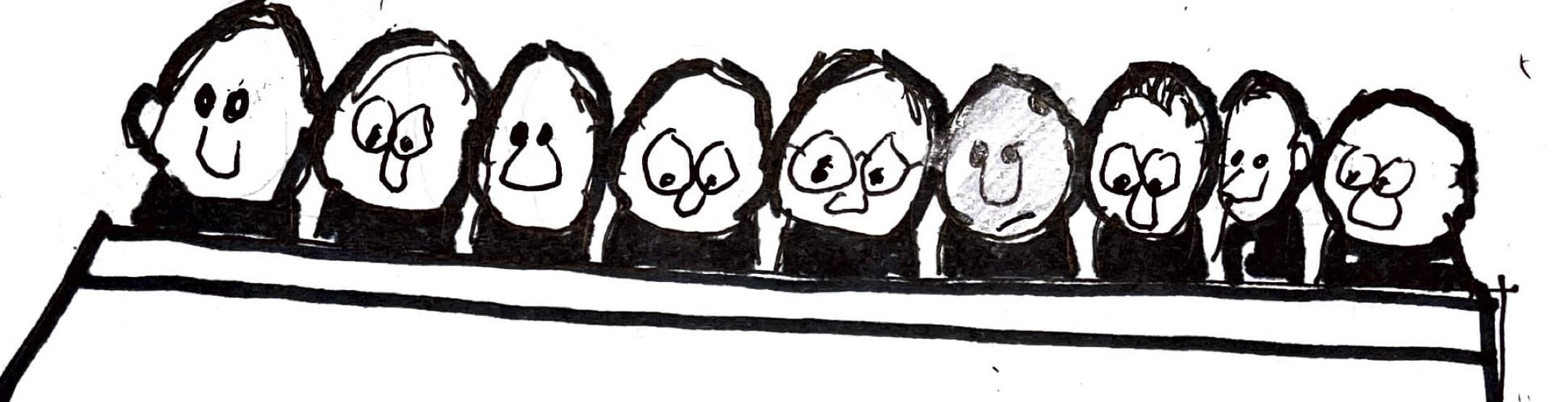
How to Protect Our Judges
They are the most important bulwark against Trump, which is why he has targeted them and why they’re endangered. Here’s what should be done.
Friends,
One of our highest priorities in this darkness must be to protect the people who are doing the most right now to push back against Trump’s tyranny: our judiciary.
In some 180 judicial rulings so far, federal judges have at least temporarily stopped Trump from (1) deporting and/or imprisoning people without due process, (2) firing federal workers and closing agencies and departments without congressional approval, (3) forcing law firms to not represent people or causes Trump dislikes, (4) forcing universities, their faculties, and their students not to say or write things Trump dislikes, and (5) imposing worldwide tariffs without congressional authority.
Most of these court rulings have been temporary until the merits of the cases are fully heard, but increasingly they’re final decisions.
The Trump regime is appealing many of them. A few will almost certainly end up in the Supreme Court.
At A Glance
See photos of this weekend's aurora across the US.
... and May's best science images.
Why billionaires are racing to space. (via YouTube)
Copenhagen is ranked the world's happiest city.
Why people without diabetes are wearing glucose monitors.
Edible replicas of ancient artifacts.
A magical blue forest in Belgium.
Netherlands university opens a tickling lab.
Clickbait: A "peeing" robot attack dog.
In The NEWS

SANDBOX
Tired of people twisting your politics into something they’re not? On the Sandbox App, you get a rare thing: someone actually trying to understand what you believe, and why.
Each week, there's a new topic to discuss. Last week’s topic was Authoritarianism and Trump. To the left, Trump's actions threaten our democracy. To the right, he’s the response to a threat: a bloated, biased government that punishes dissent. Neither view was written off; both were taken seriously. Even when people disagreed, 66% still said their partner made a tenable point.
Have a one-on-one political conversation on Sandbox without getting shouted down. Speak your mind, and find out what you’re missing. Join for free today.
'The Devil's Music'
Rock 'n' roll, 101
Rock ‘n’ roll is a form of popular music that originated in the American South in the late 1940s and early 1950s (see timeline). The genre combines elements of other American musical styles—including blues, country, gospel, R&B, Tin Pan Alley, and jazz.
Jackie Brenston’s “Rocket 88" is now widely considered the genre’s starting point, particularly due to its use of distorted electric guitar, a distinction that would define the genre for decades. That same year, Cleveland DJ Alan Freed launched his radio show, rebranding R&B records as “rock ‘n’ roll” to appeal to a broad audience.
In 1952, Memphis-based engineer Sam Phillips' Sun Records would become the home for Elvis Presley, Johnny Cash, and Jerry Lee Lewis—artists whose countryfied take on rock ‘n’ roll was called “rockabilly.” By the 1960s, rock ‘n’ roll was a part of the American mainstream, and was spreading outside the country, too.
... Read our full deep dive on rock 'n' roll here.
Also, check out ...
> Meet the man who named rock 'n' roll. (More)
> How the Beatles went viral. (More)
> Is blues the mother of all modern music? (More)
Rome's Arena Fighters
Who were the gladiators?
The first recorded gladiatorial combats were held at aristocratic funerals. Amid the hypercompetitive politics of the Roman Republic, sponsoring games with gladiators became a way of winning votes. The games reached an unprecedented scale under the emperors, when gladiators fought in arenas from Britain to Greece.
A new gladiator began by practicing swordplay against a dummy or wooden stake, and would train for months before his first match. Gladiators fought in the afternoon, often after a morning of beast hunts and lunchtime executions. Matches were managed by two referees, who used long switches to signal fouls. While some fights were terminated by a fatal blow, most ended via surrender.
The popularity of the gladiators gradually faded, thanks to a combination of rising costs and Christian disapproval. The last recorded matches were held in the fifth century.
... Read our full deep dive on gladiators here.
Also, check out...
> See images of genuine gladiator armor. (More)
> What did gladiators do when they retired? (More)
> The stories of the women in the arena. (More)
Editor's note: Thanks to historian Garrett Ryan for his contributions to this topic. Check out more of his videos @toldinstone on YouTube.
AI Humanoid Robots
Today, 2025, I am hearing the replacement of jobs is right around the corner and in some cases has already started and is full blown.
Most of our college graduates will soon be replaced by AI HUMANOID ROBOTS and there is very little if anything that we can do about it.
WHY DID THEY LIE TO US???
Those of us college graduates that graduated on or after 2020 will be SOL in the next few years but will still be in the position of having to pay back their student loans.
SO... WHAT WAS THE POINT OF COLLEGE???
What jobs will AI HUMANOID ROBOTS REPLACE:
- manufacturing
- transportation
- customer service
- retail
- administrative
- computer science
- engineering
- mathematics
- statistics
- accounting
- finance
- legal fields
- political science
- government
- liberal arts
- healthcare
- education
- humanities
Some of these fields are less likely than others but all work can and will be replaced either by ROBOTS or by AI...
Liquid carbon made for first time with high-power lasers, could advance nuclear fusion
A team of scientists, led by the University of Rostock and the Helmholtz-Zentrum Dresden-Rossendorf (HZDR), has successfully created liquid carbon for the first time. This material was previously thought impossible to study in a laboratory setting.
“This is the first time we have ever been able to observe the structure of liquid carbon experimentally,” said Professor Dominik Kraus, Head of Carbon Working Group from the University of Rostock and HZDR.
“Our experiment confirms the predictions made by sophisticated simulations of liquid carbon. We are looking at a complex form of liquid, comparable to water, that has very special structural properties.”


.jpg)


.jpg)