Monday, May 5


Robert Reich

They’re corruption.
Friends,
Words matter. When the media points out Trump’s “potential conflicts of interest,” as it has in recent days when describing Trump’s growing crypto enterprise, it doesn’t come close to telling the public what’s really going on — unprecedented paybacks and self-dealing by the president of the United States, using his office to make billions.
The correct word is corruption.
Trump holds a private dinner at the White House for major speculators who purchase his new cryptocurrency, earning him and his allies $900,000 in trading fees in just under two days. One senator calls this “the most brazenly corrupt thing a president has ever done.”
At A Glance

Workers install chimney on Sistine Chapel ahead of conclave.
Two-seater couch becomes travel destination.
The most beautiful English words, according to linguists.
How habits are formed. (w/video)
Debunking common travel myths.
1440 Topics: Everything you wanted to know about K-pop.
World's tallest and smallest dogs have a playdate. (w/photo)
... and the most popular dog name in your state.
Meet the world's oldest living woman.
Clickbait: "Star Wars"-styled airbike takes flight. (w/video)


The Pulitzer Prize

One way Joseph Pulitzer revolutionized the newspaper industry was by mainstreaming “yellow journalism,” or reporting that relied on sensationalism and could be a little loose with the facts. This video explains how the struggle for readers between Pulitzer and rival William Randolph Hearst pushed that sensationalism to the next level. Watch it here.
A ranking of the 100 best Pulitzer-winning books

No ranking is definitive, but this site compiled expert analysis with book sales and other factors to rank the best books to win the Pulitzer. The list is topped by Harper Lee’s “To Kill a Mockingbird” and includes fiction and nonfiction winners, providing a starred fan ranking and endorsements from experts and famous people. Check out the list here.
The Pulitzers' biggest controversies

From fabricated articles to fiction that inspired FBI surveillance, these are five of the most controversial moments in Pulitzer Prize history. Among them: the Pulitzer board’s decision not to give novelist Sinclair Lewis the 1921 award for fiction. This snub led the author of “Main Street” to become the first recipient to reject the prize in 1926. Read more here.
How the Pulitzer jury made its first hip-hop selection

Kendrick Lamar’s 2017 Pulitzer made history as the firs hip-hop artist ever to receive the award. Get a behind-the-scenes look at how the jury made its groundbreaking selection in this interview with music professor Farah Jasmine Griffin. She discusses the selection process, reactions, and hip-hop's growing significance. Listen to the story here.
Do Pulitzers help newspapers keep readers?

This historical look at the correlation between winning a Pulitzer and reader numbers comes from data expert Nate Silver. Silver argues the awards mostly don’t affect readership. But his data was restricted to newspapers between 2004-13—the rise in hyperlocal online outlets receiving awards over the last few years could change the game completely. Read here.
Visualizing 100 years of Pulitzers

This fascinating data visualization breaks down a century of Pulitzer Prizes. Award categories are laid out against a timeline, and the symbols used to represent each winner indicate the topic of the winning work, the number of prizes won by that outlet thus far, and whether the prize was awarded to an individual or a newsroom. Zoom in on the data here.
Peace of Mind
.jpg)
Peace of mind is directly correlated to one's sense of success and accomplishment, consequently, this state of mind is not realized until much later in life, like right before retirement or right after retirement, so one might say between the ages of 60-70.
However, since peace of mind is often related to MONEY, many artists and musicians, for instance reach a sense of accomplishment, success, and contentment (peace of mind) early in life, well before the age of 40-50. BUT, there is a downside to that early success that revolves around: WHAT DO I DO NEXT?
Since peace of mind is multifaceted, I can only describe my peace of mind because that is the one which I am obviously directly connected with.
Throughout my working career, I was relatively content and happy because I was doing what I enjoyed but constantly stressed out because of my supervisors, management, and co-workers who tried to undermine so they could be promoted to my position.
I was clever enough to survive all of that but the stress that was associated with that took a toll on me both mentally and physically.
RETIREMENT... got me away from that pressure and it took several years to cleanse my body of that toxicity and influence on my behavior.
Fortunately, my wife and I had the mindset to plan for our retirement and when it came time for that to happen at ages 67 and 62, we were both pleasantly surprise to see how much wealth we had amassed. While we are NOT WEALTHY, we have enough saved to live a comfortable life, very similar if not identical to the one we were living while working.
That financial security gave us both a high level of PEACE OF MIND.
With finances out of the way, we could focus on enriching our own lives, doing what we wanted to do and not what we had to do.
- My wife stopped cooking, so I took up the task of cooking.
- My wife got involved with K-Dramas and now is involved in teaching herself the history of Korea, China, and Japan
- We go on two vacations a year
- We enjoy family and friends
- We downsized our house and yard to lessen the upkeep and maintenance required.
- We exercise, eat healthy, and get plenty of sleep.
- I make sure that I leave the house for appointments, so I don't have to drive fast.
- I maintain two blogs daily and write novels


Big Bang Theory Debunked? A Physicist Presents An Alternative

A groundbreaking cosmological theory is taking the scientific community by storm, suggesting that the universe did not originate from a single Big Bang. Instead, this bold idea proposes that the cosmos has evolved through multiple, rapid bursts of energy known as temporal singularities.
Temporal Singularities: The Universe’s Hidden Forces
In a new paper published in Classical and Quantum Gravity, Dr. Richard Lieu, a physics professor at The University of Alabama in Huntsville, introduces a fresh perspective on the universe’s expansion.
According to Lieu, the cosmos is not the product of a one-time Big Bang. Rather, it has grown through a series of ultra-fast, step-like bursts that release energy and matter across the entire universe.
Sunday, May 4


Robert Reich
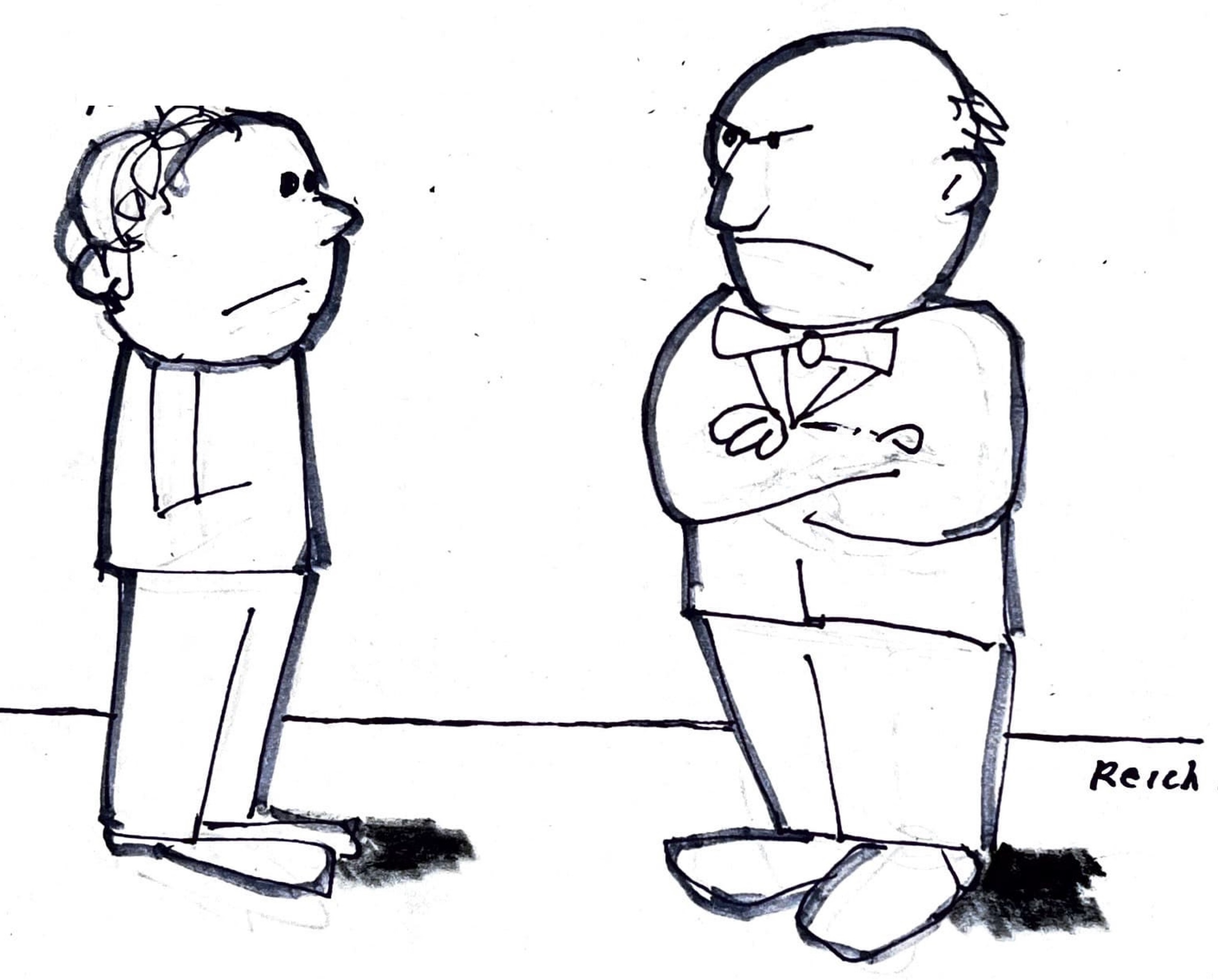
Sunday thought
President as abusive parent
Friends,
If you’re anything like me, it’s not just Trump’s policies that anger and depress you. It’s also the man himself.
Ronald Reagan’s policies were terrible, but he tried to present himself as a decent man.
Trump is a despicable human being. His odiousness affects many of us because presidents are parent figures to the nation as a whole.
According to psychological research, we respond to presidents much as we did to parents when we were kids.
George Lakoff, professor of cognitive linguistics at Berkeley, has found that two competing models of parenting shape political preferences: either the “strict parent” or “nurturant parent.”
At A Glance

Society & Culture
> How are rotisserie chickens so cheap?
> Eight ways literature can make us happier.
> A gallery of "unplaces" pulled from Google Street View.
> Debating the significance of the American lawn.
> A brief history of seersucker fabric.
World History
> Why reduced body hair on humans slows wound healing.
> A look at the revolution in commerce during the Middle Ages.
> What made the city of Alexandria so great?
> The chemistry of ancient tacos.
> The rise and reign of the British East India Company.
Business & Finance
> Why the number of publicly traded companies has shrunk.
> The "deinfluencer" trend, comedically explained.
> Who owns the federal government's debt?
> The strange situation of a cemetery going out of business.
> What are zero-coupon bonds?
Health & Medicine
> What is "inflammaging"?
> Measuring how quickly Ozempic starts working.
> The science behind chemotherapy.
> Ten of the earliest reports of near-death experiences.
> Taking a microscope to what goes on in IVF.
Science & Technology
> Rubisco, the (inefficient) enzyme that powers photosynthesis.
> The vast majority of US is skeptical of self-driving cars.
> Mapping shale deposits around the world.
> The case for life on
