Tuesday, April 1

Animals: Cats... Dogs...


When I was growing up in Alexandria, Virginia, we grew up around dogs, specifically dachshunds and always a male.  His name was Rebel, and he lived to be over 20 years old when our father finally had to put him down due to the old age pain he was feeling. Our father said that was the hardest thing he ever had to do and refused to have another animal after that - and he did not.


During my first marriage we did not have any animals for the first 15 years, then a friend of mine could not take care of this lab due to the apartment complex rules; he had been forced to take the dog as a result of a divorce.  So, my wife and I agreed to take him.  Eight years later, we got a divorce, and my ex-wife kept the dog.


Five years later when I got married for a second time, we took in stray cats right after we got married, a mother and her son.  They were outside/inside cats but primarily outside.  The son died after 12 years; the mother died after fifteen.  She was blind and had caught pneumonia, so we had to put her down.  Her son had a heart attack while playing with my wife.


Right before the mother died, my wife needed a replaced for the son to whom she had grown very attached.  As a result, we got a stray from the animal pound, the a few weeks later we got a rescue cat from a animal rescue organization, then a few weeks after that, we got a Siamese cat that we had been tricked into believing was still a kitten.


After 14 years we still have these three cats who are primarily indoor cats and have grown into becoming part of the family.  When we go on vacation, we arrange for someone to come by and feed them once a day while we are gone.  Cats are easier to take care of than dogs and do not have to be house broken or walked.  However, these three cats present attention issues and the Siamese knows when it is time to go to the vet.


After these we will have no more animals.

Somewhat Political


Ranked: The World’s Fastest Growing Economies in 2025


Oil Powering Economic Growth


The top economies in this ranking are heavily tied to the oil sector, meaning fluctuations in production can have a drastic effect on GDP.

Let’s take a closer look at the top two.

South Sudan (+27.2%)

South Sudan’s GDP has fluctuated up and down in recent years due to an ongoing civil war that has thrown its population into extreme poverty.

As a landlocked country, South Sudan also relies on pipelines that run through its northern neighbor, Sudan, to transport its oil to the Red Sea.

In 2024, South Sudan’s most important pipeline ruptured, putting massive strain on government revenue. Repairing the pipeline is difficult because parts of it lie in active conflict zones.

According to Bloomberg, South Sudan has been seeking alternative routes to export its oil, as well as cash bailouts from Qatar and the United Arab Emirates to stay afloat.

Arlo Guthrie - "St.James Infirmary"

Monday, March 31

Good Evening

Stacker


The unhealthiest fast-food sandwich in America is not a Big Mac, based on data. See the 10 worst.

Idiots


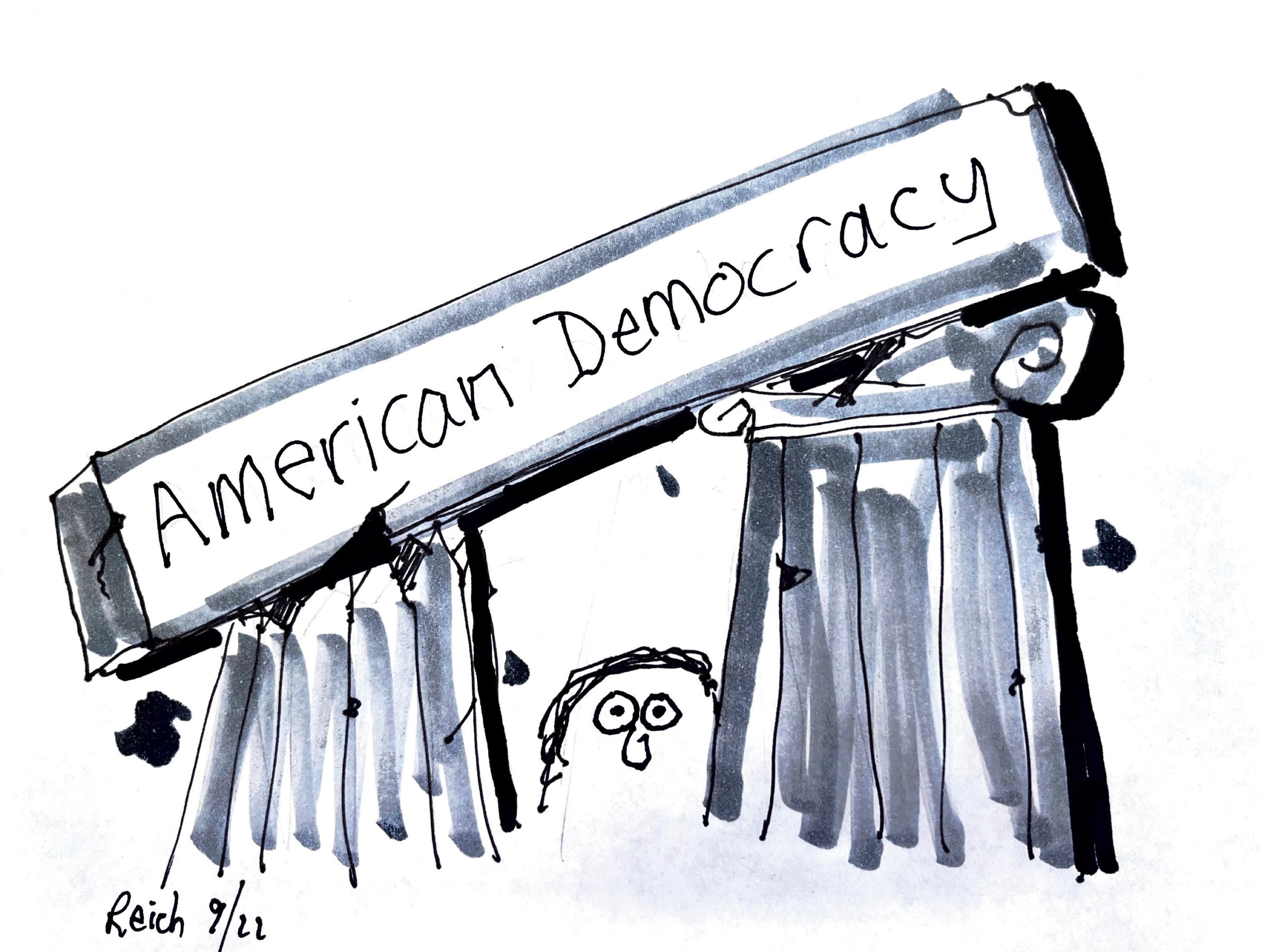
Robert Reich


Why Trump opponents can’t find a lawyer
His campaign of vengeance against lawyers and law firms is chilling opposition to his regime, which is exactly what he wants.


Friends,

Last week I wrote to you about Trump’s crackdown on the pillars of civil society — the universities, the scientific community, the media, the legal profession, and the arts — with the clear intent of intimidating them into silence.

Today I want to take a deeper dive into what Trump’s crackdown on the legal community — especially large law firms in Washington — actually means.

Frankly, I couldn’t give a sh*t about large law firms in Washington. They make boatloads of money for their partners. Even those whose partners are active Democrats push the party rightward as they round up campaign donations from corporate C-suites and Wall Street and urge Democratic members of Congress to move to the “center.”

But Trump’s bullying of Washington law firms is cutting off the litigation lifeline for nonprofit public-interest groups to challenge his policies — which is exactly why he’s doing it.

At A Glance


When you should aim for major life milestones.

Livestream the northern lights.

Did Bob Dylan steal a song from a high schooler? (via YouTube)

Even $14K can't get South Koreans to marry each other.

The man responsible for 1,000 Time covers.

... and the best of the 2025 World Press Photos.

Watch US figure skater Ilia Malinin land six quads and a backflip. (via YouTube)

Always relocate your rhinos upside-down.

Clickbait: The icy stare of a swine showwoman transfixes a nation.

Good Morning


Get Healthy: Healthy Diet | NBC Learn

Quick Clips


Exploring Nuclear Power

Take a turn with the nuclear reactor simulator

Do you have what it takes to operate a nuclear plant? This simulator, developed by the University of Manchester's Dalton Nuclear Institute, takes you on a tour of a virtual plant before handing you the keys to the control room. Challenge yourself to produce enough energy to meet demand while avoiding a nuclear meltdown. Play here.


Detailing the promise of nuclear power

Isabelle Boemeke is the world's first nuclear energy influencer. The young Brazilian fashion model’s assumptions about nuclear power were challenged by a tweet in 2015. Now, she debunks common objections to it through her TikTok persona, Isodope—which has 34,000 followers. Watch Boemeke’s TED Talk to find out why she’s so excited about nuclear power.


Would Oppenheimer support nuclear power today?

What would J. Robert Oppenheimer, the father of the atomic bomb, think of recent efforts to expand nuclear power? Oppenheimer's grandson Charles says his grandfather would support it. While Oppenheimer referred to the bombs as “an evil thing” after the Manhattan Project, he also described nuclear energy’s potential for good. Read more here.


A virtual tour of Fukushima Daiichi Nuclear Power Station

The Fukushima Daiichi Nuclear Power Station, the site of the world's most recent nuclear meltdown, is being decommissioned. It’s a decadeslong process with lots of safety precautions. See what the Japanese plant looks like in the aftermath of the accident in this virtual tour hosted by the company in charge of shutting it down. Take the tour here.


A timeline of the Chernobyl disaster

It started as a safety test so routine the Chernobyl nuclear plant’s director didn’t attend. It ended with a series of radioactive explosions that left the surrounding area uninhabitable. The 1986 meltdown is the worst nuclear accident in history, killing dozens and impacting thousands more. This timeline gives a play-by-play of what went wrong.


Which energy sources are the safest and cleanest?

There are many different power sources out there: coal, natural gas, solar, wind and, of course, nuclear. What is the best for human health and the environment? This article asks a few tough and uncommon questions to figure it out. How many deaths are caused per unit of electricity produced, for example? Explore the answers in these charts.

Time, Age, Health, Beauty


When one is eighteen years old, just graduated from high school, one pretty much thinks they are indestructible.    This applies more to males than females, but females feel this way to a degree, especially when it comes to their looks and shapes of their bodies.


When males or females go to college and graduate from college, they perceive themselves as knowing everything, when in reality they know very little.


This lack of knowledge is worse these days because most college students memorize for the grade, retaining very little because of the perception that grades will get them a better job.


That is INCORRECT...


During my 45-year career from  1970 to 2015, not one employer hired me on the basis of my college grades or GPA.  This included colleges and universities that hired me to teach.


But the main issue about age, health, and beauty is that all three deteriorate faster than you realize.  That is to say that AGE moves by faster than one realizes even though it seems like life takes its sweet ass time passing by.


Everyone who I have ever talked to who is 60 years of age or older, swears they had no idea that time would move by so quickly...  or that they took for granted the passing of time while they were trying to live life.


I am in my seventies now, been retired for ten years, and fully understand and appreciate how quickly time has passed by me.    I am in relatively good health but there are many people my age, who did not take care of themselves and who are paying the price for that lifestyle now.


Whether you believe the old people or not, do yourself a favor and start thinking right now that time is flying by and that you need to take advantage of every minute you have from a variety of standpoints.


Somewhat Political


The universe doesn't care about your precious standard model


This week, ALMA researchers reported the discovery of oxygen in the most distant known galaxy. Geologists believe unusual structures in rock in the desert regions of Namibia, Oman and Saudia Arabia may be evidence of an unknown microorganism. And a group of physicists may have generated a tiny charge of electricity using the Earth's rotational energy. But the biggest story by far is the second release of data from the DESI survey of the universe, which could upend the standard model:

DESI is coming for the standard model
An emerging generation of cosmological surveys launched this week with the second release of data from the Dark Energy Spectroscopic Instrument at Kitt Peak National Observatory in Arizona, which is mapping an unprecedentedly huge number of galaxies spanning 11 billion years of cosmic history in order to better understand dark energy.

Astronomers have known for many decades that the universe is expanding; in the 1990s, the first image of the cosmic microwave background—the echo of the big bang—revealed that this expansion is accelerating for unknown reasons. Astronomers call this expansion "dark energy," which translates to "we don't understand what this energy is."

The Allman Brothers Band - Whipping Post - 9/23/1970 - Fillmore East (Of...

Sunday, March 30

Good Night

Vision


Overthinking


Root Cause


Science Alert


Antarctic Iceberg Breaks Away to Reveal a Never-Before-Seen Ecosystem

AS USA


Extinction of life on Earth: estimated date according to NASA and international experts

Amber May Show


Lara Logan


Robert Reich


Sunday thought
Comedy and tragedy


Friends,

The past week has been another horror show, and I share your anxiety and sleeplessness.

But the past week also reveals the utter incompetence of Trump and his regime.

Even The Wall Street Journal criticized Defense Secretary Pete Hegseth for trying to dismiss “Signalgate” as a hoax, calls Trump negotiator Steve Witkoff “out of his depth in dealing with world crises,” and condemns the administration for thinking “it can bully its way through anything by shouting Fake News.”

Senate Majority Leader John Thune (R-South Dakota) instructs the administration to “own it and fix it.”

During the ensuing uproar, Witkoff goes off the deep end, telling Tucker Carlson that Vladimir Putin is “straight up” and not a “bad guy,” claiming he’s “100 percent” certain Russia “doesn’t want to overrun Europe,” and embracing Russia’s claim that people in the seized Ukrainian territory “want to be under Russian rule.”


READ MORE...

At A Glance


Society & Culture

> Movies that killed these actors' careers.
> The story of pizza in America.
> Mark her 100th birthday by reading Flannery O'Connor's best letters.
> How Picasso inspired an art movement.
> The history of rock 'n' roll in 60 seconds.

World History
> Tenochtitlan, the Aztec Venice of the Americas.
> The first Potomac cherry trees were planted 113 years ago.
> Who first said, "rebellion to tyrants is obedience to God"?
> How did Polynesian wayfinders navigate the Pacific Ocean?
> The ancient crops we've forgotten how to grow.

Business & Finance
> The bitcoin mine running on hydropower in remote Zambia.
> How one of India's poorest states became prosperous.
> Novak Djokovic's role (or lack of one) in wineries, cheese, and more.
> A look into the ongoing snack recession.
> Speaking coach shares insights on how to resolve conflict.

Health & Medicine
> Fifteen possible answers to "what is the meaning of life?"
> Why Friday surgeries are (likely) riskier.
> What's the point of pain?
> How often you should wash your water bottle.
> A town overtaken by the ergot fungus.

Science & Technology
> Inside the world's largest two-headed calf collection.
> How industrial giant Faber-Castell makes 2 billion pencils a year.
> The rise in the malicious use of drones.
> Unique "fish doorbell" lets people online open locks for fish.
> The latest images from the James Webb Space Telescope.

Nuclear Fission


Background

Nuclear power is electricity derived from the energy at the core of an atom. Energy is released when the nucleus of an atom splits (fission) or merges with the nucleus of another atom (fusion).

Conventional nuclear power relies on fission; it accounts for nearly 20% of electricity production in the United States and 10% worldwide. But we’re still learning how to utilize fusion reactions.

Nuclear plants take years and cost tens of billions of dollars to build, but they don’t produce greenhouse gases and have large generating capacities. See a map of active US nuclear plants here.


History
Nuclear fission was discovered in 1938 in a Berlin laboratory. It was quickly co-opted by the Axis and Allied powers racing to create destructive weapons during World War II. The top-secret American effort, known as the Manhattan Project, produced the atomic bombs that were dropped on Hiroshima and Nagasaki, Japan, in August 1945.

Six years later, in a rural Idaho desert, the US built the world’s first nuclear power plant. At first, it could power only four 200-watt light bulbs. Today, nuclear power accounts for roughly half of carbon-free electricity in the US.

Most US nuclear reactors were built between 1967 and 1990. Further construction became hindered, however, for a variety of reasons, including construction time, cost, safety concerns, and the introduction of cheap natural gas.


How It Works
All commercially operating nuclear plants generate power via fission, and most use uranium as fuel. The silvery-white metal is mined, milled, and then enriched (see overview).

When a neutron hits these uranium atoms, it sets off a chain reaction (visualize here). As the atoms split into smaller atoms and neutrons, they release energy in the form of heat and radiation. The heat is used to boil water. The resulting steam is funneled through a large turbine, causing it to spin and produce electricity that’s fed to the power grid.

Spent uranium fuel must be carefully cooled and buried underground because it’s highly radioactive and capable of damaging or killing cells in living things. Read about the long-standing debate over waste storage here.

Meltdowns are rare but dangerous accidents that occur when the core of a reactor overheats and melts. Radioactive materials can escape into the surrounding area, poisoning nearby communities and ecosystems. The worst meltdowns occurred at Ukraine’s Chernobyl plant in 1986 and Japan’s Fukushima Daiichi plant in 2011. The most serious domestic accident was a partial meltdown at Pennsylvania's Three Mile Island plant in 1979.

While it's difficult to trace diseases back to radiation exposure, studies have linked the Chernobyl meltdown to increased cancer prevalence, and these accidents have severely damaged public perception of nuclear power.


Future
The advent of power-hungry data centers and the race to reach net-zero emissions by midcentury have renewed interest in nuclear power. The Biden administration unveiled a roadmap to triple the nation’s nuclear capacity by 2050, and tech giants at the forefront of AI have also announced multibillion-dollar investments in nuclear power.

Since building traditional reactors is so expensive and time-intensive, significant attention is being given to restarting mothballed reactors and developing small modular reactors, which produce less power but are safer and cheaper.

Scientists have also spent decades trying to generate power from fusion, which could bring more low-carbon electricity to the grid without producing long-lasting nuclear waste. They achieved a breakthrough in California Dec. 5, 2022, sparking a fusion reaction that created more energy than it used. The feat, known as ignition, has since been replicated with steadily increasing energy yields.

Sun Good Morning


5-Ingredient Healthy Recipes in 15 Minutes