Sunday, November 7

Political Humor


Trying to Sit Down

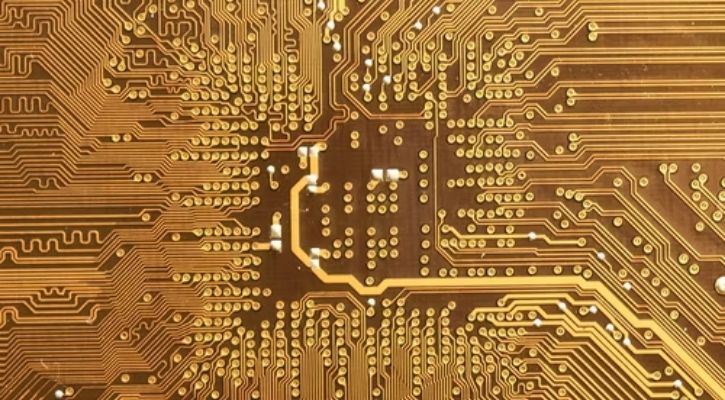
Fastest Programmable Quantum Computer In CHINA


China's leapfrogging capabilities in terms of technology development are well documented. Now, scientists from China claim to have developed the world's fastest programmable quantum computers.

Created by researchers from the University of Science and Technology of China (USTC) and led by Pan Jianwei, the quantum computing system called "Zuchongzhi 2.1" is at least a million times more powerful than its nearest competitor.

Unsplash

World's fastest supercomputers
Named after a mathematician from 5th century, Zuchongzhi 2.1 performs quantum computing 10 million times faster than Google's Sycamore computing system.  READ MORE...

Classic Sunday Newspaper Cartoons


Space Missions Cause Brain Damage

Puppy


Zinc Might Treat Colds


In 1771, the German physician Hieronymus David Gaubius introduced the western scientific community to "a medication with many promises" – zinc.

More than 200 years later, we can find it amongst the many supplements on pharmacy shelves. It's even known to be one of the rare things that might help fight off a common cold. 

Evidence for zinc supplement use is limited, study results have been mixed, and dosage, formulation and length of prescription have not been investigated properly to date.

A new meta-analysis of 28 randomized controlled trials has now strengthened the notion that supplementing zinc could prevent symptoms and shorten the duration of viral respiratory infections, like the common cold or the flu.

"It is commonly thought that zinc's role in preventing and treating infections is only for people who are zinc deficient; our findings really challenge this notion," says integrative medicine doctor Jennifer Hunter from Western Sydney University in Australia.

"The two large trials from China found very low dose zinc nasal spray reduced the risk of clinical illness. The two smaller trials in the US that evaluated the preventive effects of oral zinc excluded people who were zinc deficient.

"All the other trials that evaluated zinc for treating the common cold were in populations where zinc deficiency is very unlikely."

When zinc was taken as a preventative measure, the analysis found there was a 28 percent lower risk of developing milder symptoms, and an 87 percent lower risk of developing moderately severe symptoms.  READ MORE...

Ballet


Saturday, November 6

Wake Up America!


Sultry


Their Peace Views Were Crap


The Beatles legend Paul McCartney has touched on the thing his late bandmate John Lennon and Lennon‘s wife Yoko Ono were believed in and said the things they believed in were crap.

The richest The Beatles member, Paul McCartney, was one of those founding members of the rock band he achieved world fame, The Beatles. After The Beatles disbanded, McCartney launched his solo career. Releasing 18 solo studio albums in total, his latest album was titled McCartney III and was released on December 18, 2020.

On the other hand, John Lennon was the co-founder, co-lead vocalist, rhythm guitarist, and co-frontman of The Beatles from 1960 to 1969. He had appeared in the entire albums of the band and wrote beloved songs such as I Want To Hold Your Hand, I’ll Cry Instead, I’ll Be Back, No Reply, It’s Only Love, Girl, Tomorrow Never Knows, She Said She Said, Good Night, I’m So Tired.

In 1969, John Lennon had collaborated with his second wife Yoko Ono to form the Plastic Ono Band. With the band, they had held the two-week-long anti-war demonstration Bed-Ins for Peace.

Now, Paul McCartney has commented about Lennon and Yoko Ono‘s anti-war action. When the interviewer mentioned Lennon‘s quitting The Beatles to explore new artistic territory with Yoko Ono, McCartney said the things they’ve believed in were crap. According to him, a war could not be ended like this.

“The thing is – so much they held to be the truth was crap,” McCartney says. “‘War is over,’ well, no, it isn’t. ‘If enough people want the war to be over, it’ll be over…’ – I’m not sure that’s entirely true.”  READ MORE...

Bending


Brain Implant Gives Vision


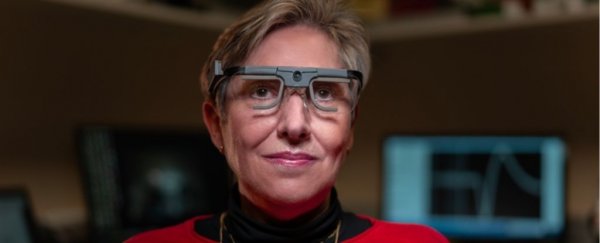
Berna Gomez, wearing glasses to test the prosthesis. (John A. Moran Eye Center at the University 
of Utah)

A 'visual prosthesis' implanted directly into the brain has allowed a blind woman to perceive two-dimensional shapes and letters for the first time in 16 years.

The US researchers behind this phenomenal advance in optical prostheses have recently published the results of their experiments, presenting findings that could help revolutionize the way we help those without sight see again.

At age 42, Berna Gomez developed toxic optic neuropathy, a deleterious medical condition that rapidly destroyed the optic nerves connecting her eyes to her brain.

In just a few days, the faces of Gomez' two children and her husband had faded into darkness, and her career as a science teacher had come to an unexpected end.

Then, in 2018, at age 57, Gomez made a brave decision. She volunteered to be the very first person to have a tiny electrode with a hundred microneedles implanted into the visual region of her brain. The prototype would be no larger than a penny, roughly 4 mm by 4 mm, and it would be taken out again after six months.

Unlike retinal implants, which are being explored as means of artificially using light to stimulate the nerves leaving the retina, this particular device, known as the Moran|Cortivis Prosthesis, bypasses the eye and optic nerve completely and goes straight to the source of visual perception.

After undergoing neurosurgery to implant the device in Spain, Gomez spent the next six months going into the lab every day for four hours to undergo tests and training with the new prosthesis.  READ MORE...

Breeze


Big Bang Isn't the Beginning


The modern cosmic picture of our universe’s history begins not with a singularity, the Big Bang, 
but rather with a period of cosmic inflation that stretches a flat, uniform universe. The end of 
inflation is the onset of Hot Big Bang., Nicole Rager Fuller/National Science Foundation)


KEY TAKEAWAYS
  • The Big Bang teaches us that our expanding, cooling universe used to be younger, denser, and hotter in the past.
  • However, extrapolating all the way back to a singularity leads to predictions that disagree with what we observe.
  • Instead, cosmic inflation preceded and set up the Big Bang, changing our cosmic origin story forever.

Where did all this come from? In every direction we care to observe, we find stars, galaxies, clouds of gas and dust, tenuous plasmas, and radiation spanning the gamut of wavelengths: from radio to infrared to visible light to gamma rays. No matter where or how we look at the universe, it’s full of matter and energy absolutely everywhere and at all times. 

And yet, it’s only natural to assume that it all came from somewhere. If you want to know the answer to the biggest question of all — the question of our cosmic origins — you have to pose the question to the universe itself, and listen to what it tells you.

Today, the universe as we see it is expanding, rarifying (getting less dense), and cooling. Although it’s tempting to simply extrapolate forward in time, when things will be even larger, less dense, and cooler, the laws of physics allow us to extrapolate backward just as easily. Long ago, the universe was smaller, denser, and hotter. 

How far back can we take this extrapolation? Mathematically, it’s tempting to go as far as possible: all the way back to infinitesimal sizes and infinite densities and temperatures, or what we know as a singularity. This idea, of a singular beginning to space, time, and the universe, was long known as the Big Bang.

But physically, when we looked closely enough, we found that the universe told a different story. Here’s how we know the Big Bang isn’t the beginning of the universe anymore.  READ MORE...

Rain

Friday, November 5

Westler


US Ends Trade War With UK

IMAGE SOURCE,GETTY IMAGES

The UK has been "left behind" according to steel makers after the US agreed to end a trade war over items that also included whiskey and Harley-Davidsons.


President Biden has signed a deal to end tariffs on steel imports from the EU, which were imposed by his predecessor Donald Trump.


But the agreement does not cover exports from the UK, putting British steelmakers at a disadvantage.


Trade body UK Steel said a deal for British producers was "sorely needed".


The tariffs, which came into force in 2018, nearly halved British steel exports to the US, Gareth Stace, director general of UK Steel, said.


The US is the second-largest market for British-made steel. But the new deal will put UK producers at a competitive disadvantage compared to European rivals who will be able to ship their products to the US without paying import tax


In return, the EU removed retaliatory tariffs that it had put on whiskey, power boats and Harley-Davidson motorcycles.


"Whilst it is promising to see the US take steps to open up access to its steel markets again, there is significant concern that UK producers have been left behind in this process and continue to wait for their own deal," Mr Stace said.  READ MORE...

Bodypaint


Japans Aircraft Carrier


When Navy Secretary Carlos Del Toro returned from his trip to Japan, he fired off a tweet that touted his tour of that country's "Aircraft Carrier Izumo." It was a short comment that recognized an important new naval reality for the longtime ally.

Japan's pacifist constitution meant its naval forces have relied on ships carrying helicopters for self-defense, not fighter jets — and it avoided using the term aircraft carrier — since the end of World War II.

Del Toro, whether intentionally or not, gave a public US acknowledgment of a historic shift by Tokyo toward its past as a carrier power. Late in 2018, the Japanese announced plans to refit two helicopter carriers including the Izumo for U.S.-built F-35B Lightning II fighters, part of an increasingly urgent effort to counter growing Chinese sea power.

A Navy spokesman said, "The tweet does not signal a change in how the US officially recognizes the ship."

Japan has a self-defense force, what most outsiders would recognize as a military, but its constitution proclaims that "land, sea, and air forces, as well as other war potential, will never be maintained," meaning that it has historically avoided any military action or buildup considered offensive.

JS Izumo approaches the harbor at Marine Corps Air Station Iwakuni in Japan, September 30, 2021. US Marine Corps/Lance Cpl. Darien Wright

"Governments have argued that Japan has the right to maintain capabilities and use the 'minimum necessary level of self-defense,'" explained Jeffrey Hornung, a scholar on Japan at Rand Corp. "Historically, anything that exceeds that is considered war potential, and therefore it violates the Constitution."   READ MORE...

Mirror


China's Satellite Dodges US Surveillance


A Chinese satellite has used a manoeuvre to avoid being followed by a spying US satellite, hinting at its capability in potential space warfare.

But some defence analysts said the scenario was not new and the incident should not be seen as escalating the rivalry between China and the United States in space.

“It is not difficult to monitor satellites,” said Chinese military commentator Song Zhongping. “The US, Russia and China are all able to monitor each other’s satellites in orbit. But the US will certainly plan its space infrastructure through monitoring the satellites of China and Russia.”

Do you have questions about the biggest topics and trends from around the world? Get the answers with SCMP Knowledge, our new platform of curated content with explainers, FAQs, analyses and infographics brought to you by our award-winning team.

Such monitoring and manoeuvring was not necessarily for a military purpose, he said.


In July, the Shijian 20, China’s heaviest and most advanced communication satellite, was approached in parallel by a US space surveillance satellite, USA 271. The Chinese satellite “rapidly” moved away, US military website Breaking Defence reported on Friday.

The Chinese detected the shadowing of the American satellite, the report said, citing information from space tracking company Commercial Space Operations Centre (ComSpOC).

“They start doing calibration manoeuvres and they’re very, very small manoeuvres, so it’s hard,” said Jim Cooper, the lead for space situational awareness at ComSpOC. “It’s about having the right system that can process and detect those small manoeuvres when you’re that close.”

The ComSpOC data also showed that in 2018, when another Chinese satellite, Tongxin Jishu Shiyan 3, took its position in geosynchronous orbit, the upper stage of the rocket that delivered the satellite had been loaded with extra fuel to enable it to stay parallel to it, to act as a decoy.

Cooper believed that was a tactic to fool an enemy’s network of space situational awareness, and to gain China several days of freedom during which it could “be off doing things that are potentially threatening” while the other country had lost track of where the Chinese satellite was.

Monitoring and manoeuvring the orbiting satellites is a necessity to avoid collisions, but the US has long been concerned about Chinese satellites’ capabilities in potential space warfareREAD MORE...

Two Tegether