Showing posts with label Egypt. Show all posts

Saturday, November 29

Voids Detected Inside Giza Pyramid May Be Signs of a Hidden Entrance

The pyramids, in order from left: Menkaure, Khafre, and Khufu. (Travelpix Ltd/Getty Images)


Scans of the third-largest pyramid at Giza, the Menkaure pyramid, have revealed two anomalous pockets of nothing but air hiding behind its sloping stone walls.

The discovery follows earlier findings inside the Great Pyramid of Khufu, including a huge internal void and a corridor near its northern entrance. But the Menkaure cavities are dramatically different in shape, size, and layout – hinting at a very different construction history and purpose.

"The images revealed two anomalies directly behind the polished granite blocks, which would indicate the presence of air-filled voids," writes a team led by archaeologists Khalid Helal and Mohamed Elkarmoty of Cairo University.

"This interpretation was supported by a series of numerical simulations that considered various possible scenarios under real-world conditions."


Monday, October 13

Engineers Found Evidence of Hydraulics in an Ancient Pyramid


Hydraulic mechanics may have indeed been the driving force behind the construction of ancient Egyptian pyramids.

In a preprint paper, scientists concluded that the Step Pyramid of Djoser in Saqqara, Egypt—believed to be the oldest of the seven monumental pyramids and potentially constructed about 4,500 years ago—offers a remarkable blueprint for hydraulic engineering.

The hydraulic-powered mechanism could have maneuvered the oversized stone blocks forming the pyramid, starting from the ground up. The research team says the Step Pyramid’s internal architecture is consistent with a hydraulic elevation mechanism, something that’s never been reported before at that place or in that time.


Thursday, August 28

Fresh Discovery Hinting at Advanced Engineering Behind Egypt’s Pyramids


In a groundbreaking discovery that challenges historical narratives, researchers have uncovered a sophisticated water management system around Egypt's Pyramid of Djoser, suggesting that ancient builders employed advanced engineering techniques to construct monumental structures.


Recent archaeological findings in Egypt are challenging traditional narratives about the construction of ancient monuments. At the heart of this revelation is a sophisticated water management system discovered around the Pyramid of Djoser.


This remarkable network, hidden beneath the sands, suggests that the ancient Egyptians employed advanced engineering techniques to harness seasonal floodwaters, enabling the construction of monumental structures. Such insights not only revolutionize our understanding of ancient Egyptian capabilities but also open new avenues for exploring historical engineering marvels.


Friday, August 15

“Ancient Egypt’s Water Dam Just Changed Pyramid History”


In the arid expanses of the Egyptian desert, recent discoveries are revolutionizing our understanding of ancient engineering. Excavations around the Pyramid of Djoser have unearthed a sophisticated water management system, challenging long-standing beliefs about how the builders of the Old Kingdom achieved such monumental feats. 

This intricate network of dams, basins, and shafts reveals a level of technical sophistication that suggests a profound understanding of hydraulic engineering. These findings compel historians and archaeologists alike to rethink the technological capabilities of ancient Egyptian civilization and its capacity for innovative problem-solving.


Friday, June 13

Egypt plans desert city supplied with diverted Nile water


CAIRO, June 1 (Reuters) - Egypt unveiled plans on Sunday to build a desert city that will see about 7% of Egypt's annual Nile River quota rerouted from fertile delta land to pass by upscale glass-fronted housing units and eventually a large agricultural project.


Egypt, facing mounting water shortages, power constraints, and a deepening economic crisis, wants the development to help increase the value of state assets and boost land prices through "non-traditional, innovative ideas," Prime Minister Mostafa Madbouly said in a statement announcing the project.


Wednesday, June 11

Chinese well-drilling technology turns Egypt's deserts into farmland


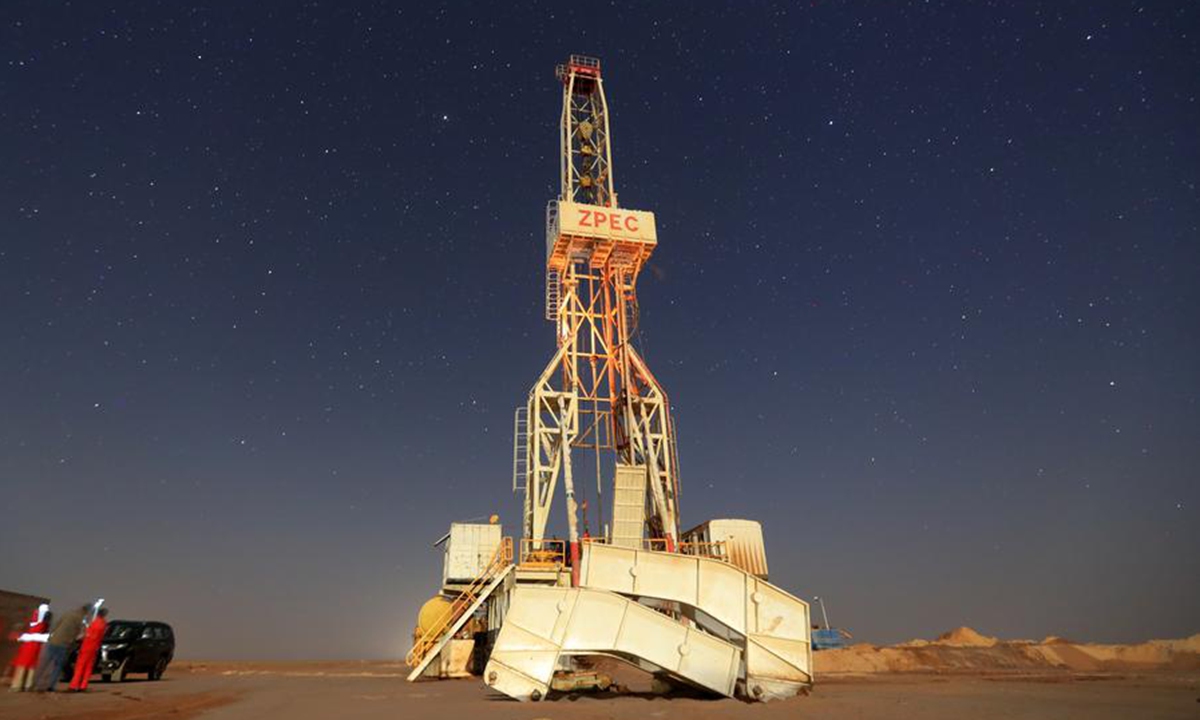
This photo taken on May 3, 2025 shows a well-drilling rig at night at the site of Owainat Water
Well Projectin the desert of New Valley Governorate, Egypt. (Xinhua/Sui Xiankai)


As summer begins, patches of lush farmland stretch across Egypt's Western Desert, an area that, until recently, was dominated by sand and rocks. Thanks to the deep wells drilled by the Egypt branch of China's Zhongman Petroleum and Natural Gas Group (ZPEC), wheat, alfalfa and potatoes now thrive in tidy rows under the desert sun.

These wells, part of a broader effort to reclaim desert land for agriculture, have transformed the barren landscape into productive farmland, offering a model for sustainable development in arid regions and underscoring the potential of international cooperation in addressing food security and ecological restoration.


Wednesday, May 21

Scientists unlock the secrets of the Great Sphinx of Giza


The Great Sphinx of Giza has stood guard over the desert for thousands of years. Carved from limestone and towering beside the pyramids, it remains a powerful symbol of ancient ingenuity. With its serene gaze and monumental scale, it continues to stir debate and awe in equal measure.


Throughout history, sphinx-like figures have appeared in many cultures. But none have left a mark quite like the one in Egypt. Here, the Sphinx represents strength, wisdom, and divine protection—a guardian carved in stone.


Shaped with the body of a lion and the head of a ruler, the Great Sphinx is thought to reflect the might of a pharaoh. Scholars link it to the sun god Ra, suggesting a blend of human insight and animal strength. Its design may have been a message to the heavens—and a warning to foes.


Elsewhere, the Sphinx takes a more sinister form. In Greek stories, it becomes a beast that tests wanderers with riddles. Those who fail pay with their lives. This version represents the edge of the unknown—where knowledg
e meets danger.


Wednesday, February 19

Archaeologists left in complete shock


Archaeologists were uncovering a mystery after opening a hidden Egyptian pyramid for the very first time - only to be shocked by what they found inside.

The village of Dahshur is an ancient royal burial site known for its few remaining pyramids and buried ruins.

British Egyptologist and writer, Doctor Chris Naunton, described the area as a 'lunar-looking landscape.'

After uncovering finely cut limestone blocks, scientists discovered the remains of one pyramid that had been hidden under the sands for thousands of years

They quickly informed the Ministry of Tourism and Antiquities - the government department that preserves the country's ancient history and heritage - which led to a full-scale excavation.

The discovery was so momentous that it was featured in the 'Mystery of the Lost Pyramid' - a documentary film broadcast by the Smithsonian Channel.      READ MORE...

Tuesday, August 6

Evidence of Hydraulics in Ancient Pyramid

  • A new study suggests that the first of seven key pyramids in Egypt, the Step Pyramid of Djoser, was built using a hydraulic lift.
  • Dated to about 4,500 years ago, this would move up the introduction of major hydraulic systems from previous beliefs.
  • The landscape, waterways, and interior architecture of the pyramid all point to the hydraulic system.

Hydraulic mechanics may have indeed been the driving force behind the construction of ancient Egyptian pyramids.

In a recent preprint paper, scientists concluded that the Step Pyramid of Djoser in Saqqara, Egypt—believed to be the oldest of the seven monumental pyramids and potentially constructed about 4,500 years ago—offers a remarkable blueprint for hydraulic engineering.

The hydraulic-powered mechanism could have maneuvered the oversized stone blocks forming the pyramid, starting from the ground up. The research team says the Step Pyramid’s internal architecture is consistent with a hydraulic elevation mechanism, something that’s never been reported before at that place or in that time.     READ MORE...

Wednesday, April 24

The Great Pyramid's Latitude


Spend long enough on the Internet and you will likely be met with a post informing you that the speed of light is 299,792,458 meters per second, and the latitude of the Great Pyramid of Giza is 29.9792458°N, before inviting you to assess whether this is a coincidence or not.

But is it true, and if so, is it a coincidence?

The answer to the first question is yes. Light travels at 299,792,458 meters per second in a vacuum, the absolute speed limit of the universe. The latitude of the Great Pyramid of Giza is indeed 29.9792458 N – but so are a whole bunch of other places at the same latitude.  READ MORE...

Tuesday, April 23

BRICS is Expanding Against USA


The origins of BRICS — a bloc comprising Brazil, Russia, India, China, South Africa and, as of 2024, new members Egypt, Ethiopia, Iran and the United Arab Emirates — can be traced back to a 2001 publication by Goldman Sachs economist Jim O’Neill titled ‘Building Better Global Economic BRICs’. O’Neill argued that Brazil, Russia, India and China were poised to play an increasingly significant role in the global economy.

His prediction was that by 2050, these countries would collectively account for 40 per cent of the world’s economic output. In reality, from 2012 to 2022 China alone has accounted for around a quarter of global GDP growth, and the BRICS countries together contributed over 45 per cent.

BRIC was officially launched in 2009 and was renamed BRICS in 2010 when South Africa joined the group. Since then, trade relations have clearly grown, but in a very unbalanced manner.

Most of the growth in trade has been China-centric, with the contribution from the rest of BRICS remaining quite flat until recently. The recent increase is mostly explained by India, which has experienced an acceleration in economic growth. BRICS members are increasingly intertwined with China as far as trade is concerned, but the remaining members have very few ties among themselves. Bilateral trade between BRICS members other than China remains extremely low.  READ MORE...

Wednesday, December 20

Record Breaking Free Divers of Egypt


Dahab, Egypt – When the countdown began, Khaled Elgammal took one final, deep breath before descending without any breathing equipment into the ocean. One minute and 29 seconds later, still holding his breath, the Egyptian athlete had free-fallen to 102 metres (335 feet) – a national record.

But for it to count, he had to reach the surface again. He turned at the bottom of the line and began his ascent – focusing on deep relaxation and the feelings of the surrounding water. In all, he had held his breath for two minutes and 50 seconds.

Elgammal is Egypt’s deepest freediver, and his remarkable achievement set a new national record at the Sharm el-Sheikh competition in October 2023.

“When I came to the surface, it was bliss. It felt amazing,” Elgammal recalls.    READ MORE...

Sunday, October 15

FIVE-THOUSAND-Year-Old Wine in Egyptian Tomb


Why would you want to drink boggy old sarcophagus juice when there are more palatable tomb beverages to hand?

In the tomb of the First Dynasty Egyptian queen Meret-Neith, archaeologists have uncovered a wealth of grave goods that includes hundreds of large wine jars – some of which still sealed. These funereal riches, they say, bolster the case that she was a person of great significance, maybe even Egypt's first female pharaoh.

Meret-Neith lived some 5,000 years ago, serving as queen of Egypt some time around 2950 BCE. She was, at the very least, queen-consort and regent. She may have been a ruler in her own right – a pharaoh – but archaeologists have been unable to determine her position with certainty. The first queen known to assume the full royal titulary was Sobekneferu, a millennium later.

There is certainly evidence of Meret-Neith's importance in her tomb, at the royal necropolis of Abydos. She was buried amid the final resting places of male pharaohs, and her own tomb was of comparable size and richness. She was likely the most powerful woman of her time.  READ MORE...

Thursday, October 12

FOUR-THOUSAND-Year-Old Mummy


The false door to Ptahshepses’s tomb was removed by a French archaeologist in the 19th century. Now, 160 years later, researchers have rediscovered it and found the mummy of its occupant. Image courtesy of © Archive of the Czech Institute of Egyptology, Faculty of Arts, Charles UniversityThe false door to Ptahshepses’s tomb was removed by a French archaeologist in the 19th century. Now, 160 years later, researchers have rediscovered it and found the mummy of its occupant.


A team of Czech archaeologists have rediscovered a lost tomb that belonged to an ancient Egyptian official called Ptahshepses, who lived around 4,400 years ago (during the 24th and 25th centuries BCE). The discovery even contained the mummified remains of this significant individual.

According to a statement released by the Czech Institute of Egyptology on Facebook, the lost tomb was discovered in the zone between the pyramid fields of Abusir and Saqqara, Egypt.

"It was a difficult search lasting several years,” Miroslav Barta, head of research at Abusir, explained in the statement. “Detailed satellite imagery of the area and the study of old maps led to the rediscovery of the tomb of Ptahshepses in 2022.”

Around 160 years ago, a French scholar named Auguste Mariette found this site and partially “excavated” it. Mariette extracted Ptahshepses’s false door, a symbolic doorway the Egyptians believed the deceased could use to enter and exit the tomb, and a lintel originally placed above the cult chapel. However, the tomb disappeared under the sand and was lost until now.

The artifacts recovered by Mariette are currently on display at the British Museum. The door itself provides an extensive and unique account of Ptahshepses’s career. It explains how he was educated at the court of the last Giza ruler – Menkaure (Greek "Mykerinos") – and how he later married the daughter of pharaoh Userkaf. Userkaf himself was an important figure who founded the Fifth Dynasty of Sun Kings.

“This reference itself indicates that Ptahshepses is the first known official of non-royal descent in Egyptian history who was given the privilege of marrying a royal daughter,” the Institute explained.  READ MORE...

Image courtesy of © Archive of the Czech Institute of Egyptology, Faculty of Arts, Charles University

Monday, July 10

Great Pyramid of Giza


The Great Pyramid of Giza is the last remaining artefact in the seven wonders of the ancient world, a fascinating emblem of the ancient civilization that once ruled over Egypt. Along with the surrounding pyramids in the Giza complex, the Great Pyramid is remarkably well preserved, and has become a UNESCO World Heritage site which is under extensive protection. 

Built over 4,000 years ago, it is the largest pyramid in the world, and remained the tallest structure made by human hands for over 3,000 years, until the Eiffel Tower was constructed in Paris in 1889.

How, exactly, such a colossal structure was built has been a subject of fascination for centuries. The purpose of the Great Pyramid of Giza has also been a source of extensive study and research. Below we outline some of the most widely accepted purposes of the Great Pyramid that attracts millions of tourists every year.

Historians believe the primary role of the Great Pyramid of Giza was to act as a tomb for the great Egyptian King Khufu. Egyptians believed that their pharaohs would go on to become gods in the afterlife, but in order to prepare for a safe transition into the next world, they had to have the right burial chamber. 

King Khufu spent 27 years planning the construction of his pyramid with his cousin and vizier, the architect Hemiunu.

In its day it was the most impressive structure in the world, unlike anything anyone had seen, and its sheer scale and ingenuity seemed to represent the almighty power of the man who once ruled over the ancient kingdom, although it was more likely a demonstration of his kingdom’s wealth, which waned in subsequent generations. 

When Khufu died, his sarcophagus was placed inside the king’s chamber, deep inside the pyramid, although his remains were never found. However, his pyramid was surrounded by several satellite pyramids built for his wife and family.              TO READ MORE...

Tuesday, November 8

Mysteries of King Tut


It is one of the most iconic discoveries in all of archaeology—the treasure-filled tomb of the young Egyptian pharaoh Tutankhamun, better known as King Tut. One hundred years ago today British archaeologist Howard Carter and an Egyptian excavation team found the boy king’s final resting place. Scholars have been studying the royal tomb and its owner ever since. 

From this work the broad outlines of the life and times of Tut have emerged. Many mysteries remain, however, including how the young pharaoh was related to Queen Nefertiti (herself a subject of debate), how influential he was as a ruler and how he died. Now new findings are emerging that could fill in some of the missing details. But as ever, debates rage over how to interpret them.

The key to Tut’s discovery was dogged perseverance. By November 4, 1922, Carter and his team had spent five futile years searching for an undiscovered royal tomb in Egypt’s Valley of the Kings. The prevailing wisdom said that everything the valley had to offer had already been found. Carter decided to spend what was to be his final field season digging beneath a group of huts that housed the ancient tomb builders. 

“We had almost made up our minds that we were beaten...,” he and archaeologist Arthur Cruttenden Mace wrote in The Discovery of the Tomb of Tutankhamen, their account of the expedition. “Hardly had we set hoe to ground in our last despairing effort than we made a discovery beyond our wildest dreams.”

Beneath those huts, the excavation team uncovered a step cut into the rock. Within days the team had dug out a steep staircase and a 30-foot-long passageway that ended in a door sealed with plaster and stamped with the royal necropolis seal. Carter waited to open the door until his benefactor George Edward Stanhope Molyneux Herbert, fifth earl of Carnarvon, who had funded his work in the valley for all those years, could travel to the site. 

The next day the team dug out a steep staircase and a door sealed with plaster and stamped with the royal necropolis seal. Carter waited to open the door until his benefactor George Edward Stanhope Molyneux Herbert, fifth earl of Carnarvon, who had funded his work in the valley for all those years, could travel to the site. On November 24, 1922, it was cleared to reveal a corridor, followed by a 30-foot-long passageway that ended in another door. On November 26, 1922, Carter broke open a small hole in the door and stuck a candle through, casting the first light into the chamber in nearly 3,300 years. 

The sight held him speechless as his eyes adjusted. “Details of the room emerged slowly from the mist, strange animals, statues, and gold—everywhere the glint of gold,” Carter wrote in The Discovery of the Tomb of Tutankhamen. He was looking into the antechamber of the tomb of Tutankhamun, a ruler who sat his throne for only around 10 years but did so at a pivotal time in Egyptian history.  READ MORE...

Tuesday, October 25

How The Great Pyramid Was Built

The Great Pyramid has evoked many theories about its construction. With the advent of drone photography, we get a closer look at the summit and can see amazing evidence for the methods used by builders to get megalithic blocks all the way to the top.

There is an opportunity for you to make the discovery for yourself! Watch and listen to the clues and see if you can figure it out before the reveal.


What's with the lone dark stone that stands out from the yellow limestone? Is it a different composition or was there granite used at the very top?

Do you miss the metal scaffolding that used to mark the original apex or does Khufu's pyramid look better without it?

Sunday, September 18

A Branch of the Nile Reveals...


The Sphinx at the Giza Pyramids on November 20, 2019. KHALED DESOUKI/AFP via Getty Image

A 4,500-year-old architectural marvel that still baffles scientists

Researchers have uncovered a now-dried-up branch of the Nile that came right up to the great pyramid complex of Giza about 4,500 years ago.

Awesome in size, with perfect geometry, and adorned with intricate decorations, the pyramids at Giza, on the outskirts of modern Cairo, served to demonstrate the power of the pharaohs in Egypt's golden ageResearchers have uncovered a now-dried-up branch of the Nile that came right up to the great pyramid complex of Giza about 4,500 years ago.

The findings, published in the Proceedings of the National Academy of Sciences on Monday, explain how ancient Egyptians were able to haul millions of the tons-heavy building blocks to the site of the iconic pyramids over four miles of what is now a desert landscape.

"It was impossible to build the pyramids here without this branch of the Nile," study author and geographer Hader Sheesh said, per The New York Times.       READ MORE...

Monday, August 1

Ancient Egyptian Foreign Mercenaries


A team of archaeologists from the Czech institute of Egyptology have unearthed a tomb in the Abusir necropolis, near to modern-day Cairo, Egypt.

The tomb belongs to an Egyptian dignitary named Wahibre-mery-Neith, who lived during the 26th or 27th Dynasty (5th century BC).

Inscriptions in the burial shaft describe him as a “Commander of Foreign Mercenaries”, suggesting that he supervised the mercenaries from the Aegean islands and Asia Minor.

The site was first excavated in 2021, where archaeologists found the largest ancient embalming cache in Egypt, containing 370 pottery storage jars that held materials used in the mummification of Wahibre-mery-Neith.

In the latest season of excavations, the team focused on the burial shaft and excavated 14 metres of material to a depth 6 metres below ground level. They found that the shaft was orientated east-west and measures approximately 6.5 by 3.3 metres.

At the bottom of the shaft the researchers found a double sarcophagus situated directly on a filling of sand, but discovered that the tomb had already been robbed in late antiquity during the 4th to 5th century AD (indicated by two early Coptic vessels found in the main shaft).

The outer sarcophagus is made of two massive blocks of white limestone that contains an inner sarcophagus made of basalt and is inscribed with the Book of the Dead, chapter 72, describing the resurrection of the deceased and his departure to the afterlife.  READ MORE...

Saturday, June 25

Stone Blocks at Heliopolis


A joint German/Egyptian archaeological mission has discovered stone blocks from the reign of King Khufu in Heliopolis, Egypt.

Khufu or Cheops was an ancient Egyptian monarch, the second pharaoh of the Fourth Dynasty in the first half of the Old Kingdom period (26th century BC). Khufu is generally accepted for commissioning the construction of the Great Pyramid of Giza, one of the Seven Wonders of the Ancient World.

The mission was excavating in the ancient city of Heliopolis, the capital of the 13th or Heliopolite Nome of Lower Egypt and a major religious centre. Archaeologists uncovered large blocks of granite in the ruins of the Sun Temple near the obelisk of Senusret I, representing the first discovery from the period of King Khufu in the Ain Shams region.

Mustafa Waziri, Secretary General of the Supreme Council for Archaeology announced the discovery in a press release, suggesting that the stone may have been part of a building once situated at the Pyramids of Giza and later moved and repurposed during the Ramesside era (19th and 20th Dynasty).

Excavations also revealed the sarcophagi and altars from the era of Amenemhat IV, Sobekhotep IV, Ay, Seti I, Osorkon I, Takelot I, and Psamtik I, in addition to a sculptural model of quartz in the form of the Sphinx of King Amenhotep II, the base of a statue of King Amasis (Ahmose II), and the base of a colossal monkey statue of pink granite of a baboon.  READ MORE...