Showing posts with label China. Show all posts

Tuesday, October 28

China unveils ‘world’s cheapest’ humanoid robot standing 3.1 feet tall


In a move that could redefine the affordability of humanoid technology, Beijing-based startup Noetix Robotics has unveiled Bumi, a compact humanoid robot priced at just ¥9,998 ($1,370).


The development, first reported by TechNode and Global Times, is a significant milestone in making humanoid robots accessible beyond research labs and corporate settings, targeting consumers, students, and educators instead.


Thursday, August 21

The U.S. grid is so weak, the race may already be over

A drone photo shows sustainable energy being generated in northwest China’s Xinjiang Uygur Autonomous Region,
July 17, 2025.   Yin Tianjie/Xinhua via Getty Images


Ma, a renowned expert in Chinese technology and founder of the media company Tech Buzz China, took her team on the road to get a firsthand look at the country’s AI advancements. She told Fortune that while she isn’t an energy expert, she attended enough meetings and talked to enough insiders to come away with a conclusion that should send chills down the spine of Silicon Valley: In China, building enough power for data centers is no longer up for debate.


“This is a stark contrast to the U.S., where AI growth is increasingly tied to debates over data center power consumption and grid limitations,” she wrote on X.

The stakes are difficult to overstate. Data center building is the foundation of AI advancement, and spending on new centers now displaces consumer spending in terms of impact to U.S. GDP. That’s concerning since consumer spending is generally two-thirds of the pie. McKinsey projects that between 2025 and 2030, companies worldwide will need to invest $6.7 trillion into new data center capacity to keep up with AI’s strain.

Thursday, August 14

China’s 2027 fusion ambition leaves U.S. in the dust


China’s latest fusion project promises to generate five times more power than it consumes, setting a blistering pace unmatched by its American rivals. If successful, this could rewrite the playbook on fusion energy and edge the world closer to a carbon-free future.

At the heart of this endeavor lies the Burning Plasma Experimental Superconducting Tokamak—BEST for short—a doughnut-shaped vessel where hydrogen isotopes collide at temperatures hotter than the sun’s surface. I still recall the first time I learned that fusion mimics the processes powering stars; it felt like peeking behind the universe’s curtain. 

Thanks to superconducting magnets and advanced cooling systems, the BEST reactor is engineered to sustain plasma long enough to achieve a genuine net energy gain, rather than simply breaking even.


Wednesday, August 13

How China created super steel for nuclear fusion


Nuclear fusion reactors rely on powerful superconducting magnets that must function under intense magnetic fields and at temperatures approaching absolute zero. These extreme conditions place extraordinary demands on the structural materials used, which must remain strong and stable despite the cold and stress.

Finding a material that can withstand both has challenged scientists for decades. Now, researchers in China have introduced CHSN01—China high-strength low-temperature steel No 1—a specially engineered alloy designed to meet these demands.


Wednesday, June 18

Geologists Reveal World’s Biggest Iron Deposit Worth $6 Trillion Set to Impact Global Economy


In a remote part of Western Australia, geologists have uncovered a mineral deposit of staggering size—one that promises to rewrite not only the map of global iron production but also our understanding of Earth’s geological history. The Hamersley region, already known for its rich mineral resources, now hosts what scientists say is the largest iron ore deposit ever recorded, containing roughly 55 billion metric tons of ore with iron concentrations exceeding 60 percent.

This massive find, valued at nearly $6 trillion, marks a significant moment for the global mining industry. Dr Liam Courtney-Davis, a geologist at Curtin University who has been closely involved in the research, published in the journal Proceedings of the National Academy of Sciences, suggests that entire chapters of mineral formation and large-scale geological processes may need rewriting.

The size and quality of the deposit could influence international iron prices and reshape trade relations, particularly between Australia and major iron consumers such as China.


Sunday, June 15

China’s humanoid robot masters chopsticks, cooks dumplings, pours wine


A Chinese firm has trained its humanoid robot to become the first to skillfully handle chopsticks, marking a major leap in robotic dexterity.  Being trained to master traditional Chinese culinary tasks, Robotera’s STAR1 can cook dumplings, steam buns, pour wine, and even clink glasses in a toast.

According to the Beijing-based firm, it will continue to train the robot in a growing range of Chinese cooking techniques, highlighting its expanding capabilities in the kitchen.

In March 2025, in a desert showdown in China, the 5.6-foot-tall flagship robot STAR1, wearing sneakers, outpaced its barefoot humanoid rival with a unique running style, reaching speeds of 8 mph (12.8 km/h) across rough terrain.


Saturday, June 14

China Uncovers “Limitless” Energy Reserves Capable of Powering the Country for 60,000 Years


China may be on the brink of an energy revolution thanks to a newly revealed abundance of thorium, a radioactive metal that could fuel the nation for tens of thousands of years. The heart of this discovery lies in the Bayan Obo mining complex in Inner Mongolia, where a recent national survey uncovered reserves that may vastly exceed earlier estimates, offering a potential solution to the world’s growing energy demands.

A Radioactive Element With Unique Potential
Thorium is a silver-colored element found naturally in the earth’s crust, often as a byproduct of rare earth mining. Unlike uranium, which powers most of the world’s nuclear reactors, thorium cannot directly sustain a nuclear reaction because it is not fissile. However, thorium is classified as “fertile,” meaning it can be transformed into uranium-233, a fissile material, through neutron bombardment inside a molten-salt reactor (MSR).


Wednesday, June 11

Chinese well-drilling technology turns Egypt's deserts into farmland


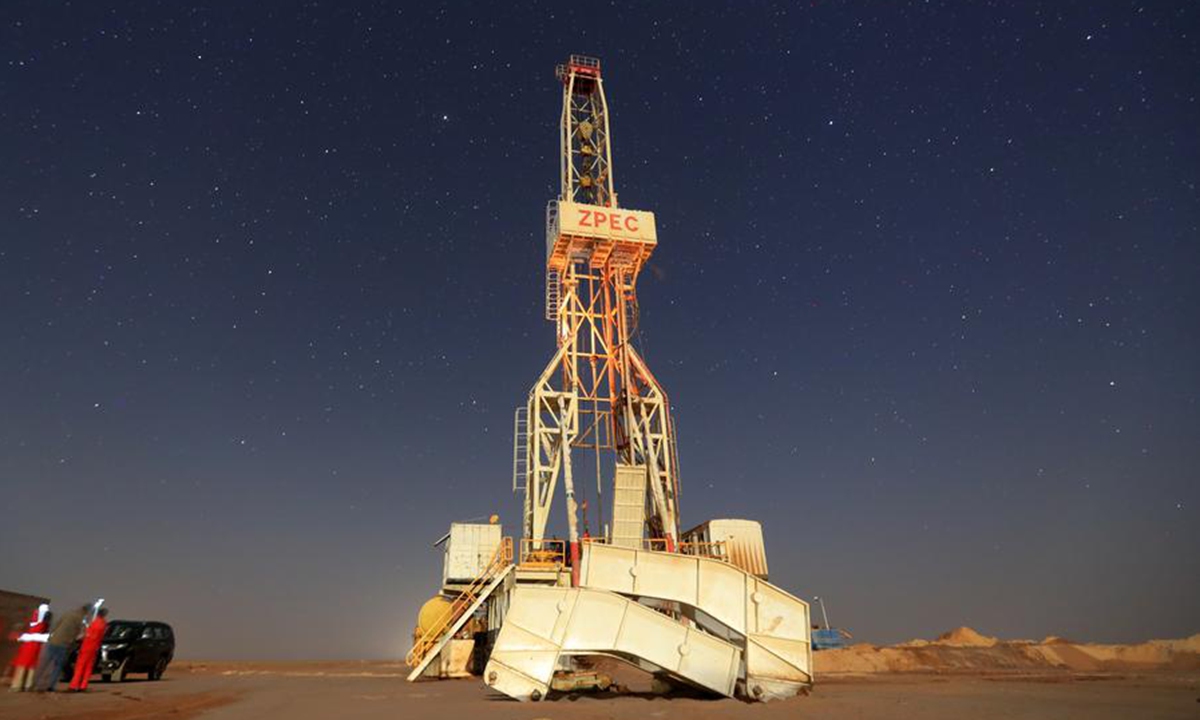
This photo taken on May 3, 2025 shows a well-drilling rig at night at the site of Owainat Water
Well Projectin the desert of New Valley Governorate, Egypt. (Xinhua/Sui Xiankai)


As summer begins, patches of lush farmland stretch across Egypt's Western Desert, an area that, until recently, was dominated by sand and rocks. Thanks to the deep wells drilled by the Egypt branch of China's Zhongman Petroleum and Natural Gas Group (ZPEC), wheat, alfalfa and potatoes now thrive in tidy rows under the desert sun.

These wells, part of a broader effort to reclaim desert land for agriculture, have transformed the barren landscape into productive farmland, offering a model for sustainable development in arid regions and underscoring the potential of international cooperation in addressing food security and ecological restoration.


Friday, May 9

China Fires Laser at the Moon in Broad Daylight—Achieves Unprecedented Deep-Space Targeting Breakthrough


In a major leap for lunar navigation, China has successfully bounced a laser off a Moon-orbiting satellite in full daylight—a feat previously thought impossible due to intense solar interference. The breakthrough, carried out by the Deep Space Exploration Laboratory (DSEL) using the Tiandu-1 satellite, marks the world’s first Earth-Moon laser-ranging success under strong sunlight, according to a report by Interesting Engineering.


The two-day experiment, conducted on April 26–27, demonstrated the precision tracking and signal clarity needed to support continuous navigation between Earth and the Moon. Until now, glaring solar background noise has limited such laser measurements to nighttime windows. With this barrier overcome, China has significantly advanced its roadmap for sustained lunar operations and deep-space infrastructure.


Thursday, April 10

On way to harnessing nuclear fusion, Chinese HL-3 reactor hits ‘dual 100 million degrees’


China has announced a milestone in the development of its next-generation “artificial sun”, marking another step towards harnessing controlled nuclear fusion.

For the first time, the Huanliu-3 (HL-3) tokamak reactor in Chengdu has achieved a plasma state with ion temperatures of 117 million degrees Celsius and electron temperatures of 160 million degrees, edging closer to the extreme conditions required to ignite fusion – the same process that powers the Sun, according to researchers.


A tokamak is a doughnut-shaped device that uses powerful magnetic fields to confine superheated plasma, where hydrogen atoms – typically deuterium and tritium – fuse into helium and release vast amounts of energy.


Wednesday, March 26

Quantum Breakthrough: Scientists Create Schrödinger-Cat State With Record-Long Lifetime


USTC researchers created a long-lived Schrödinger-cat state, boosting quantum metrology and precision measurements. Their findings open new possibilities for quantum computing and fundamental physics.

A research team led by Prof. Zhengtian Lu and Researcher Tian Xia from the University of Science and Technology of China (USTC) has successfully created a quantum state with a lifetime on the scale of minutes using optically trapped cold atoms. This breakthrough significantly improves the sensitivity of quantum metrology measurements. Their findings were published in Nature Photonics.

In quantum metrology, particle spin serves as a powerful tool for measuring magnetic fields, inertia, and various physical phenomena. It also has the potential to uncover new physics beyond the Standard Model. A high-spin Schrödinger-cat state, a superposition of two maximally opposed spin states, offers unique advantages for precision spin measurements.

Friday, March 21

China achieves quantum supremacy


T

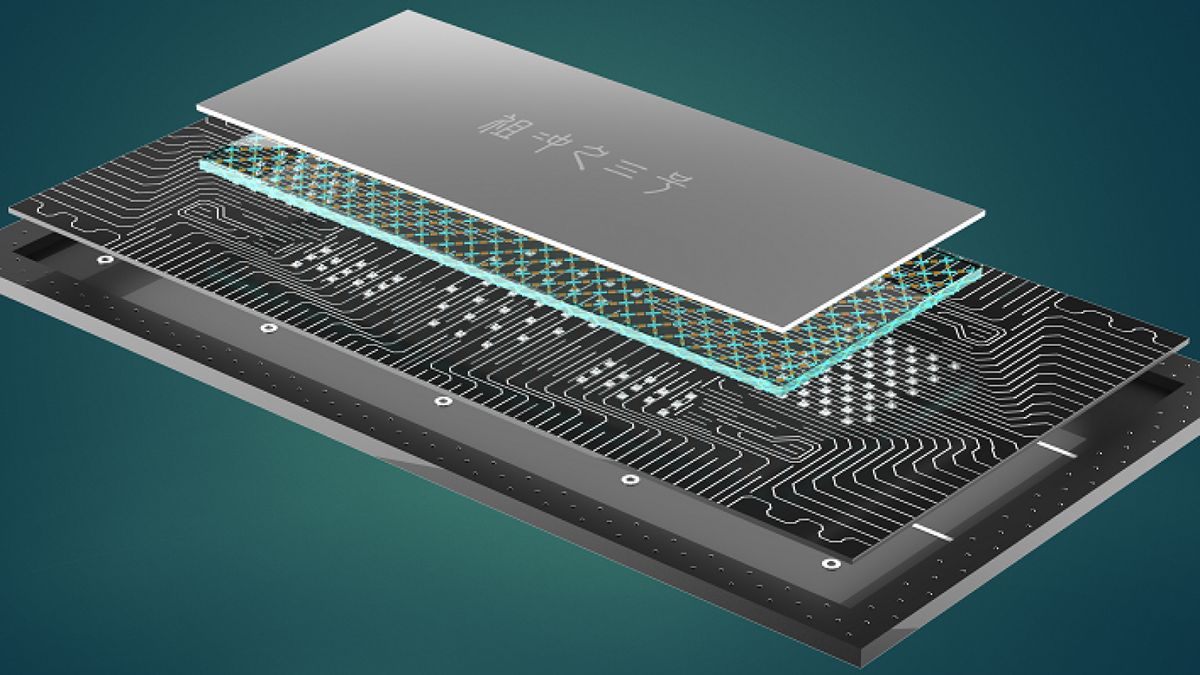
he latest iteration of Zuchongzhi includes 105 transmon qubits — devices made from metals like tantalum, niobium, and aluminum that have reduced sensitivity to noise. (Image credit: D. Gao et al.


Researchers in China have developed a quantum processing unit (QPU) that is 1 quadrillion (10¹⁵) times faster than the best supercomputers on the planet.


The new prototype 105-qubit chip, dubbed "Zuchongzhi 3.0," which uses superconducting qubits, represents a significant step forward for quantum computing, scientists at the University of Science and Technology of China (USTC) in Hefei said.


It rivals the benchmarking results set by Google's latest Willow QPU in December 2024 that allowed scientists to stake a claim for quantum supremacy — where quantum computers are more capable than the fastest supercomputers — in lab-based benchmarking.

Saturday, March 15

First Humanoid Race in China


 A one-of-a-kind event is fast approaching in southeast Beijing’s Economic-Technological Development Area (often called “Beijing E-Town”). Slated for April 13, this half-marathon will see humans and humanoid robots compete on the same 21km route.


As registrations begin on March 5, global anticipation is quickly mounting. While the basic format has been public knowledge for some time, newly released rules give a clearer picture of the event and its stakes.


Additionally, recent announcements of more than 10,000 robot placements in key industries amidst the marathon preparations suggest something far larger is at stake for China’s robotics sector.

Extended competition rules
For the robot category, organizers have set a cutoff completion time of roughly 3 hours and 30 minutes. Unlike human runners, robot teams can switch batteries mid-race or swap out their robots in a relay setup. Each change, however, comes with a 10-minute penalty added to the team’s final time.     READ MORE...

Sunday, February 2

Human VS Humanoids


China plans to host a groundbreaking race like no other — a “world’s first” half-marathon where humans will go head-to-head with their own creation: humanoid robots.

The South China Morning Post (SCMP) reported that t
he marathon is scheduled for April in Daxing district, Beijing.

The humanoid robots, developed by companies from around the globe, will take to the streets alongside 12,000 human runners. The robots will run the entire race for the very first time this year.

This unprecedented race reflects China’s ambitious push to become a global leader in artificial intelligence and robotics

Reportedly, this first-of-its-kind race will see humans and robots challenge themselves on a 13-mile (21km) route. The top three runners will receive prizes.     READ MORE...

Wednesday, January 22

China Outnumbers US


After being overtaken by China in naval strength, a senior US military official has now warned that by 2027, China’s modern fighter jet fleet will outnumber US forces about 12 to 1 in key regions of the Western Pacific.

Brigadier General Doug Wickert, commander of the 412th Test Wing at Edwards Air Force Base, shared the information regarding the anticipated dominance of Chinese aerial power during the Back-in-the-Saddle Day event on January 6.

The US Air Force General stated that the speed at which China is modernizing its military is “unprecedented,” further noting that it is “far outpacing” comparable modernization efforts by the United States.

The warning follows the PLA’s introduction of two new combat aircraft on December 26, touted as sixth-generation fighter jets, to celebrate Chinese Communist Party founder Mao Zedong’s birthday.     READ MORE...

Saturday, January 18

China's Mars Mission Leaves US Behind


Hong Kong CNN — China’s historic attempt to bring samples from Mars to Earth could launch as soon as 2028, two years earlier than previously stated, according to a senior mission official.

The country’s Tianwen-3 mission would carry out two launches “around 2028” to retrieve the Martian samples, chief mission designer Liu Jizhong said at a deep-space exploration event in eastern China’s Anhui province last week.

The projected mission launch is more ambitious than a 2030 target announced by space officials earlier this year, though the timeline has fluctuated in recent years. A 2028 target appears to return to a launch plan described in 2022 by a senior scientist involved with the Tianwen program – a mission profile that would see samples returned to Earth by 2031.    READ MORE...

Thursday, January 2

China's Supersonic Jet


CHINA is vying to take on the 'Son of Concorde' with an even faster supersonic jet that could blast from London to New York City in less than two hours.

Beijing-based Space Transportation - also known as Lingkong Tianxing Technology - has been carrying out test flights and recently reached a speed of 3,106 mph which is four times the speed of sound, according to Chinese media.

The so-called Jindouyun engine, or JinDou400, could enable travel twice as fast as the iconic Concorde.  In the latest test it was able to reach altitudes over 65,600 feet, the company claims.

It achieved this by doing away with compressors and turbine parts you find in most rocket engines, relying on detonation combustion technology instead.  This tech uses a detonation ramjet to create essential thrust.     READ MORE...

Thursday, December 19

China's Powerhouse Robot Factory


Chinese robotic startup MagicLab has introduced a fleet of collaborative humanoids at a factory for job training.

The humanoids also demonstrate small-scale collaborative operations, showcasing their ability to work efficiently together.

In January, MagicLab unveiled its third-generation humanoid robot, MagicBot, designed to rival Boston Dynamics’ Atlas. By February, a video update showcased the robot roasting marshmallows, performing magic tricks, and dancing.

The firm joins a growing wave of companies deploying robots in industrial settings as China aims to mass-produce humanoids by 2025 and dominate the market by 2027.   READ MORE...