Showing posts with label Himalayas. Show all posts

Monday, October 20

Beneath Tibet, alarms blink — Data suggests the continent is pulling apart live


At first glance, the Himalayas appear immutable; we see snow-capped peaks, majestic mountain ranges, and valleys that tell millions of years of history. However, beneath this epic landscape, a process is underway that could redefine how we understand Earth itself.

Something invisible to our eyes, but which sends clear signals to those who know where to look. What’s happening beneath Tibet is, in short, unsettling. This is because scientists are beginning to see that the story isn’t just one of slowly rising mountains, but of a continent that may be, quite literally, tearing itself apart before our eyes.


Sunday, December 12

Plankton Creates Mountains


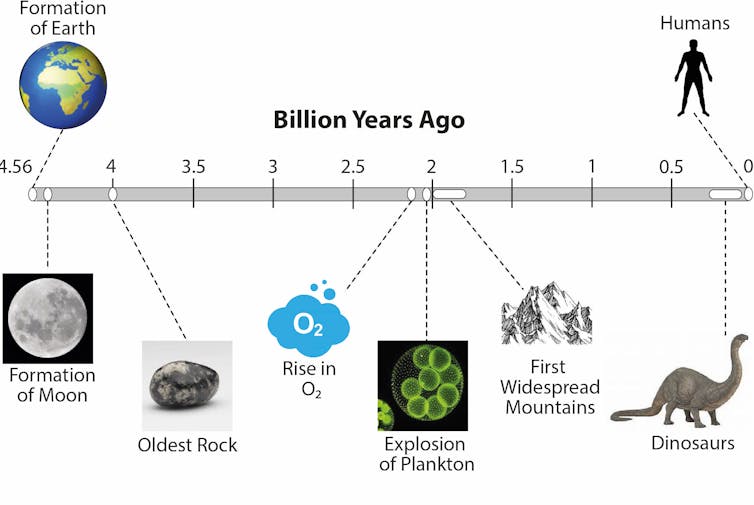
A world without the great mountain ranges – the Himalayas, the Alps, the Rockies, the Andes – is unimaginable, but they were not always a part of the Earth’s geography. Mountains didn’t start forming widely until 2 billion years ago, half way through the planet’s history. Now our research has revealed how primitive life played a key role in their introduction to the planet.

While the formation of mountains is usually associated with the collision of tectonic plates causing huge slabs of rock to be thrust skywards, our study has shown that this was triggered by an abundance of nutrients in the oceans 2 billion years ago which caused an explosion of planktonic life.

Timeline for the formation of mountains on Earth. J Johnston/University of Aberdeen, Author provided

Making mountains
Mountains are not just a beautiful backdrop for recreation, they are essential to the way the world works, through their influence on weather, climate, the distribution of fresh water and the erosion of rock to make cultivable soil.

Before there were mountains, the plate movements that reshape the distribution of oceans and continents only occurred on a limited scale. But the movement of these plates are essential to making mountains. The pressure of one plate pushing against another – typically an ocean plate hitting a continental plate – causes slabs of ocean rock to break off and stack up on top of each other as they are pushed from behind.  READ MORE...