Presented By


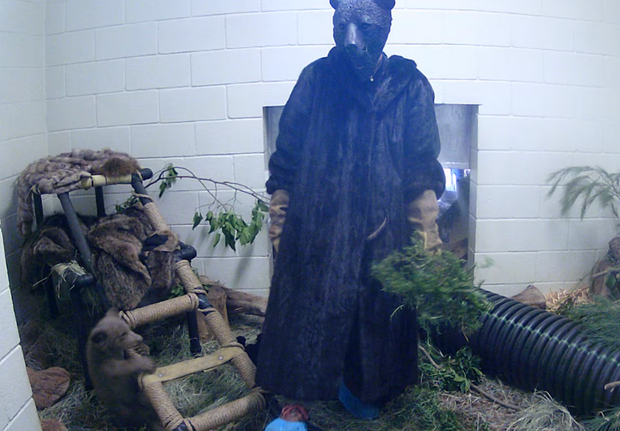
Chili Dog gave it a good go at the Wienie 500, but ended up on the back burner. Congrats to the winner, Slaw Dog. Icon Sportswire/Getty Images
Photo of the week
Did you hear about the group of PhD scientists from Johns Hopkins, Harvard, and Stanford who walked into a lab—and left with a breakthrough probiotic in hand?
These scientists zeroed in on one of the most beneficial strains for gut health, Akkermansia muciniphila. They figured out how to bring live Akkermansia muciniphila to the probiotics market. The final result of their work? Pendulum’s Akkermansia probiotic.
This particular strain is so groundbreaking because it can strengthen gut lining, improve metabolic and digestive health, and naturally increase GLP-1.*
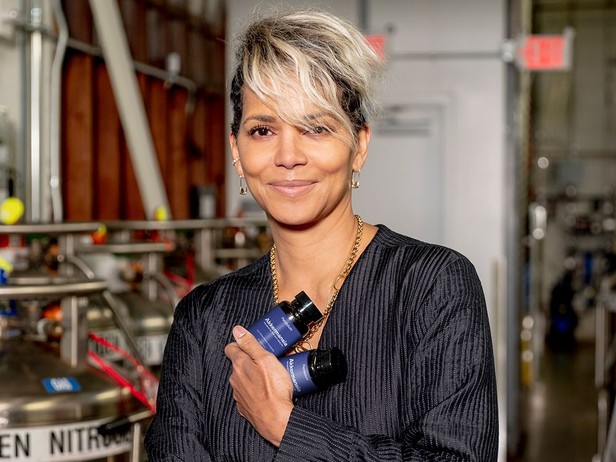
With more than 15k medical provider recommendations, 4.5k mentions of Akkermansia muciniphila in scientific publications, and loyal customers like Halle Berry, this stuff sure sounds promising.
Try Akkermansia yourself and take 20% off.
PATRICK HERTZOG/AFP via Getty Images
Here are some illuminating scientific discoveries from the week to help you live better and maybe even gaze at the clouds.
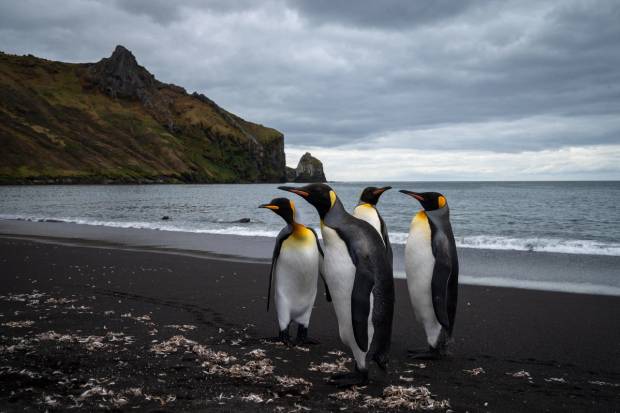
 Penguin poop can help limit global warming. These are the bowel movements heard ’round the world. Penguins in Antarctica are “major emitters” of ammonia—a compound that stimulates cloud formation, which helps block heat from the sun. Meaning, penguins may be combating ice melt just by going No. 2, scientists reported this week. The downwind from a colony of 60,000 penguins contained about 1,000 times more ammonia than atmospheric baselines, according to the new research. Typically, ammonia from vegetation helps create cloud coverage, so, in lieu of greenery at the South Pole, penguin poop could be critical, especially as climate change quickly melts the sea ice that keeps Earth cool.
 FDA clears first blood test for detecting Alzheimer’s. Doctors are expected to catch more cases of Alzheimer’s—faster and earlier—now that federal officials have greenlit a blood test for people showing symptoms of the disease. About 7.2 million Americans are estimated to be living with Alzheimer’s, but primary care physicians only diagnose it correctly ~60% of the time, and specialty neurologists catch it 70%–80% of the time, according to Dr. Howard Fillit, chief science officer at the Alzheimer’s Drug Discovery Foundation. “With the blood test, we can get it up to over 90%,” he said.
 Unknown bacteria found on Chinese Space Station. Astronauts discovered a microbe on China’s Tiangong space station that’s never been seen on Earth before—and appears uniquely suited for space. Niallia tiangongensis can break down protein in nutrient-deficient environments and even self-repair radiation damage, which is perfect for surviving in space stations. But scientists aren’t sure yet if the bacterium evolved up there or hitched a ride from Earth, where there are estimated to be billions of undiscovered microbes. Though scientists said earlier this year that space stations are too sterile and astronauts could benefit from more bacteria, they might not want this one. The new microbe’s closest terrestrial relative can cause sepsis.—ML
No comments:
Post a Comment